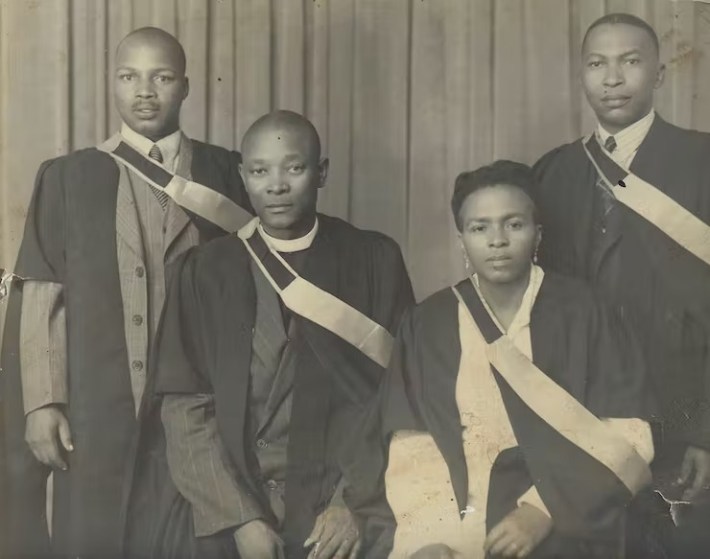
Over the past few months, I’ve been assisting Professor Joel Cabrita at Stanford University with research on two projects. The work has been focused on tracking down images and information on various sites connected to the research. The first project has been published online. Click HERE for the full site for the Regina Gelana Twala Archive.

Regina Gelana Twala
Regina Gelana Twala was a writer, anthropologist, social worker and political activist who lived in both South Africa and Eswatini (then Swaziland). She died in 1968 at the age of 60.
Twala broke the mould of what black women were meant to represent. She was just the second black woman to graduate from Johannesburg’s University of the Witwatersrand (in 1948) and the first to graduate in social science in South Africa. In a period dominated by male intellectuals, she was a formidable writer and thinker. One of few female contributors to southern African newspapers, she wrote hundreds of articles. *from africaspeaks4africa
Regina Gelana Twala (née Mazibuko, 1908-1968), was born in the rural Indaleni Methodist mission station of South Africa’s Natal countryside. Raised amongst the country’s elite Black Christian middle class, Twala was educated in the most prestigious mission schools available to the country’s Black population. Her background and capabilities gave her the opportunity to be one of the few legally emancipated women in South Africa. While her cosmopolitan advice for women in Johannesburg’s Black newspaper columns (published in Bantu World in the 1930s) gained a devoted audience, Twala was first brought to the city through her first marriage, to the mining clerk, Percy Kumalo. After a drawn-out, frustrating divorce from Kumalo, Twala married Dan Twala, then the well-known and popular manager of Johannesburg’s Bantu Sports Club who played an important role in South African sports, theatre, and cinema. While Regina and Dan Twala lived separately from the 1950s, the fulfilment that their relationship brought is evidenced by the hundreds of letters they wrote to each other, in which they discuss everything from mundane details of their everyday life, to goals for Regina Twala’s writing and intellectual ambitions (as well as Dan Twala’s dreams for the Sports Club), to the tumultuous political details of life under apartheid in South Africa. *from the archive
Work continues on the other Stanford projects.
UPDATE ON OTHER PROJECTS:
As such, I’m behind on my own schedule! The ‘Trams’ ebook is progressing well. I’m waiting for the JHB public library to re-open to access the newspaper archives. Aiming for an October 2026 release.
Look for an update on the Doornfontein piece about 96 End Street. I’m adding new details on the early history along with first-hand accounts about Mandys and IDOLS. There is also an IDOLS tape from 1990 that I’ve digitised for the occasion, plus a vinyl mix with Gary Van Riet covering the Mandy’s era.
Doing some work with Gallo on the company’s early Johannesburg headquarters for their centenary in 2026.
Finally, I’m assisting Ted Botha with research on his next book, which is due out in 2025. His previous book ‘Daisy De Melker’ made the Sunday Times Literary Awards Non-Fiction Longlist in 2024. I had a small part in researching maps and places for that one, which also culminated in an interview for the History Channel’s ‘Great African Crimes’ with Mandy Weiner.

© 2024 Johannesburg 1912. Please don’t copy our content or images without permission — we work hard to research and produce everything you read here. If you’d like to share something, please link back to the original post. Thank you for respecting our work.


 Johannesburg 1912 - suburb by suburb research
Leave a reply to Michael Herr Cancel reply