Documenting the hotels of Johannesburg is a great insight into the growth and development (and social changes over time) of this town that eventually became a city. Along with boarding houses, they were key in the early days when accommodation was limited. As the town developed, hotels started establishing themselves as meeting and entertainment venues of varying quality, in addition to providing accommodation for visitors, whether on business, work contracts, and later, on holiday.
For us long-established locals, I’m not sure we ever needed to stay in a Johannesburg hotel, certainly not when one lives in the city (there are a few exceptions…these are, erm, covered in minor detail) I’ve never stayed a night in a Johannesburg hotel, but yet, many of the hotels hold some place in the collective memory because of associations with restaurants, bars, nightclubs, or the famous people that stayed there. It was more my parent’s generation and those that came before that frequented the various ‘watering holes’ located at Johannesburg’s hotels.
This is not an exhaustive list but was compiled using several old maps, tourist guides, and website listings. As expected, there is a wealth of information on the more popular hotels, and sometimes no more than a listing for others. I’ve supplied photos or Google Earth screenshots where the building still exists and whatever information I could find. This piece only covers the CBD and Hillbrow and only until the 1980s. Suburban hotels can be found in the corresponding piece if I’ve covered it.
**Please note: This piece is not intended to be tourist accommodation advice or suggestions. Most of these hotels no longer exist, and those that do are not intended for tourists. They are in unsafe parts of the city**
Please share your comments, corrections, or memories in the comments and follow this blog, or the Instagram account @johannesburg1912
Here we go…
Cecil John Rhodes and Charles Rudd visited Ferreirascamp in July 1886 and booked into a wattle and daub structure called Walker’s Hotel. It was opposite the ‘post office’ in Ferreirascamp and run by the wife of the man who first struck gold on the rand. After one night, Rhodes chose to rather sleep in his wagon.
By July 1886, 3 months before Johannesburg was proclaimed, there were 14 ‘so-called hotels’ in Ferreirascamp. The fourteen ‘wayside hotel’ licenses were issued by the Landdrost of Heidelburg between 24 July and 27 September 1886. According to the Government Gazette No.303 from 10 November 1886, Mining Commissioner Jan Eloff issued 25 hotel licenses. The population was estimated at between 200-300.
In Leyd’s ‘History of Johannesburg’, he lists several hotels that were granted licences or renewals after a meeting of the Licensing Board for Hotels and Bars that took place on 13th January 1888. The following hotels are listed:
Metropolitan Hotel (near Market Square)
Maderose’s Hotel
Crown Hotel
The Free State Hotel (Proprietress Kate Pemberton)
These were likely simple wood and iron or mud and reed structures. No further info is given on these, so I’ve listed them only because they’ve been documented. The hotels that follow are considered the first wave of establishments in early Johannesburg, although these were also of a temporary nature given the shortage of building materials at the time.
Hodgson’s or Edgson’s Hotel 1886/7
Hodgson’s may be an error on the sketch. It appears that A B Edgson, who owned the Wayside Inn in Muldersdrift opened a canteen and a store in the camp which also doubled as the first post office.
It’s also recorded that Mrs Helena Minaar opened the first boarding house that consisted of a wagon and a tent. She had come up from Natal after the death of her husband with her son and two daughters.

Transvaal Hotel 1886/7
Pen and ink drawing by J Stephensen

Royal Hotel 1886/7
Built by A Goldschmidt. No further details.
Central Hotel / Edgson’s Hotel – Commissioner Str Ferreirascamp 1886/7
Estimated to have been built sometime in 1887, it was a corrugated iron shed with a bar, dining room, and three or four rooms. These rooms were always booked and overcrowded, so extra guests slept on the floor of the dining room provided they had their own bedding. It’s noted that Edgson leased this hotel to F H Bussey. A visiting journalist in 1887 wrote that the billiard room was ‘packed like a herring barrel filled with all sorts of persons.’ Edgson started the first bar in the camp prior to erecting the hotel. He named his corrugated iron hotel Central Hotel.
Grand Central Hotel – 62/4 Commissioner Street (cnr Sauer Street SE cnr) 1889
In late 1888, Mr. Gosch built a new Central hotel on the same site as Edgson’s original iron hotel, this one made from brick and hewn stone. Many of these early brick buildings were erected quickly with limited skills. In January 1889, the original Central Hotel collapsed when a second story was added. This was due to poor foundations. A German waiter named Fritz was killed in the collapse. It was immediately replaced by a new two-story sandstone building with cast-iron verandah designed by A. H. Reid. The classic design and finishing meant the hotel fitted in well with the ‘office’ type of buildings around it. It had a dining room that seated 200 as well as 50 bedrooms. The billiard room and table were also evidently used for accommodation when the hotel closed in the early hours of the morning. Mattresses were laid on the floor and on top of the table for casual visitors.

Cecil John Rhodes was a regular guest and liked to sit on the verandah where he was often approached by people on the street looking for a loan.
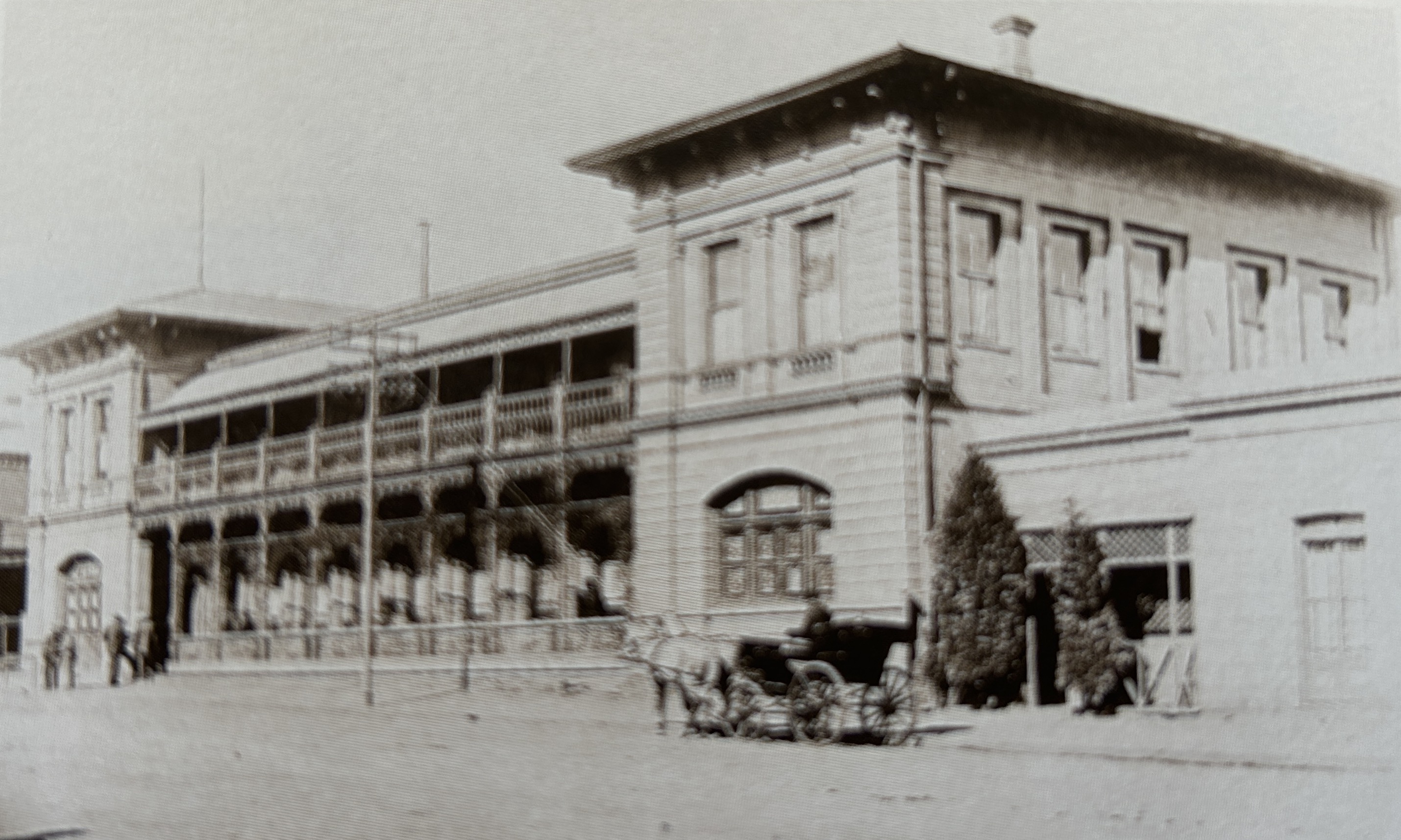
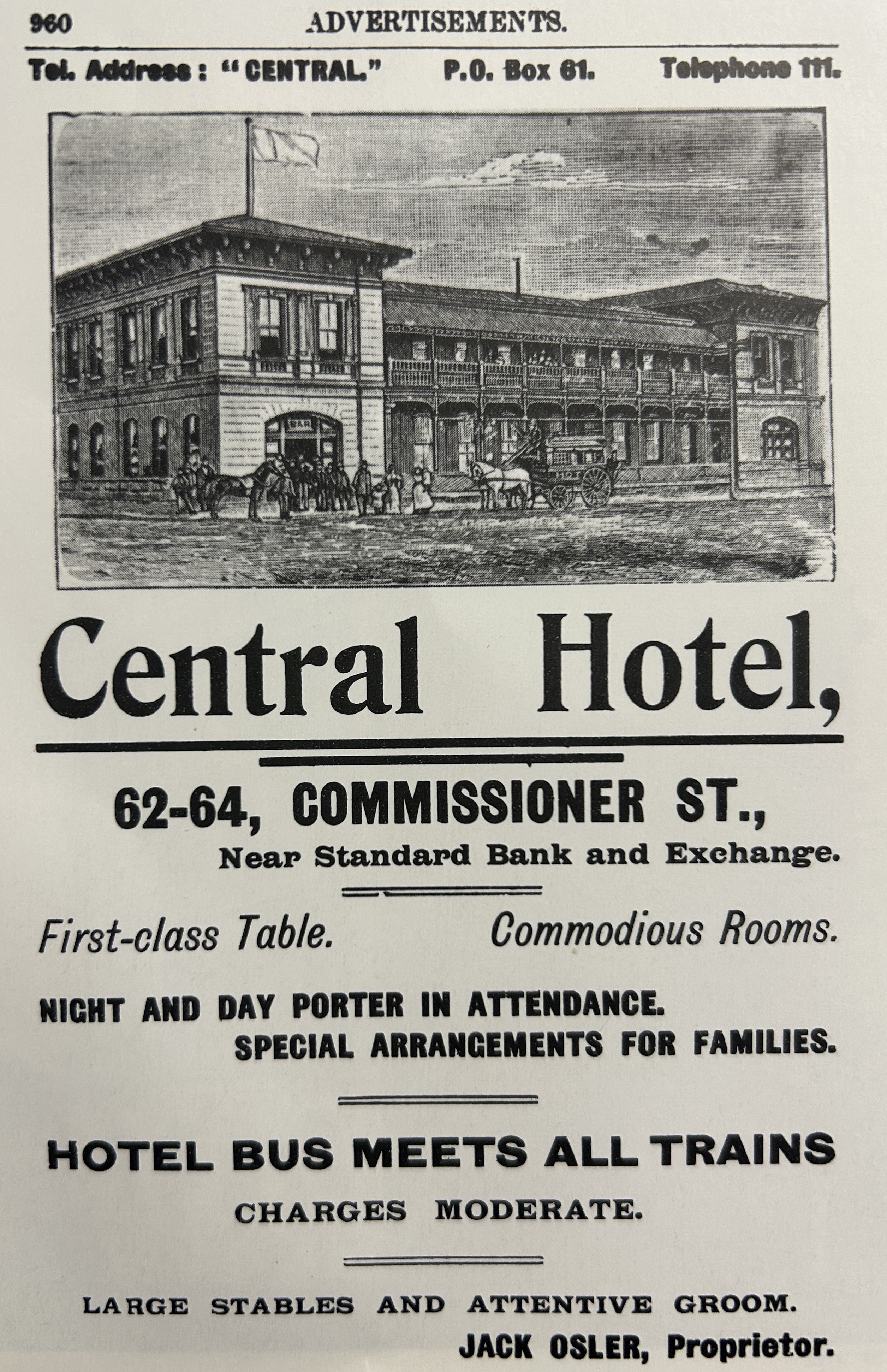
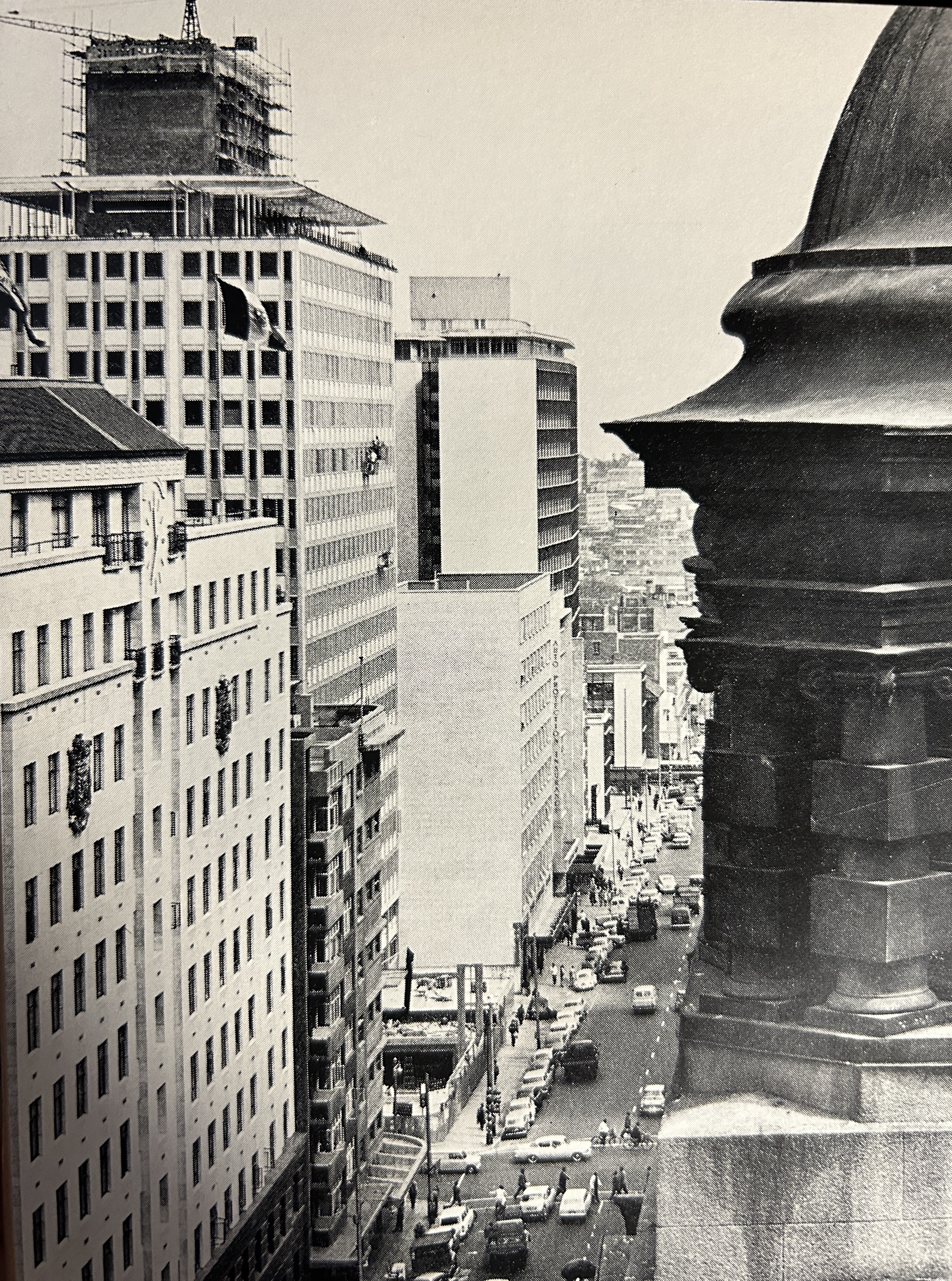
The building stood until the 1960s and was replaced by the New Corner House (4th Corner House) which was officially opened on 24th May 1965.
Heights’ Hotel – Cnr Commissioner Street & Ferreira Street 1887
Built from brick and run by S. B. Height and his wife. There is some discrepancy as to the actual position. Van Der Waal lists the building at the corner of Commissioner and Ferreira Street but places it on a map at the corner of Commissioner and West Street. Another source puts where John Vorster Square is today which is the least likely.

The long street-level verandah certainly faced Commissioner Street. Owner Sam Height was the first person to own a piano on the Rand. It wasn’t destined for him, but rather an A. D. Alexander. A group of miners ‘commandeered the piano before the rightful owner could take delivery of it’ and evidently compelled Height to purchase it, which he did. The story goes that on that night, the hotel was packed due to the new entertainment, and those miners who couldn’t gain entry danced with each other up and down dusty Commissioner Street until the early hours of the morning.
The original hotel was rebuilt in 1897 and renamed Rand Hotel. Plans for the Rand Hotel by new owners African Hotel Co. LTD were submitted and designed by C. H. Brauer. This ambitious hotel took up stands 1 – 3 & 9 -12 of the block. There were further additions in 1902 after the war by Aburrow & Treeby. The building took on various names over the years.

Height also built Villa Saratoga Villa in 1889 designed by Lennox, Canning, and Goad. It was next to the old Doornfontein farmhouse, and those buildings were converted into servants’ quarters. The villa was a two-storey affair made from red brick with quoined corners. It featured a wooden verandah and six gables, as well as hot and cold running water. Sam Height and his wife Louisa also grew produce on the land for their hotel. Water for the scheme came from the new reservoir behind where Ponte is today. Height also started the short-lived Doornfontein Club in Davies Street, which was later taken over by Mother Ambrose and used as a convent. This was the precursor to the 1905 Parktown Convent in Oxford Road.
Grand National Hotel – Cnr Pritchard and Rissk Streets 1888-91 (NW cnr)
Named after a famous British racehorse, the address was 50-54 Rissik Street. Designed by J. S. Donaldson, it was different in design to the Central Hotel being situated in the shopping district. As such, the two-storey building featured stores on the ground floor, with the hotel rooms upstairs. It could be said to be triple-storied, as there were also attic-style rooms. The roof featured classicist gables and ornamented skylights, much like the commercial buildings surrounding it. There were 100 rooms (presumably after the later Kerk Street extension), three drawing rooms, a ladies’ sitting room, hot and cold running water, as well as a constant supply of electricity. There were also stables and grooms. During its early years, it was managed by M. A. Zoccola previously of Heights Hotel. Turner’s Drug Store occupied the corner shop for many years.

“In August 1892, a gentleman well known in railway circles created great excitement at the Grand National Hotel by trying to ride his skittish little pony up the stairs for a wager. The pony would not look at the stairs so the rider set spurs into it and it charged the bar. Two ladies fainted and a scene of indescribable excitement ensued, the fair customers of the bar being terror-stricken at the spectacle.”
The hotel was frequented by Johannesburg’s millionaires like Barney Barnato, Herman Eckstein, Abe Bailey and George Albu. Mark Twain stayed there in 1896, the same year Carl Hertz showed the first cinema film at the Grand National.
By the 1930s, the stands in the city centre had become valuable. The old hotel was demolished and the new Grand National Building designed by Cook & Cowen was erected between 1935-8. This featured shops at street level and flats above.

The 1930s building was demolished in 1978 and replaced by the Tony Factor Centre.
Beaconsfield Hotel – Cnr Market and Simmonds Street (SW cnr)
This is where the National Bank building is today. It was named after its namesake in Kimberly which had a connection the the Earl of Beaconsfield. The hotel was likely demolished in the late 1890s.
Goldfields Hotel – Loveday Street bounded by Main and Marshall Streets (Goads)
A fairly big hotel that took up half the block. The entrance was on Main Street and is noted as ‘metal clad’. A bar and private room are next to the entrance. The rooms (around 15 of them but possibly doubled to 30) were on the Loveday side, with another 15 rooms opposite and adjacent to the next property. The dining room and kitchen are situated in the centre with an alley on each side between the inside rooms. There appears to be one communal bathroom servicing all the rooms. It was demolished by 1930s. Geneva House and Locarno House were being built on the site by 1937. The first ESCOM house took up the rest of the block facing Rissik Street.

According to reports, in 1888 there were 77 bars, 43 hotels, and 12 billiard saloons. By 1892, hotels had increased to 254. I doubt these were traditional hotels as covered in the piece, and that a large percentage were made up of boarding or rooming houses for men. It was also recorded that the 1896 census listed 62 boarding-house keepers while in the same year, the Witwatersrand Boarding-House Keepers Protection Association had a membership of 90. The majority of these were white women.
The following is a listing of hotels in Henry Longman’s 1896 directory. The street numbers make it difficult to track the locations

Hotels up to 1900
Hotels in this period had a low profile. The town was made up largely of single males (54% were unmarried and 33% had families that lived abroad) and there was not a massive influx of visitors. The political climate of the mid-late 1890s was also partly to blame. This would change after the British occupation of Johannesburg in 1900.
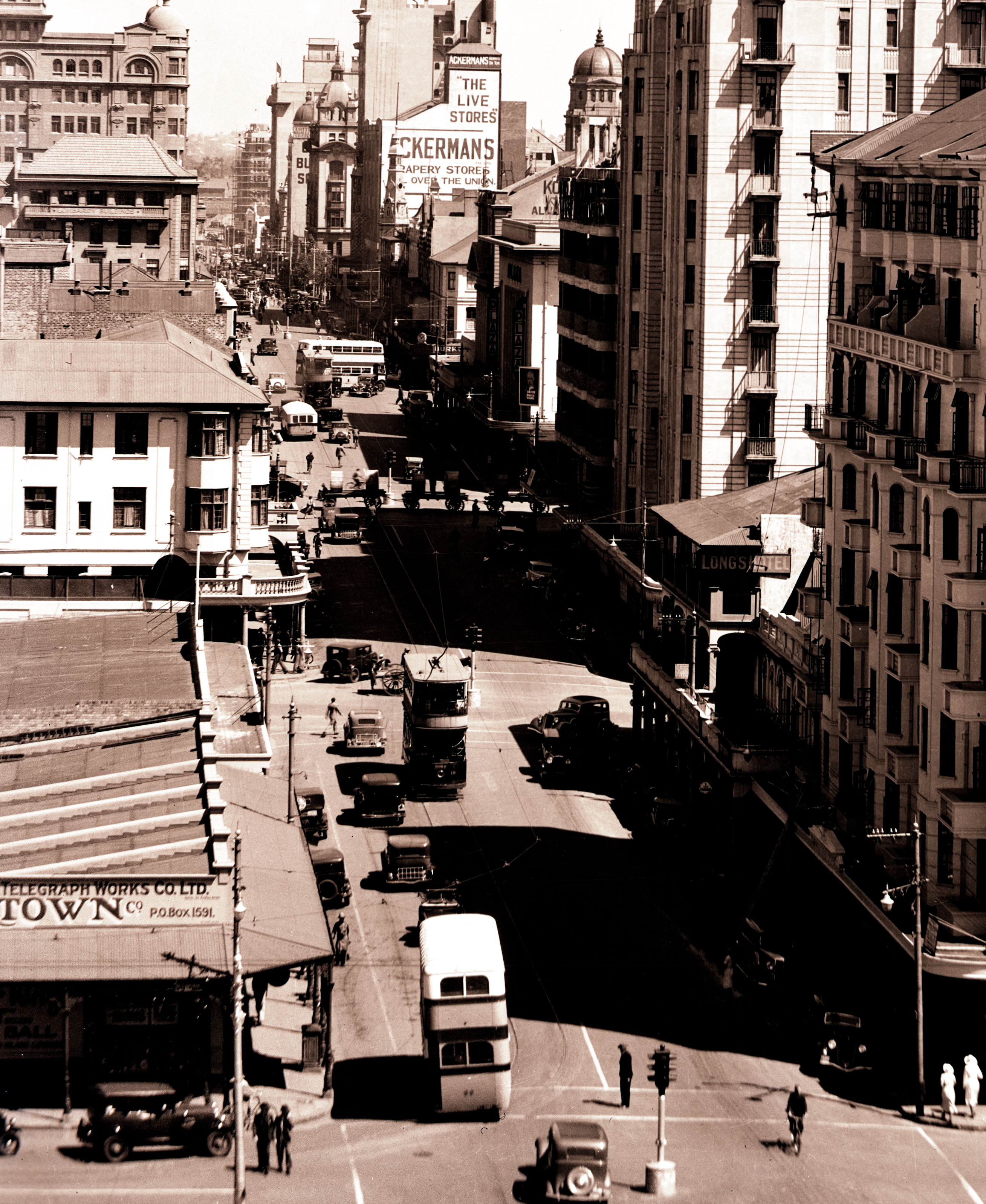
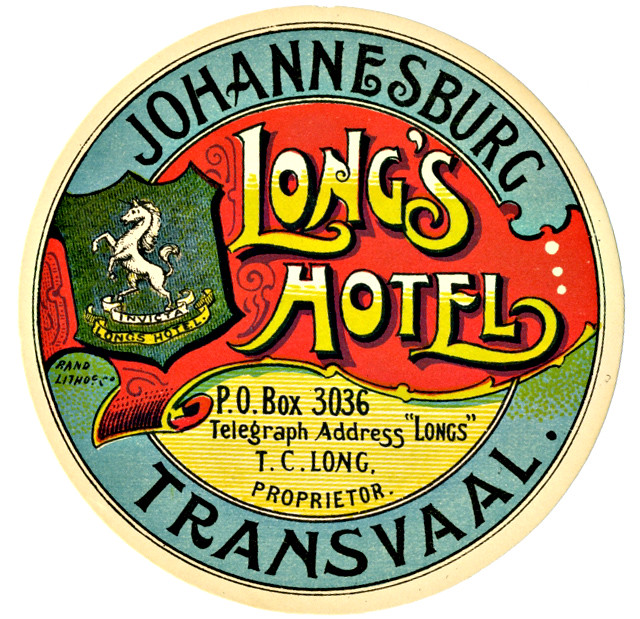
Long’s Hotel – NW cnr Bree and Rissik Streets (Goads)
Doesn’t exist on the 1910 map. Block is listed as having dwellings although the area fell outside of the insurance survey. A new building called Longbank stood on the site in 1973.
North Western Hotel / Hotel Clarendon – 19, 21 Pritchard Street cnr Sauer Street & Fraser (Goads)
Built in 1893/4 it had timber verandas. The construction seems to have been abandoned, but it was eventually completed in 1895. During the drought of 1895, it is said that the hotel provided guests with bottles of soda water to bathe. Twelve bottles were needed for a proper wash.
In 2014 the Southern African Institute of Mining and Metallurgy (SAIMM) celebrated 120 years of existence. The SAIMM was founded in 1894 at a meeting held at the North-Western Hotel, 21 Pritchard Street, Johannesburg as the Chemical and Metallurgical Society of South Africa, following the discovery of gold in Johannesburg in 1886.

Barney Barnato frequented the billiards room.
By 1910, the North Western Hotel took up almost half the block. The name had changed by 1937 to Hotel Clarendon. In 1973 it was listed as ‘customs house’. Bank City now takes up the entire block. The architect John Bryce Ferguson made alterations in 1926. The hotel was used by Rand Club from 1902-1904 while the 3rd club was being erected.
Masonic Hotel – Cnr Pritchard and Von Brandis Streets (NW cnr)
Designed by A.H. Reid in 1891 and later became Salisbury Chambers. This was opened by the same Heath of Heath’s Hotel. The building was demolished in the 1930s for John Orr Stores.


Heath’s Hotel – 78 Pritchard Street (between Eloff and Von Brandis)
This 3-storey hotel with wrought iron verandas was built in 1893/4 and designed by Reid & Williams, and Heath’s second hotel after the Masonic Hotel. During the 2nd Anglo-Boer War, it was considered the leading hotel and was a favourite among the British soldiers stationed in Johannesburg.

In 1910, it was trading as African Hotel according to Goads Map. On the Goads ’37 map, it shows up as Heaths Hotel again but has been reduced to a smaller site facing President Street. The entire half of the block where Heath’s hotel was situated was demolished after 1937, and a late deco building (similar in design to His Majesty’s) for OK Bazaars was erected on the site behind the 1920s OK building that faces Eloff Street. Both OK buildings are still extant.
An article in The Star by Denis Godfrey tells the story of Lord Algernon Gordon Lennox who stayed there in 1893. His valet and a friend stayed in the quarters at the back of the hotel. Both had smallpox and were cited as the source of the outbreak that was only contained in 1895.
“The first known case of smallpox in Johannesburg was confirmed on 26 January 1893, when a recently arrived English immigrant presented symptoms, and was immediately isolated in a well-guarded tent on Hospital Hill (in present-day Hillbrow). It was later claimed, however, that the
outbreak came from Portuguese East Africa via recruited mine labour.” Phillip Harrison: Johannesburg and its epidemics.
In Van Der Waal’s book, he references a photo for Heath’s hotel which shows a 2-storey building. This may be incorrect, but also not impossible.
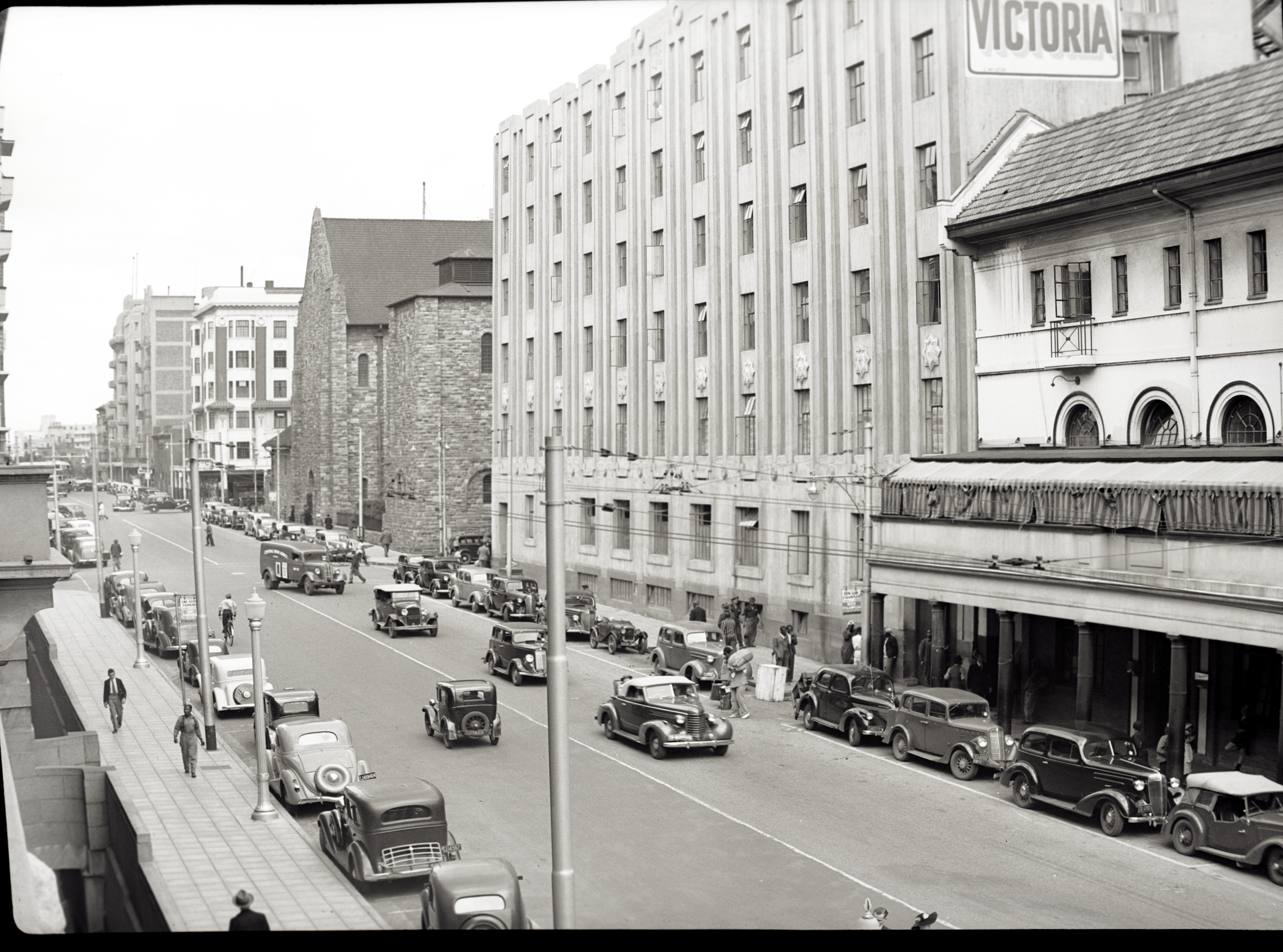
Hotel Victoria – Plein Street
Designed by McCowat and built in 1895/6 (Some sources say 1899 and others 1905/6). It was designed in the Second Empire mode and reminiscent of London hotels from the 1850s and 1860s. The same architect designed Victoria Mansions on the open stand next door shortly after.

The February 1983 edition of ‘Hotelier and Caterer’ stated that the owner was Mr Hart and that the hotel was built in 1899. In the 1920s it passed on to Mr Frank Bawerman, and then fell under the ownership of Castle Breweries, EK Green and Morrison. In 1933 it was bought by Mr Archibald Little who owned a mine in Rhodesia.
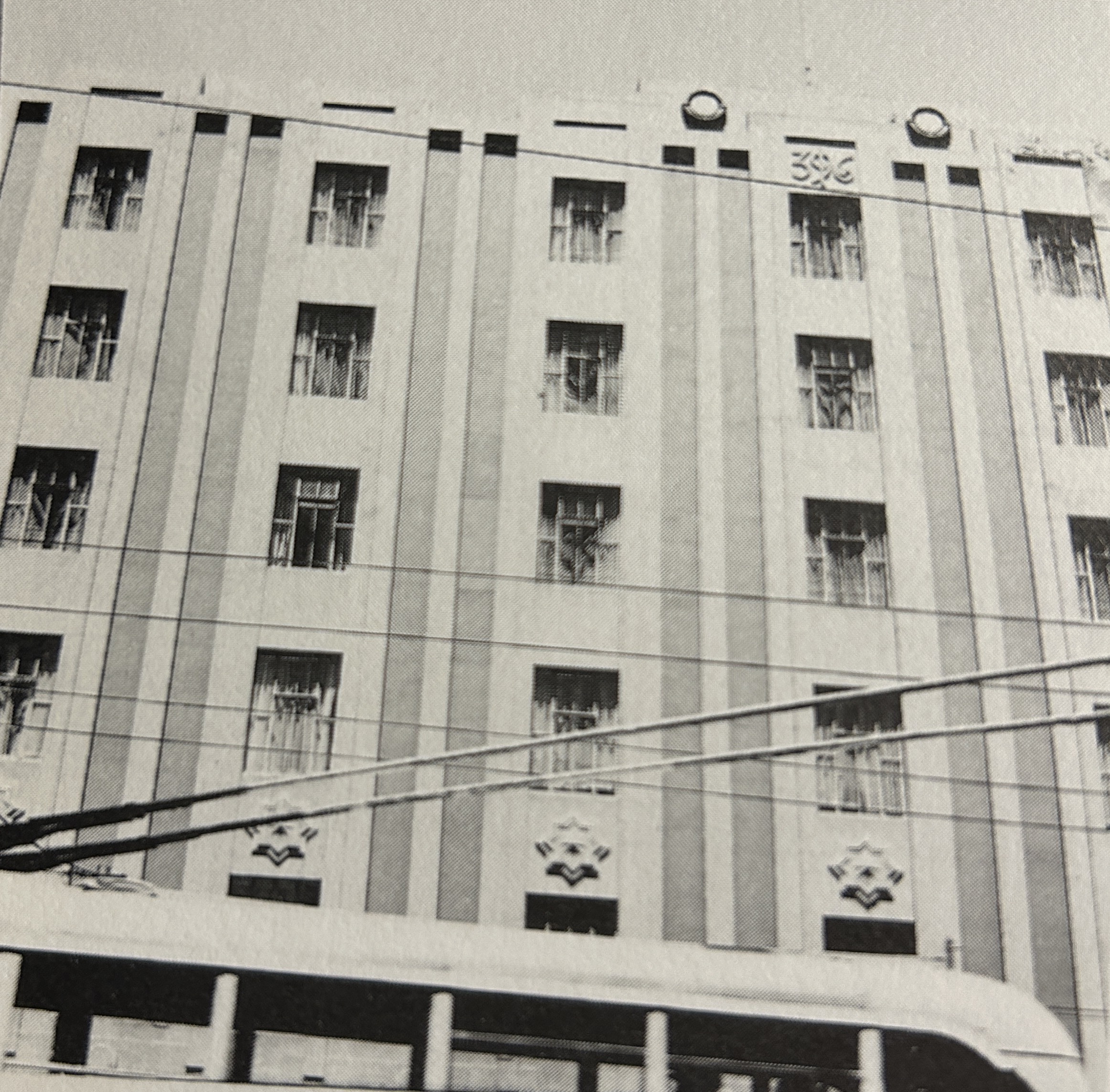
The original hotel was demolished and rebuilt in 1936 to a design by John Ralston. It was in Johannesburg’s Empire Style described by Clive Chipkin as “a large, simple, rectangular plastered construction whose steel windows recurred at a regular Georgian beat, the building depended for its modernness on the external plaster surface modelling.” The new building took up half the block and was completed before the 1936 Empire Exhibition at the old Rand Show. The design was based on the Cumberland Hotel in Marble Arch in London.

A 1962 advert claimed it had 300 rooms / 450 beds, and all double rooms with baths. The JHB guide of 1962 put it at 296 rooms. Porters from the hotel met guests at the train station and conveyed their luggage to the hotel free of charge. If guests arrived by car, they could drive directly into the underground garage. All rooms were equipped with a telephone and a radio. TV had not yet made it to South Africa (this would only happen in 1976)
In 1968 extensive alterations were done. At that time, it was then taken over by Southern Sun Hotels (a company formed by merging SAB with 55% shareholding, and a hotel chain run by Sol Kerzner) and then the Picardi Group in 1980, where it was still considered a luxurious hotel.
The hotel was popular with business travellers and sports teams.
The Bellingham Suite was the most expensive room. It consisted of 2 bedrooms, 3 bathrooms, a lounge/dining area and a cocktail bar. In the 1980s, the main restaurant was the buffet-style Victoria Range. There was an award-winning English pub called The Queen’s Arms, and an ‘action bar’ known as Bonanza where bands performed.
The site is now home to the Universal Church of God and it looks as though the 1936 building has been replaced.
Pioneer Hotel / Great Eastern Hotel – 8,10 Plein & Loveday Street (SW corner)
Built in 1896 and once a leading hotel in the city. The 3-storey building featured cast-iron railings and verandas like those from Mcfarlane’s catalogue. In later years the building became a slum and was demolished in 1971. Only listed on Goads ’37 map, the stand is blank in 1910 (fell outside part of the survey area) and on the Curries ’73 map. The licensing department and Joburg regional head office building stands on this site today which was originally part of the 12 stands set aside for Johannesburg’s first cemetery (the bodies were exhumed and moved to Braamfontein cemetery in 1888). It may have started out as the Great Eastern Hotel which had the same address.

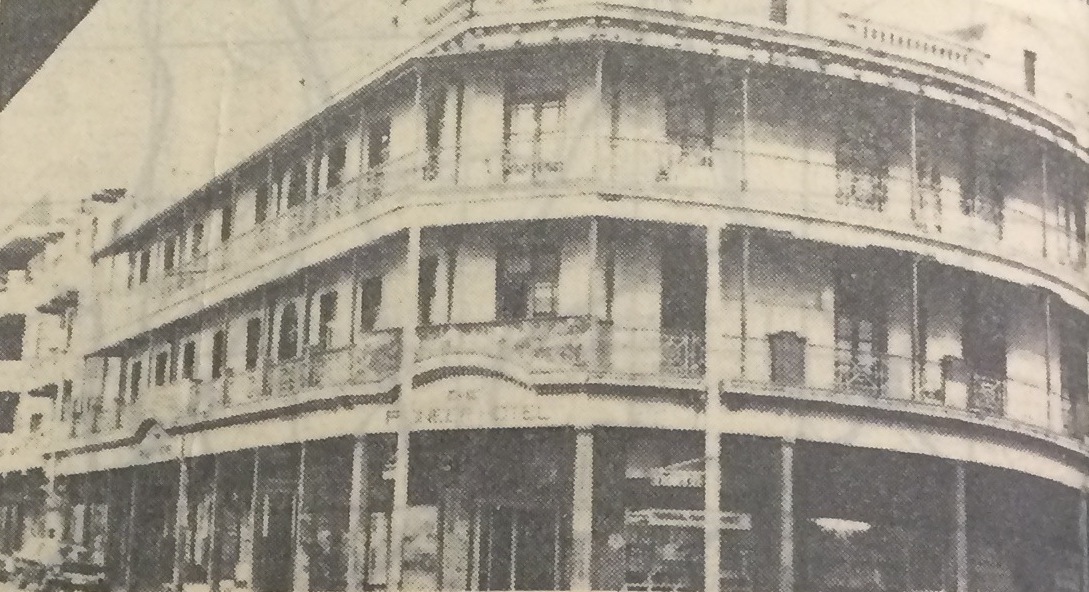
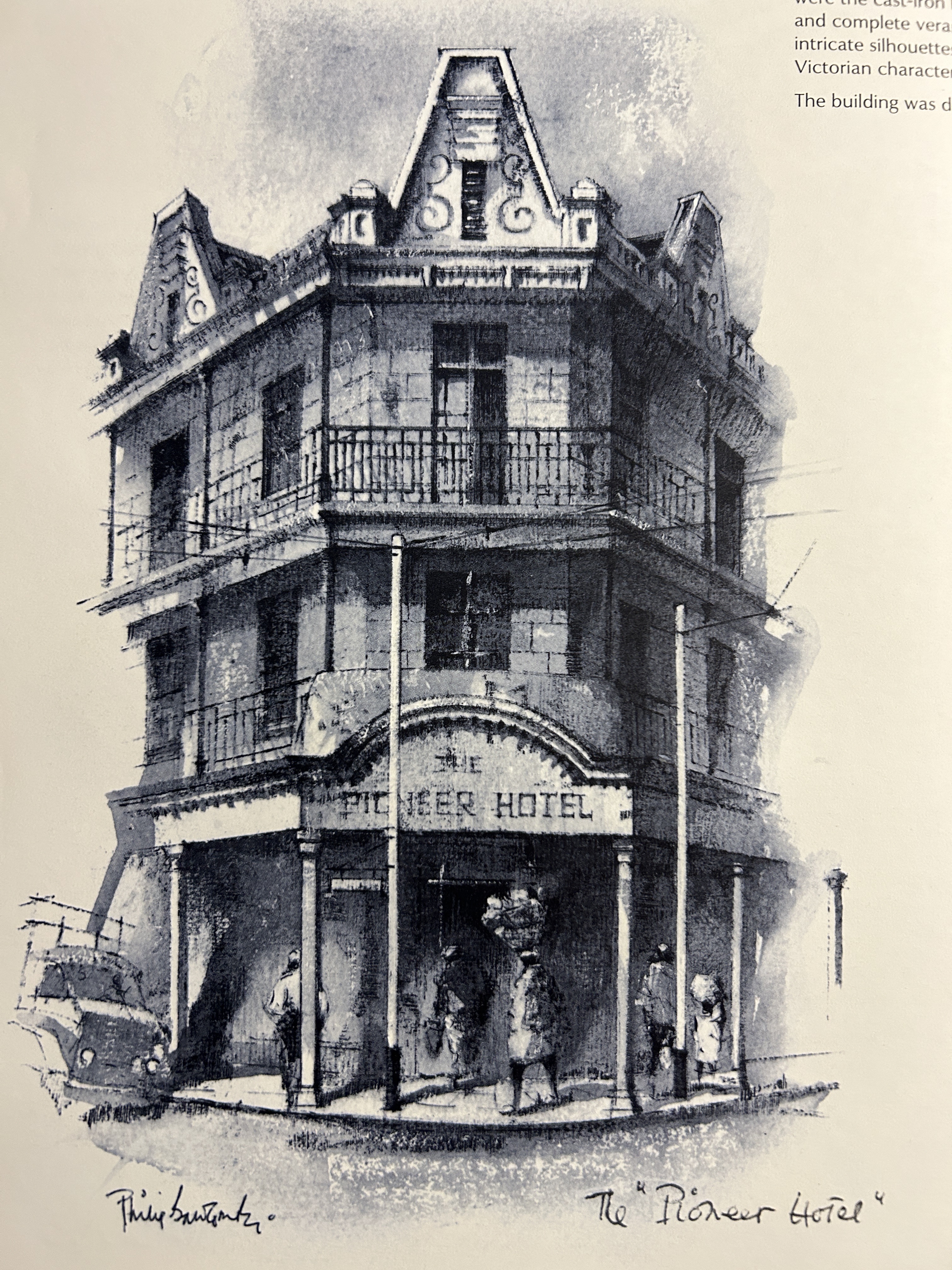
Odeon Hotel / Empress Victoria Hotel – Ferreirastown Marshall Street
Alteration plans exist for the Odeon Hotel dating back to 1895. It later became Empress Victoria Hotel, and then Empress Victoria Buildings and boarding house. The property became a slum along with much of Ferrerastown at the time and was demolished in the 1930s.

Post 1900s (after the 2nd Anglo Boer War)
From 1902 onwards, there was an increased need for hotels to cater for visitors. They tended to be situated on the edge of the town’s commercial centre (mining and finance buildings and the market square). This trend would continue into the 1920s and 1930s and hotels would be pushed further out as central Johannesburg became home to more commercial buildings.
Old Langham / Luthje’s Langham Hotel
According to Thelma Gutsche in ‘Do you know Johannesburg?’, the first Langham Hotel was known as the ‘Old Langham’ and was in Kerk Street a few blocks away from the more well-known site on the corner of Kerk and Von Weilligh Streets (where the Sanlam Centre building now stands). Evidence indicates ‘Old Langham’ was between Polly and Mooi Streets. (And was still known as the ‘Old Langham Hotel’ in the late 1930s). This area was predominantly residential after the 2nd Boer War, with old houses and the occasional boarding establishment.

The ‘Old Langham’ was started by William Luthje and his wife Virginia in 1896. William had previously worked at the Langham in London, hence the name. Old Langham was a meeting place for mining magnates where the story goes, that Mrs. Luthje darned their socks while they visited! Lord & Lady Methuen were once all once guests.
In 1905 it moved to a new W. H. Stucke-designed building near the corner of Von Weilligh and Kerk Streets (112/4 Kerk Str), replacing four old semi-detached cottages. The smooth facade plane was interrupted by recessed balconies and the building was covered by a hipped roof that featured three Neo-Cape Dutch gables and tall chimneys.

One of the first guests at the new Luthje’s Langham Hotel was Lily Langtry, who sang from the balcony to a crowd below. In 1906 she performed successfully in South Africa, acting in The Degenerates, As You Like It, The Walls of Jericho and The Second Mrs. Tanqueray (performances of the first two plays were in Cape Town, but I’ve not found any evidence that she performed in Johannesburg). She was friends with Oscar Wilde and infamously had a romantic affair with His Royal Highness, Edward, Prince of Wales, later King Edward VII.
It was frequented by many actors and singers in those early days. Leonard Rayne and Freda Godfrey stayed there when they visited the city. Lord and Lady Buxton were regular diners.
“The Langham was expensive, discreet, smaller and less flashy than the Carlton which opened not long afterwards…(the Langham) was a noted rendezvous for new-rich mining magnates and the upper strata of the town’s good-time girls.”
In 1936, the hotel had a modern six-storey section added on the corner of Von Welligh and it’s this version that old Johannesburgers remember. Photographic evidence shows that part of the original gabled building remained after the extension.

It acquired some respectability later when India’s first agent General lived there as well as successive Chinese Consuls. During WW2, Prince Paul and Princess Olga of Yugoslavia, and the Shah of Persia stayed there. In 1947, Hollywood heart-throb Tyrone Power “attracted a whole siege of squealing fans.”
The hotel was sold in 1929 for GBP 52 250 to Simon Goldberg who ran it until 1946 and then sold it to financiers Mr Joseph Milne and Mt Norbert Erleigh. Another source claims that in 1936, it was bought by Amalgamated African Hotels, and they built the new modern wing. This version seems likely. It’s also backed up by another version that claims Luthje died in 1921 and his wife ran the hotel for another 15 years before selling it to AMA who built the new wing. Amalgamated African Hotels (later Langham-Edward Group) is noted as being the first hotel chain in Johannesburg.
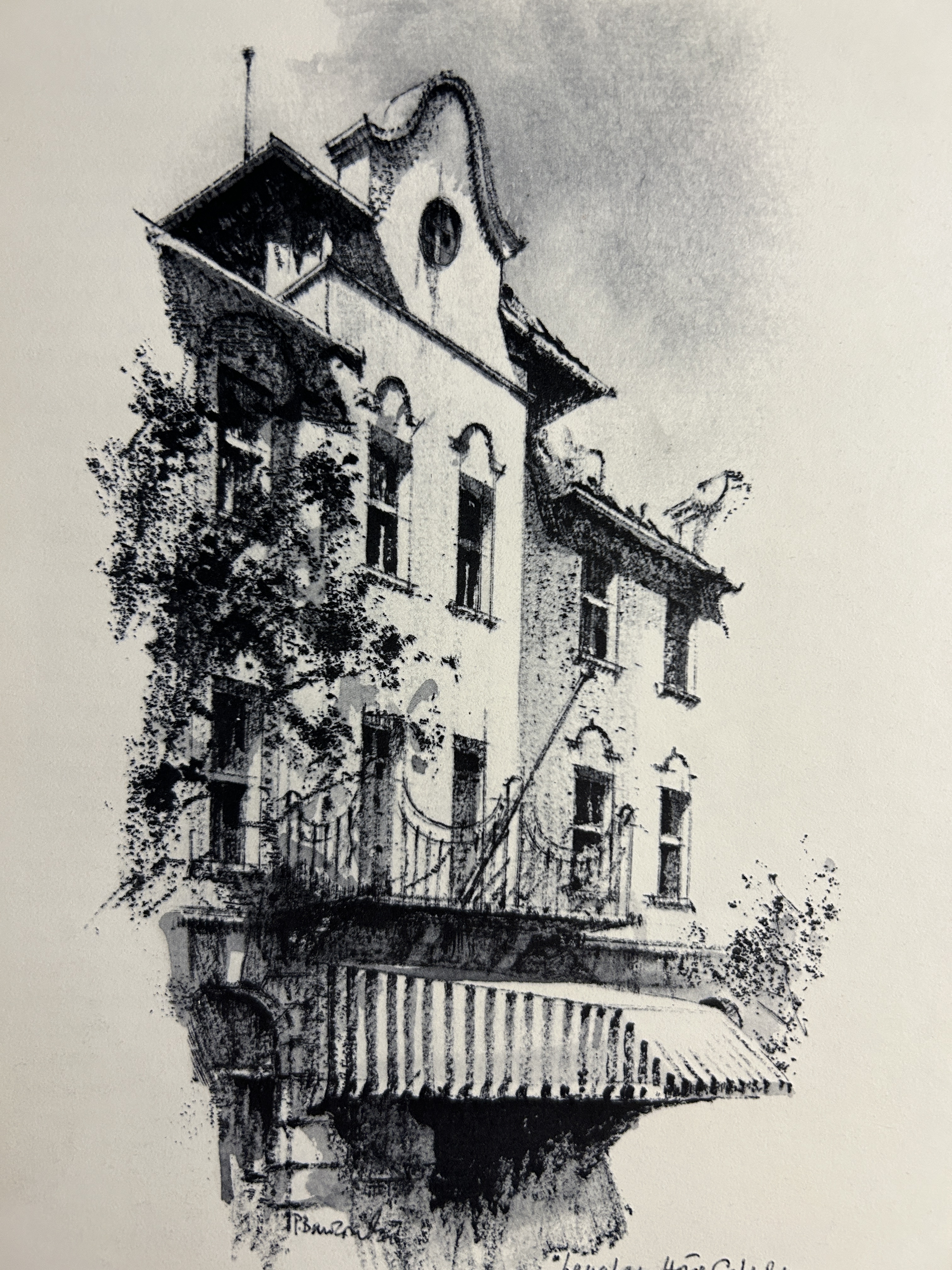
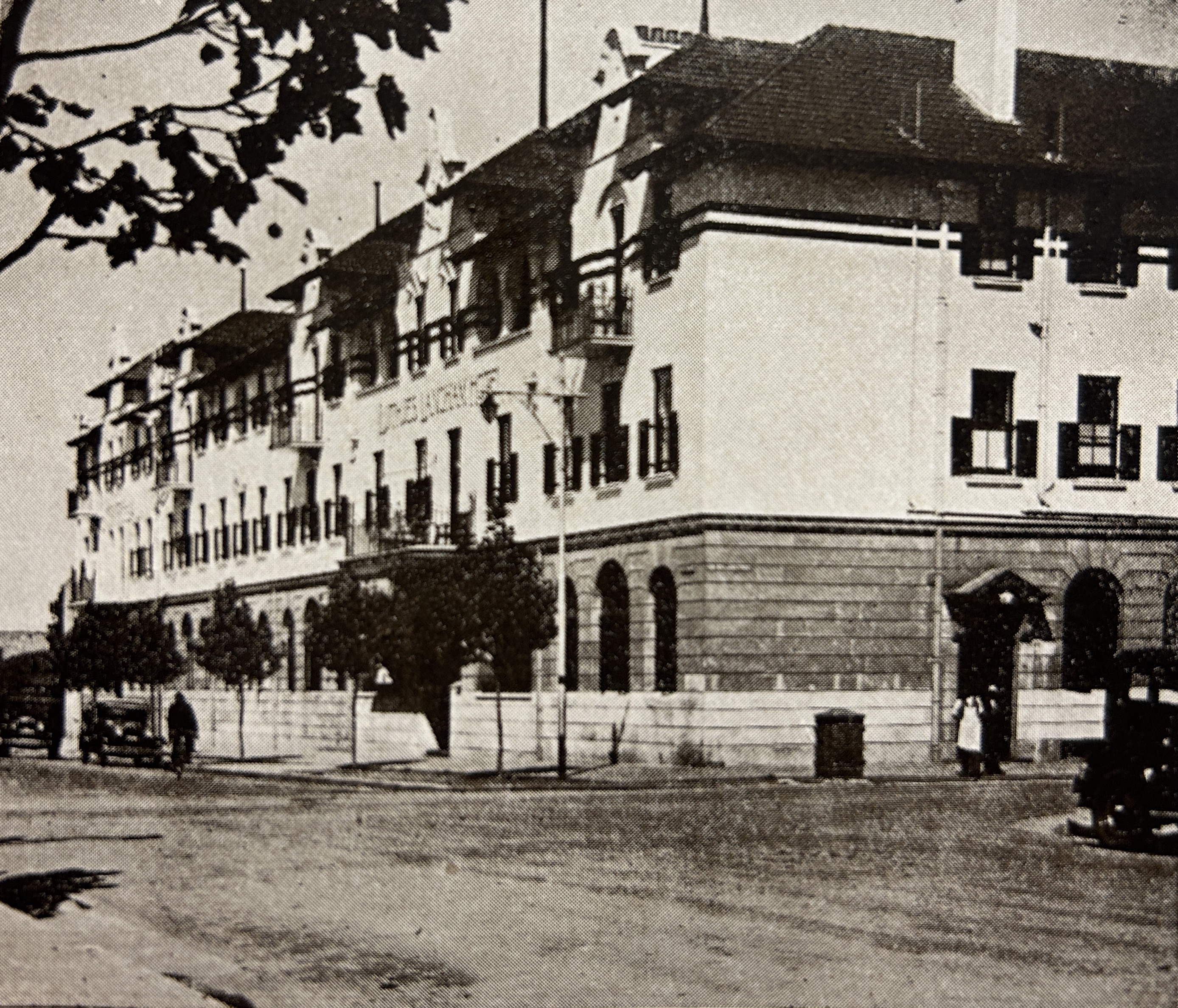
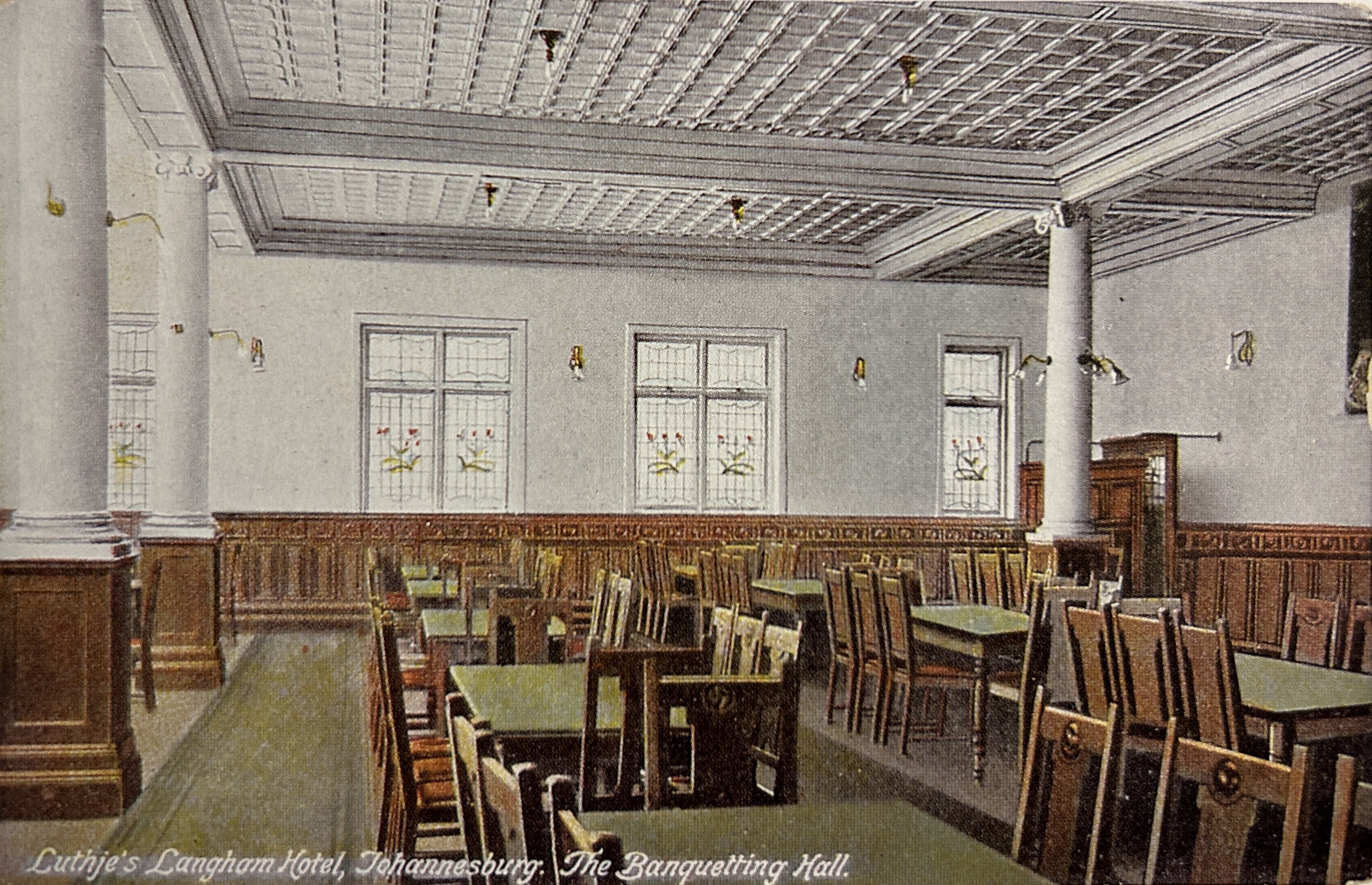
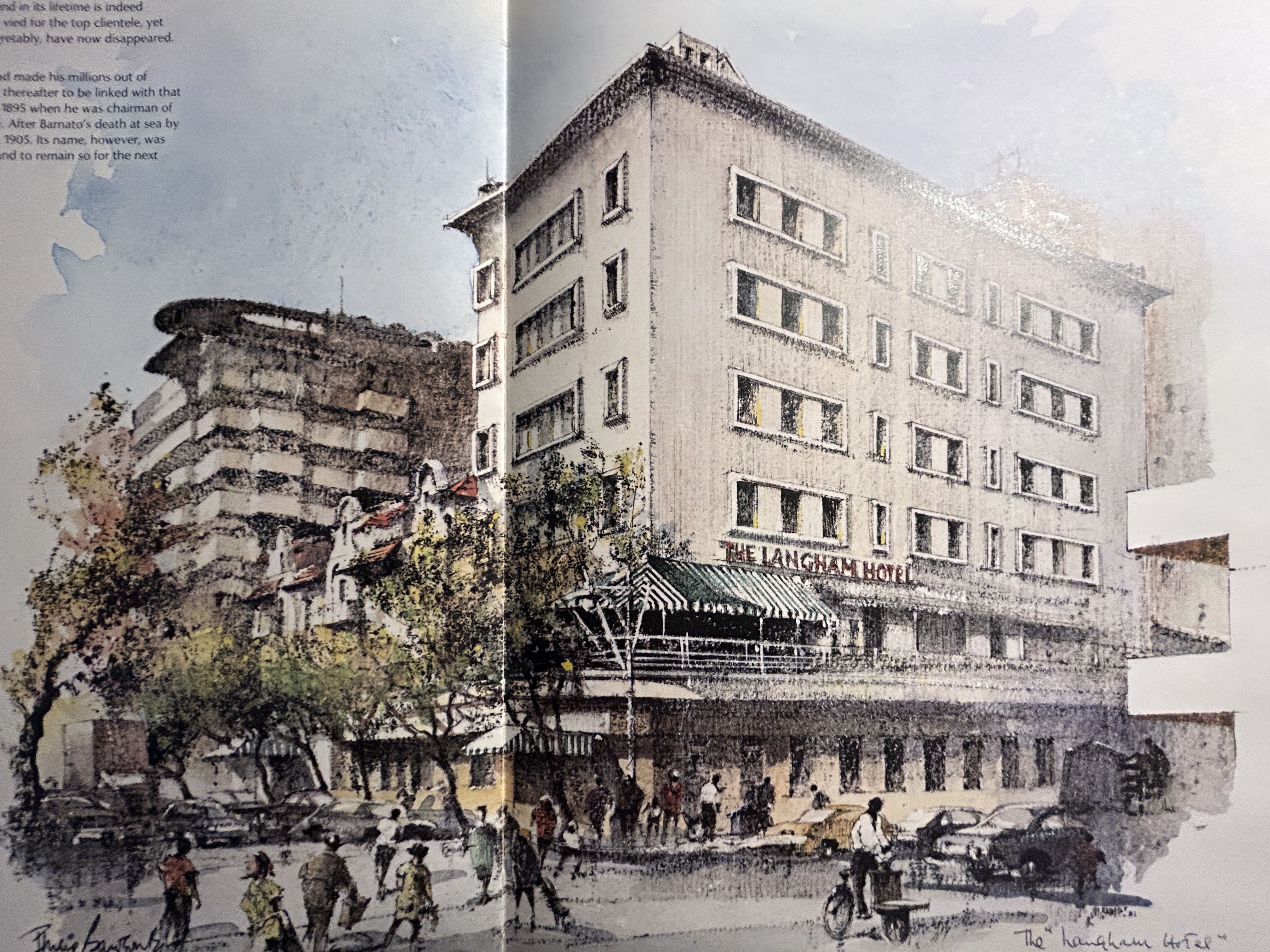
The hotel went through various management changes thereafter as well as stiff competition from the new Tollman Towers across the road.
In 1967, it was still part of the Langham-Edward Group which also owned the Dawson Hotel, as well as the Edward Hotel in Durban, and Deal’s Hotel in East London.
It was described as a three-star establishment to the end, but ultimately, it was too old-fashioned to keep up with the pace and progress of the city. In 1971 it was put under judicial management and later torn down along with several other buildings (including two other hotels: The Imperial and Paul Kruger) to make way for the massive Sanlam Centre development.
One of the last to leave the Langham when it finally closed was the daughter of the original owners, Miss Ella Luthje, who was born there and served for most of its 67-year existence.
In 1962 it was listed as having 150 rooms with 145 of them with their own bathrooms. In the absence of the Carlton Hotel, it was one of the city’s most expensive and exclusive at the time.
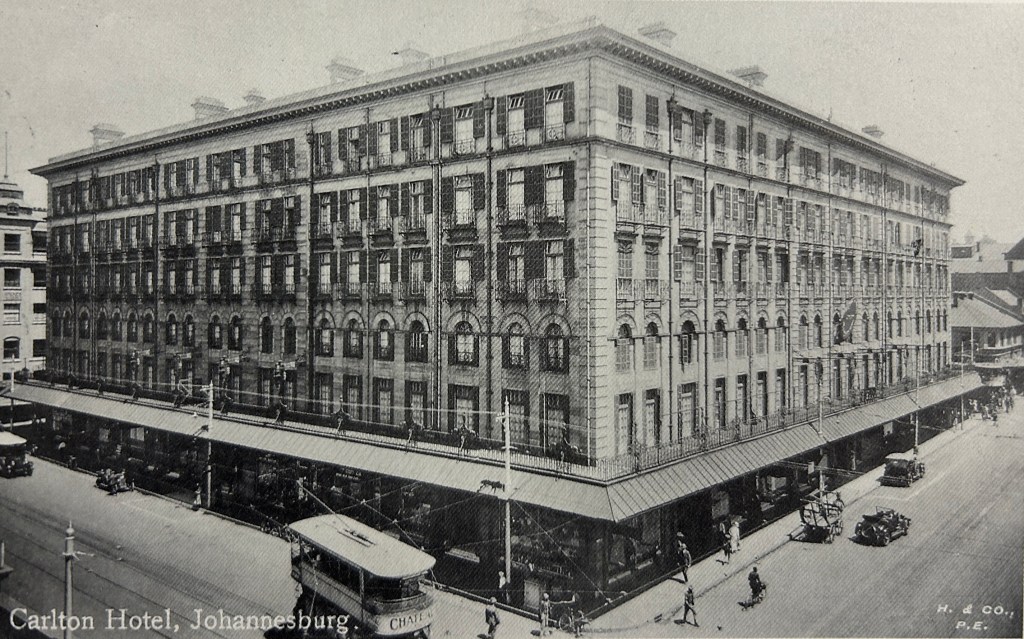
Carlton Hotel – Eloff Street between Market and Commissioner Streets.
Plans for a Carlton Hotel in Johannesburg were discussed by Barney Barnato and JCI as early as 1896. Six stands between Eloff and Commissioner Streets were purchased at a cost of GBP40 000 and it was envisaged that the hotel and theatre would cost another GBP100 000. There were several designs and even an advert placed for cartage companies presumably to move earth from the foundation excavations. On June 14 1897, while on a boat to England, Barney Barnato jumped overboard to his death. JCI chairmanship passed to Barney’s nephew, Solomon Barnato Joel (Solly Joel). He continued with the plans, but all was put on hold at the outbreak of the war on 11 October 1899.
The Carlton Company was formed on 22 August 1902. After the war, there was an economic slump and a shortage of labour. During this time, the design of the hotel was updated to bring it in line with modern tastes.

The hotel was designed by T.H. Smith and W. Leck using the London Carlton Hotel as inspiration. It opened on 16th of February 1906. The building’s 6-storey steel frame structure was erected by Swedish millionaire and match king Ivan Kreuger. The new erection cost ended up being GBP750 000. 600,000 tons of marble, iron and woodwork were imported for the hotel’s construction. At the time, there was a renewed spirit of optimism in Johannesburg as thousands of Chinese workers were imported to work in the mines while several steel-framed buildings of the ‘American skyscraper style’ were also going up in the town: Corner House, Stuttafords, Cuthberts, and JCI head office. The Carlton was massive compared the these and was the largest in South Africa at the time (though not the tallest which went to Corner House until the 1920s)
The first manager was Mr Morelli. At the time, it was the most expensive building in South Africa before the construction of the Union Buildings in 1911/12.
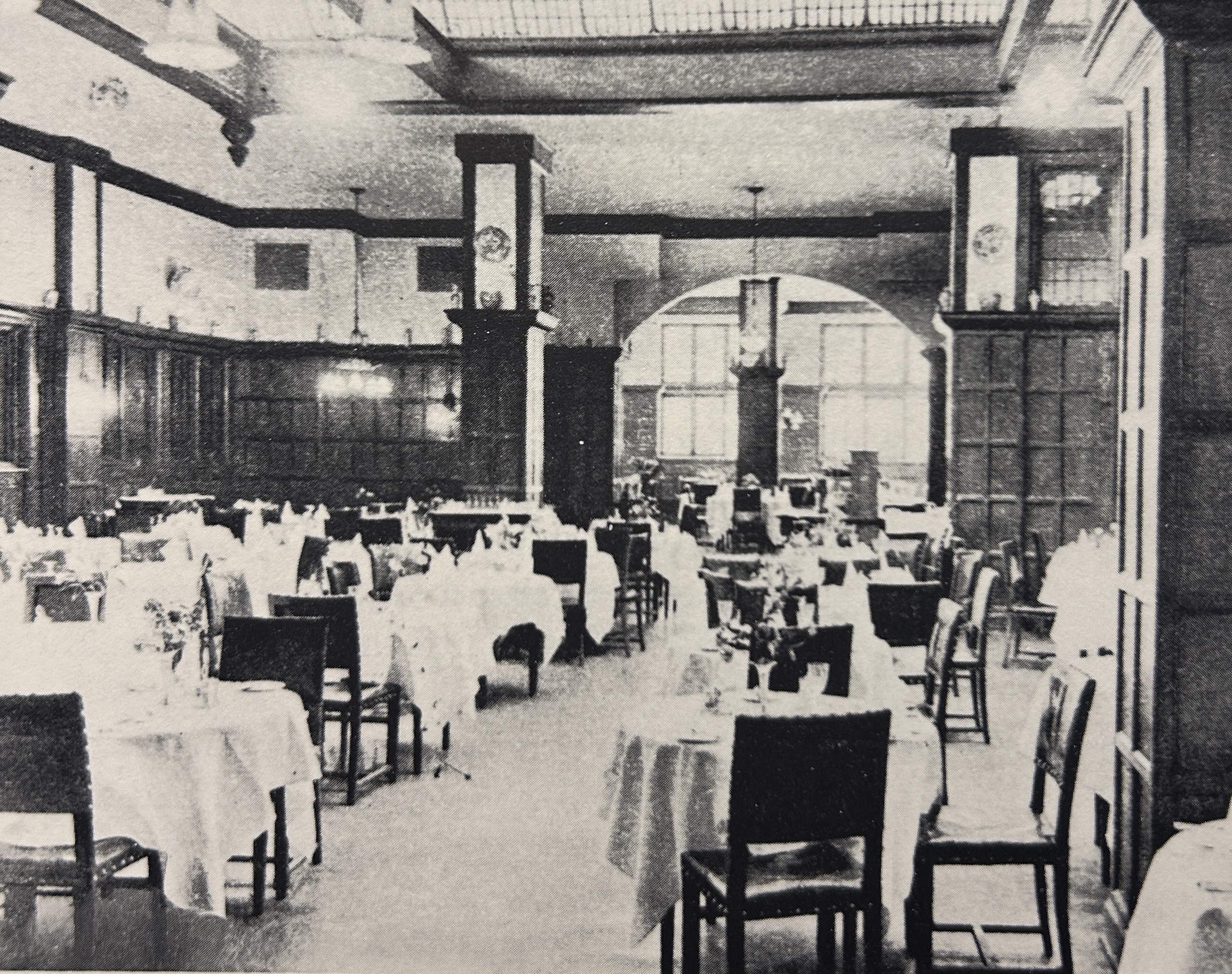
It comprised of more than 300 rooms, a marble ‘grand staircase’, a ballroom, dining rooms and the double-volume Palm Court, which was ‘the place’ for the fashionable ladies and socialites for afternoon tea.
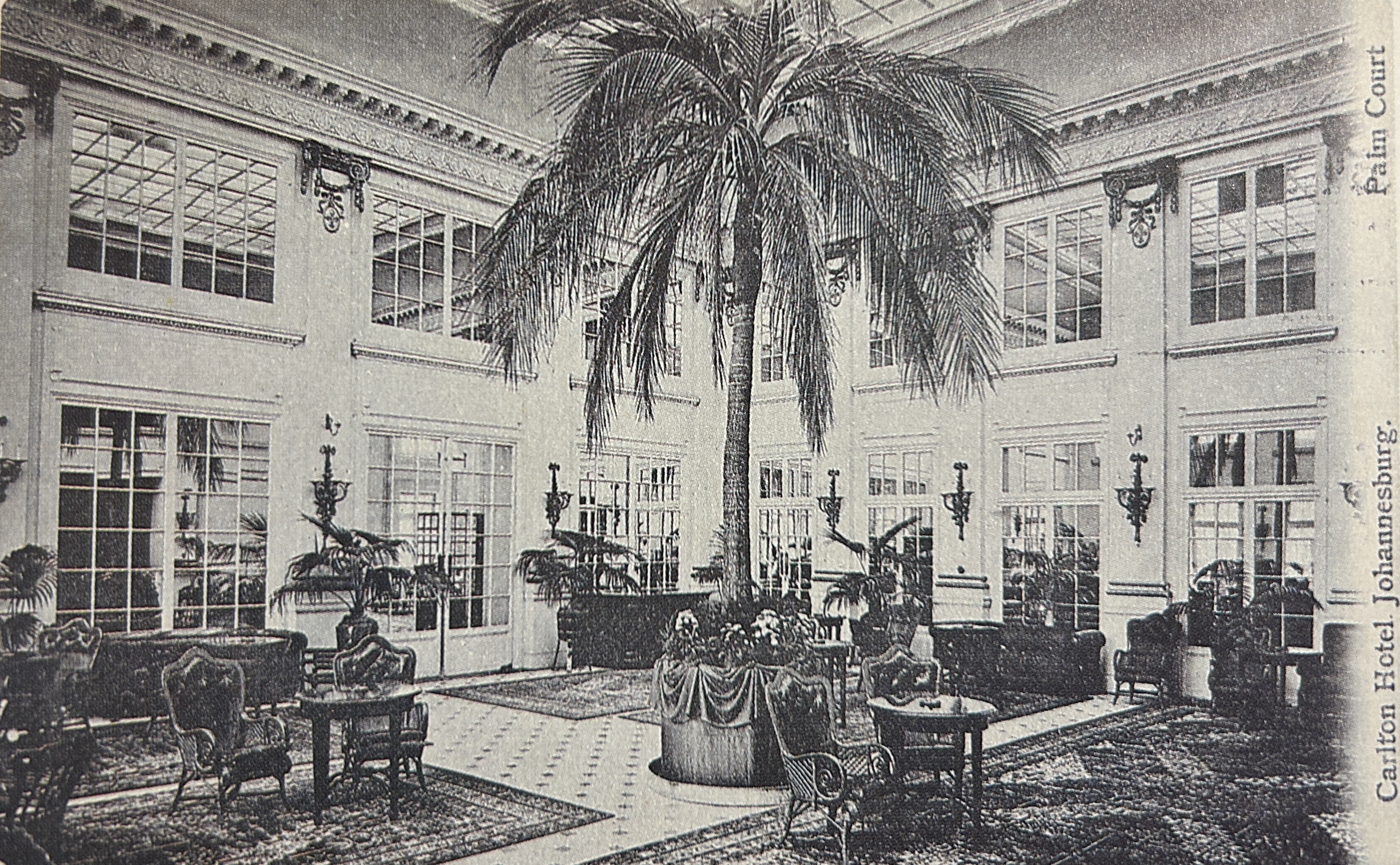
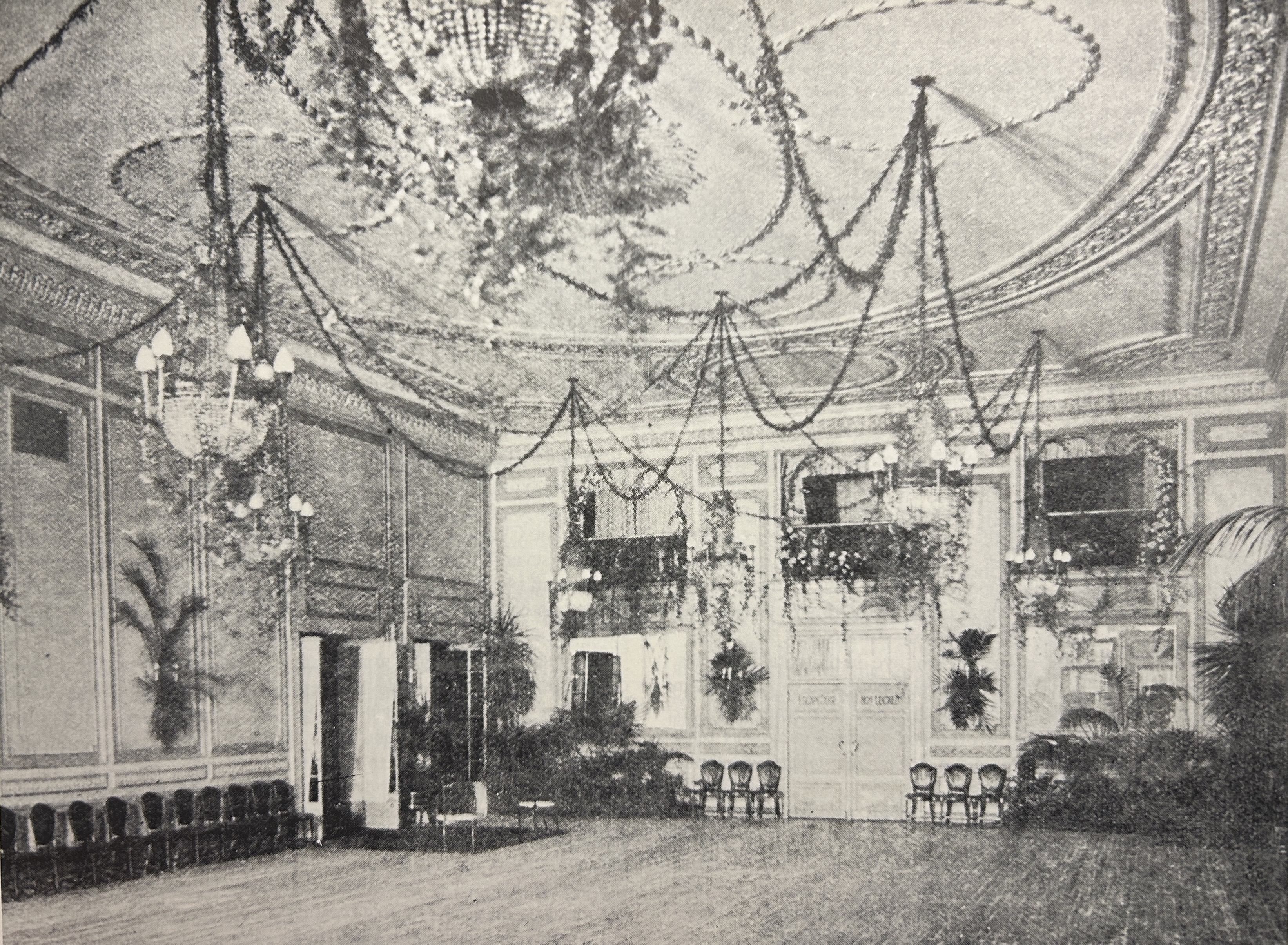
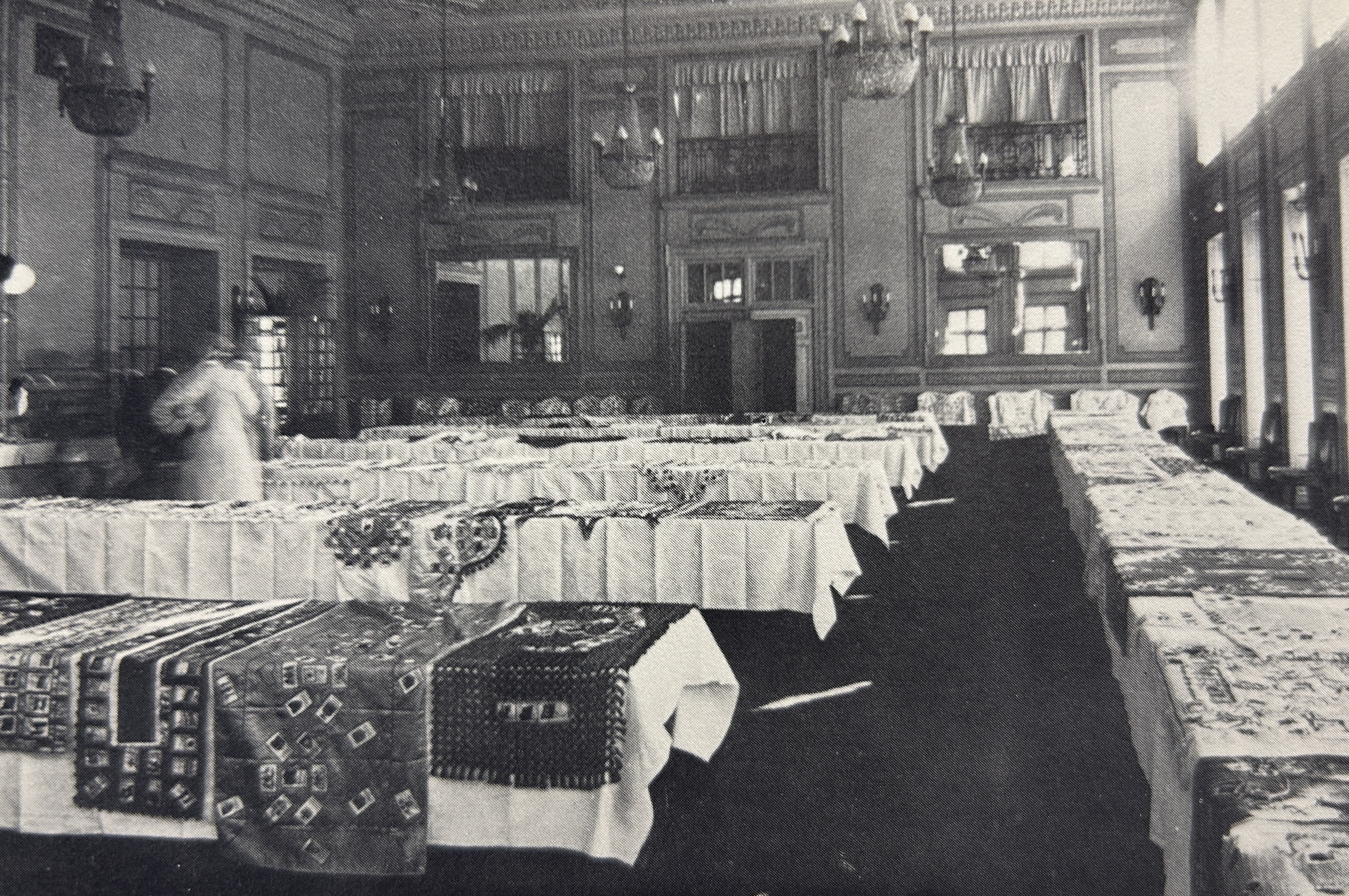
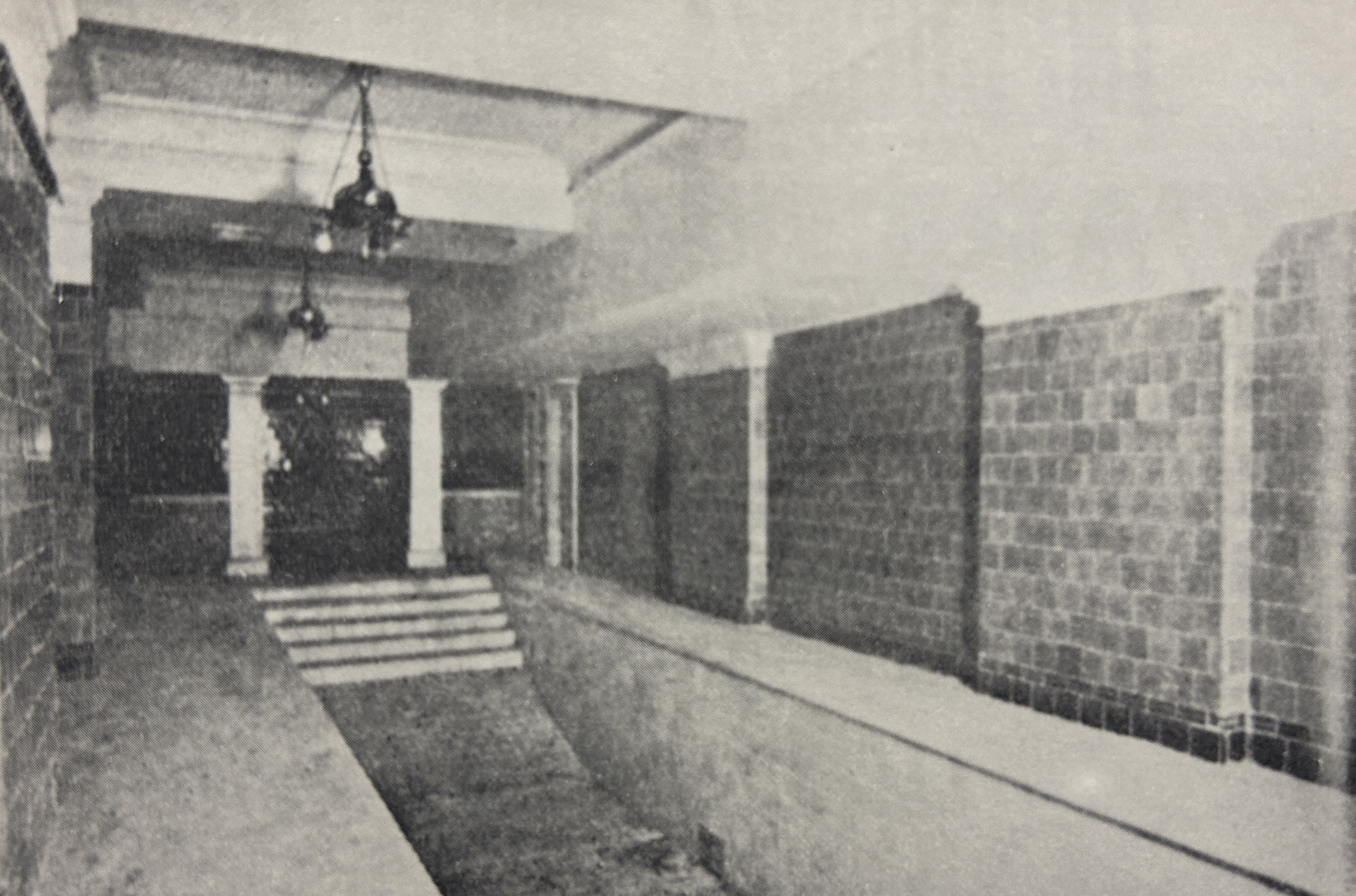
The hotel also had its own water-borne sewerage, a bakery, butchery, Turkish bath, electricity plant, lifts, steam heating system, and a borehole. Two other unique features were air conditioning (the ‘Plenum’ System installed by S. R. Crittall & Co.) and a recently patented central vacuum cleaning plant.
The furniture and decor were supplied by Lord Waring’s firm Messrs. Waring & Gillow of Oxford Street.
The hotel’s opening was two days after the introduction of electric trams to Johannesburg, with an important junction being the corner of Market and Eloff Streets, thus being easily accessible from anywhere in the town. Hotel porters would meet and drop off out-of-town guests at the station, first in a horse-drawn carriage, and later in a petrol-driven charabanc adorned with [the hotel’s] cost of arms.’
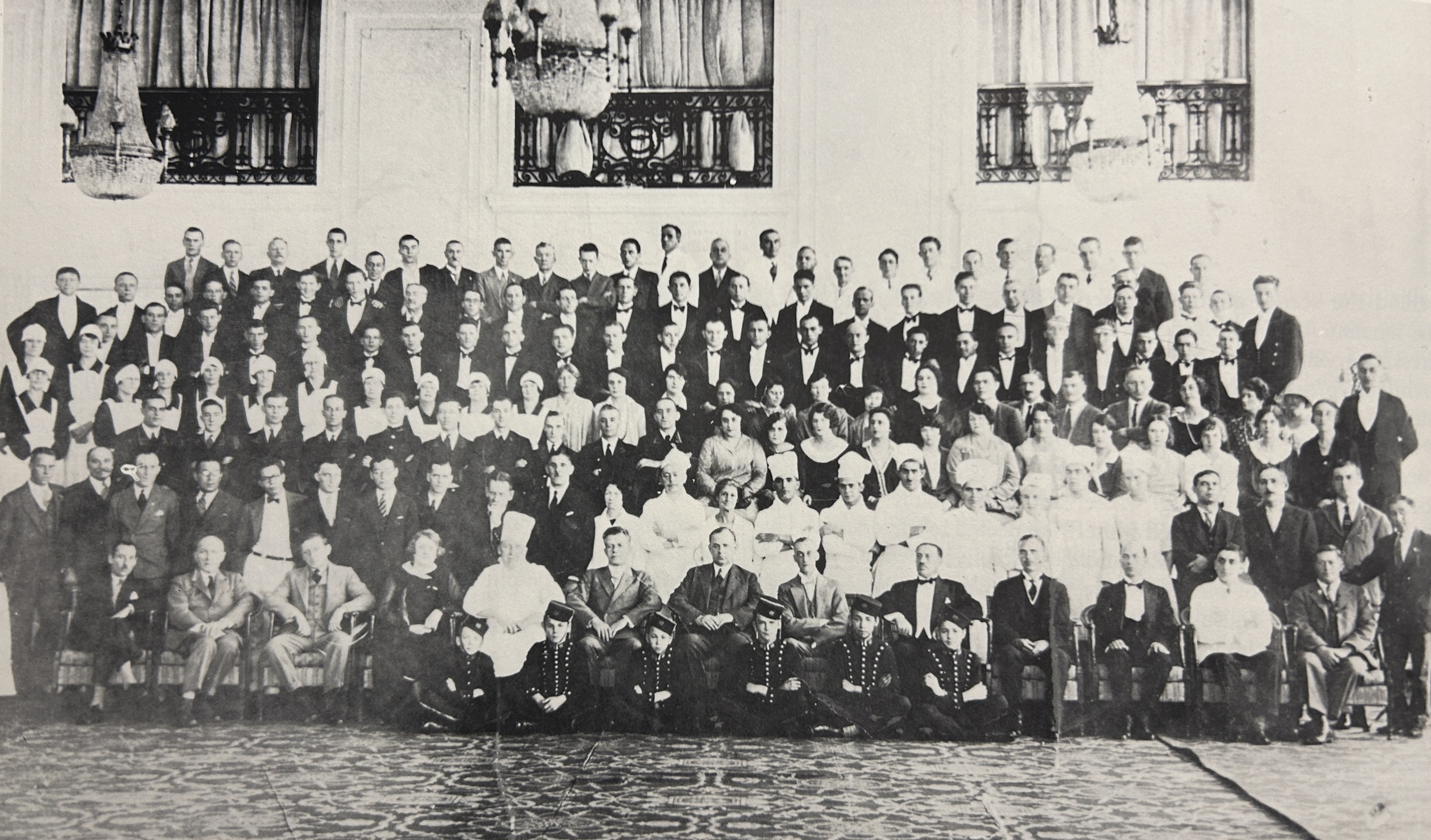
The Carlton’s second manager, Ettelin, introduced the Carlton Orchestra which would play in the Palm Court during meals. Other orchestras and military bands all played special functions and ‘cabaret suppers’ in the various ballrooms. Christmas Eve and Old Year’s Eve were major attractions, where those who could afford it were able to share in the festivities and dance until the small hours of the morning. The chorus girls emerging from giant eggs with feathers in their hair were the highlight of the Old/New Year’s party. A proper dance floor was installed for the Friday and Saturday dances. These were very popular in the 1920s with the birth of the Jazz Age. The Carlton Ballroom could be said to be the first ‘mega-nightclub’ in Johannesburg, setting the trend for future dinner & dance establishments.
The street level housed retail stores selling fashionable items of the times like ostrich plumes and jewellery. In 1910, a number of smaller shops on the Market Street side were demolished to make way for the Carlton Bioscope, which lasted until the mid-1930s.
In March 1922 the hotel was sold for GBP235 000 to Mr. Samuel Thompson on behalf of a syndicate, the principals of which were virtually the same as the previous owners (Solly Joel and his partners). As the company had to pay taxes in both SA and England, one had to be wound up. England was wound up, and the property was purchased in the name of a new company Carlton Hotel (South Africa) Limited.
I. W. Schlesinger, who was a permanent resident of the hotel since 1908, bought a 51% share of the hotel in 1925, (for GBP 230 000). He embarked on a period of modernising several outdated aspects of the hotel (power plant, entrances, kitchens), optimising staff costs, service levels, and pricing. In 1936, in anticipation of the Empire Exhibition, three more floors were added (with the Carlton Cinema closing down). This took the hotel to nine storeys.

In the one frontage photo, there is signage at street level for a shop called PUBLIX. This was an American ‘drug store’ concept brought over by Schlesinger. It wasn’t unsimilar to the Clicks or Dischem concept today, but back in the 1940s, it didn’t catch on.

Functions linked to the Empire Exhibition took place at the Carlton which were attended by the Earl and Countess of Clarendon, Prime Minister Hertzog and General Smuts. A permanent resident at this time was Dr Hans Merensky, the geologist who discovered the platinum fields in the Transvaal.
It was the most upmarket hotel in Johannesburg and catered for many dignitaries including the Duke of Windsor in 1925, and the Royal party in 1947 that consisted of King George VI, Queen Elizabeth, and their two daughters, the late Queen Elizabeth II and Princess Margaret. They occupied the whole 5th floor which was refurbished for the visit.
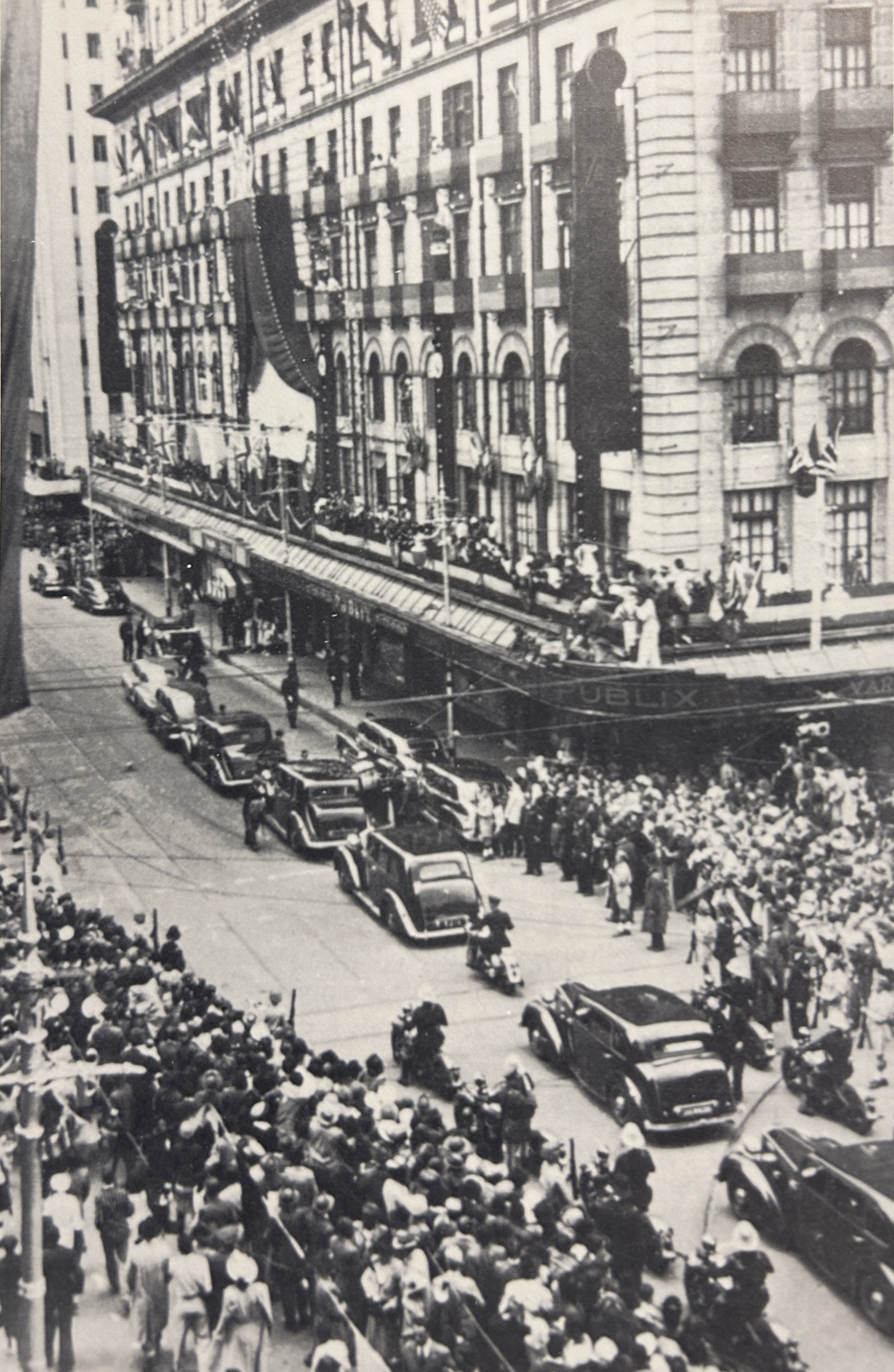
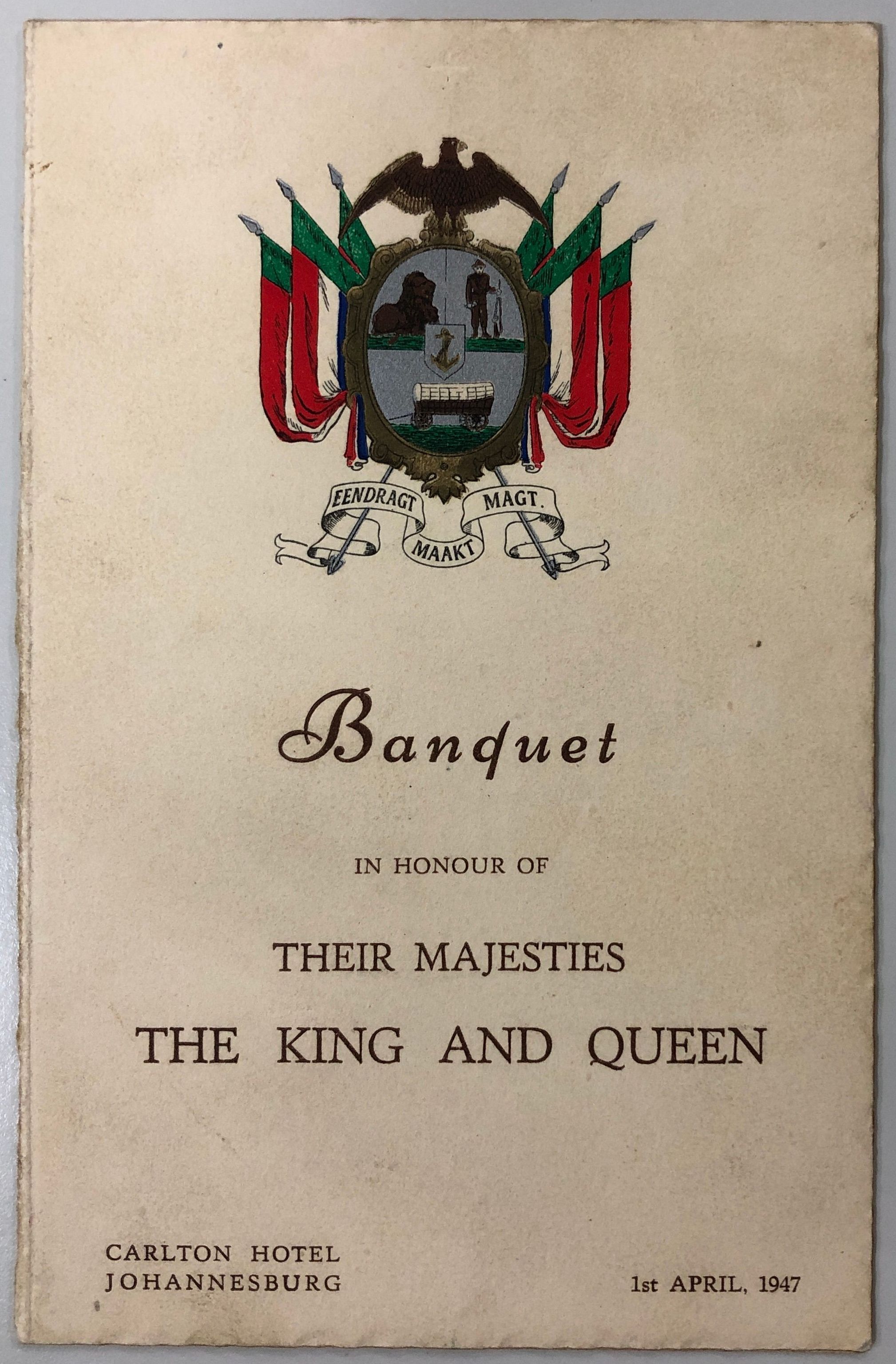
Other guests around this time were Prince Bernhard of the Netherlands, President Tomaz of Portugal, Ivor Novello, Danny Kaye, Joan Crawford, Margot Fonteyn, Sir Thomas Beecham, Yehudi Menuhin, Jascha Heifetz, and Norman Rockefeller.
I. W. Schlesinger died in 1950, and his son John took over the empire. The Carlton continued to the early 1960s, but profitability fell, while real estate in central Johannesburg rose steeply. It was announced that the hotel would be demolished and a 20-storey skyscraper named Africa Life Centre would go up in its place.
It was decided that December 1963 was to be the closing month. The final ‘kick’ was a Spring Ball thrown in aid of Hope Home for Crippled Children by Dorothy Susskind. On the 27th of December 1963, a newspaper advert announced the auction of the hotel’s contents. It took place between the 6th and 18th of January 1964 and was handled by Boysie Levin’s Auctions. Hundreds of people attended with many purchasing some small relic to remember the hotel by. Some, like City Councillor Jimmy Hall, purchased bar counters, lamps, verandah fittings, cutlery and crockery. After the hotel was emptied out, the demolishers got to work. It would take them until November 1964 to complete the work because the building was so solid.

In alphabetical order, these are from a combination of Goads Insurance map (1895-1910) and other sources:
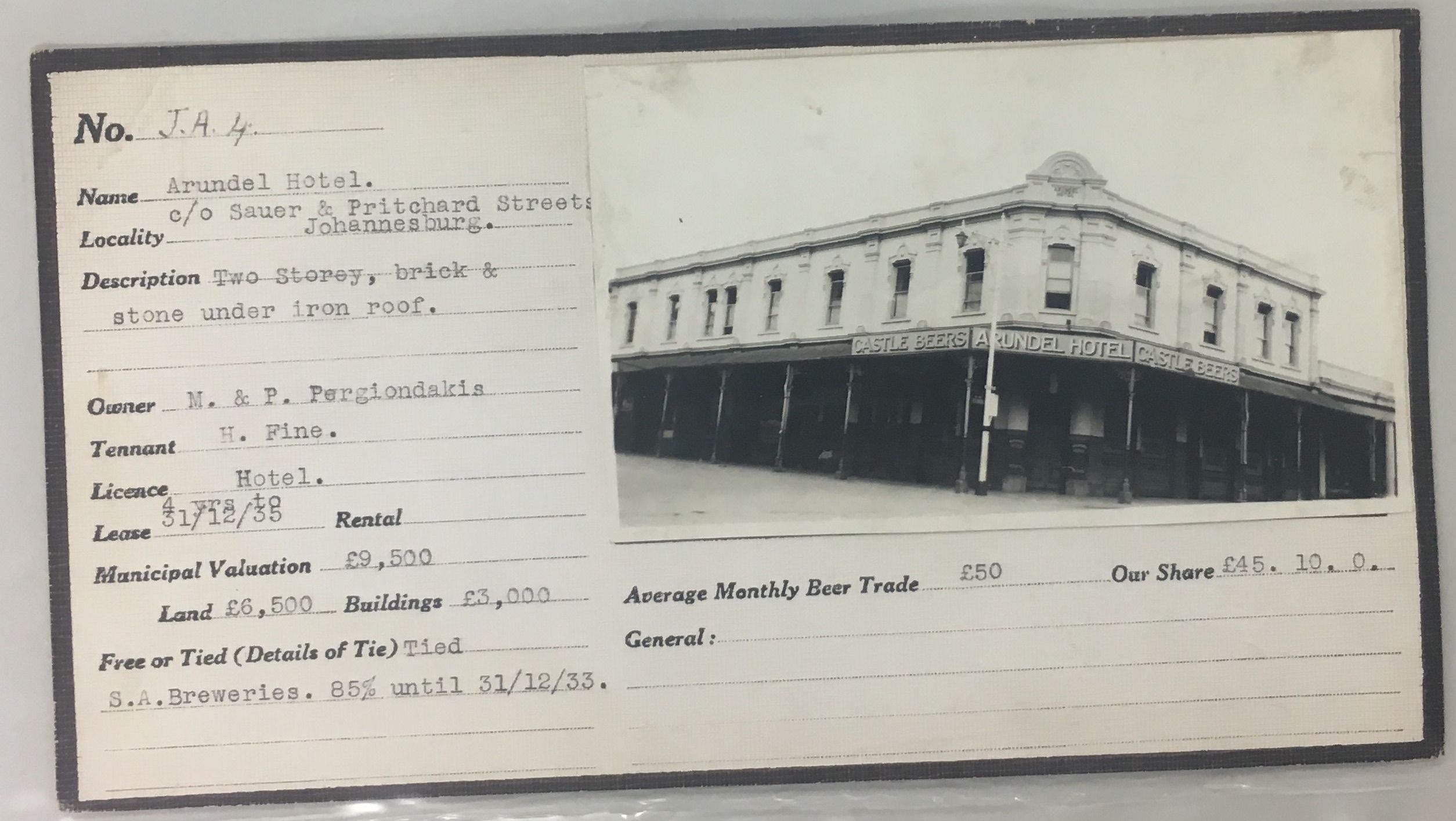
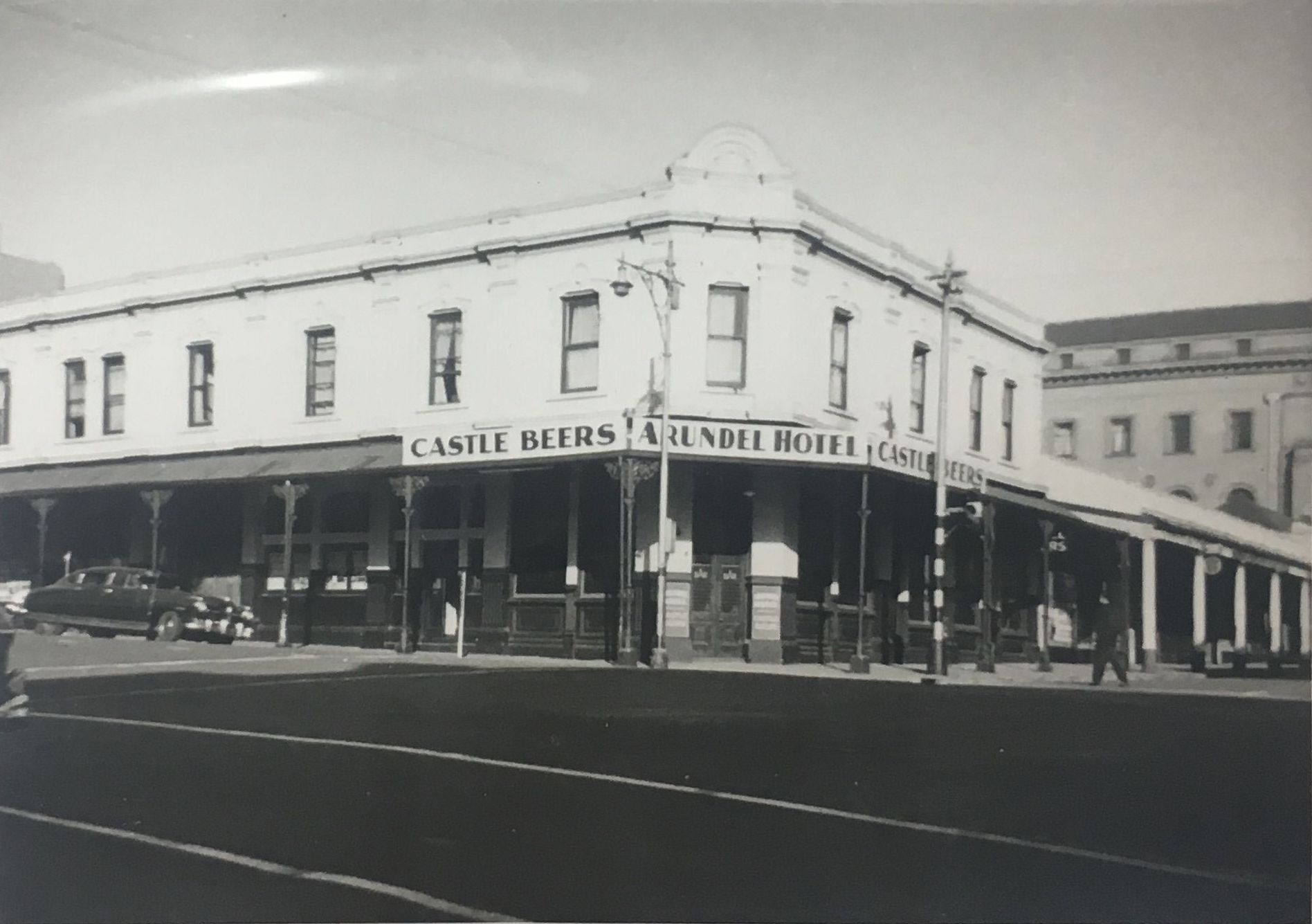
Arundel Hotel / Elizabeth Hotel – SE cnr Sauer and Pritchard Streets (Goads)
The site is empty as of 2022 and is situated behind Luthuli House. The old building was demolished around 2010 and the site has not been developed since. It is listed in both Goads maps. On the 1973 Curries map, the site is listed as Elizabeth Hotel. In 1962 it was listed as having 45 rooms with 12 having private bathrooms, weekly rates and no bed & breakfast.
Australia Hotel / Balmoral Hotel – 24 Harrison str cnr Kerk SE corner
Built c1906. By 1937, it was known as the Balmoral Hotel and by 1973 the block is known as BP Centre.

Austrian Imperial Hotel
This hotel was acquired by the Cab Drivers Union (CDU) in 1904 to become their social club. In the liquor licence application, it was stated that the building would be used by the ‘Jewish Cab-owners and drivers of Johannesburg’ according to the source ‘Johannesburg’s Jehus, 1890-1914’ by Charles Van Onselen. There is no mention of the street or area, but I suspect this hotel was either in Ferreriasdorp or Fordsburg.
Beresford Boarding House SE cnr Main and Simmonds Street (Goad)
Within Beresford Buildings and likely rooms above street level shops.
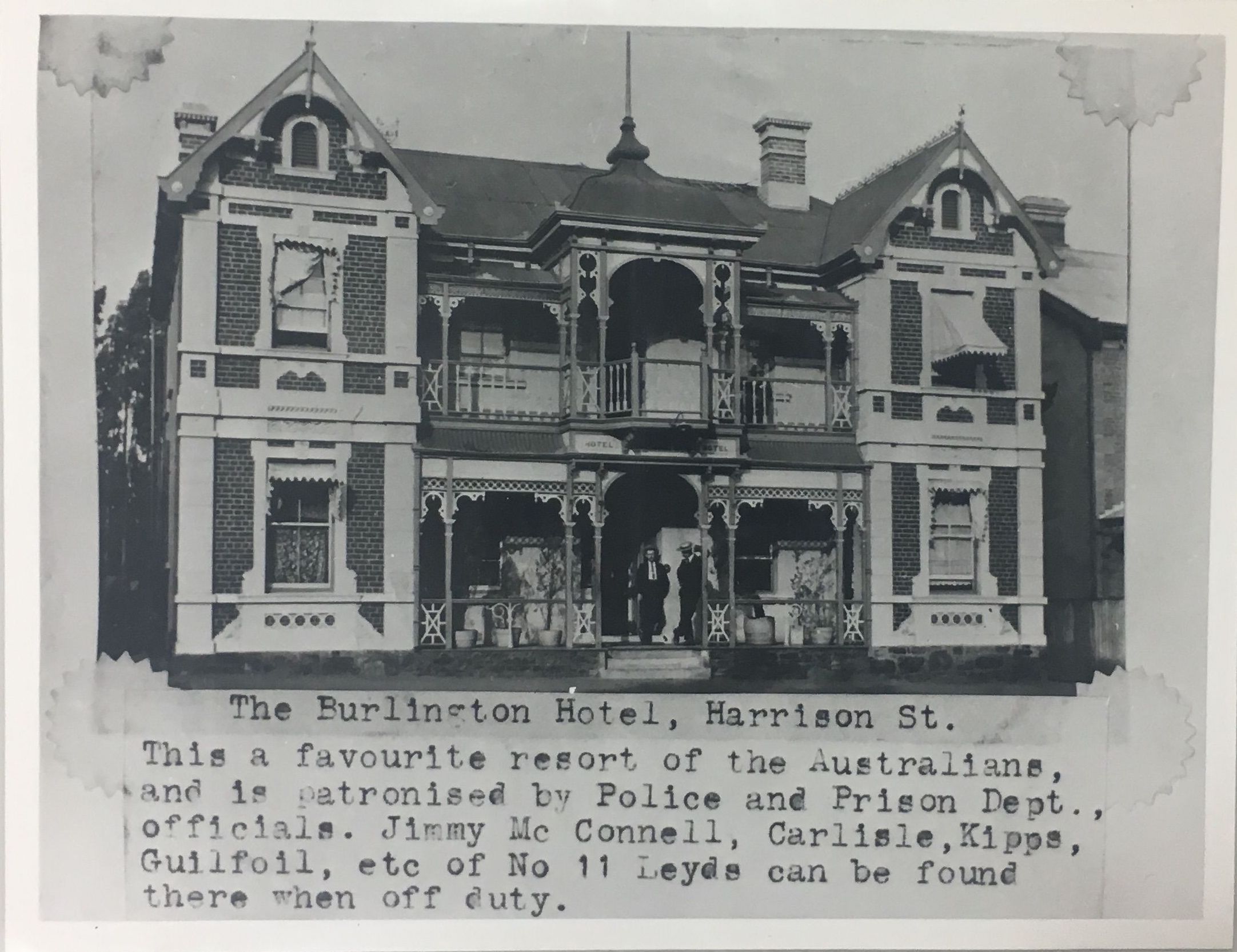
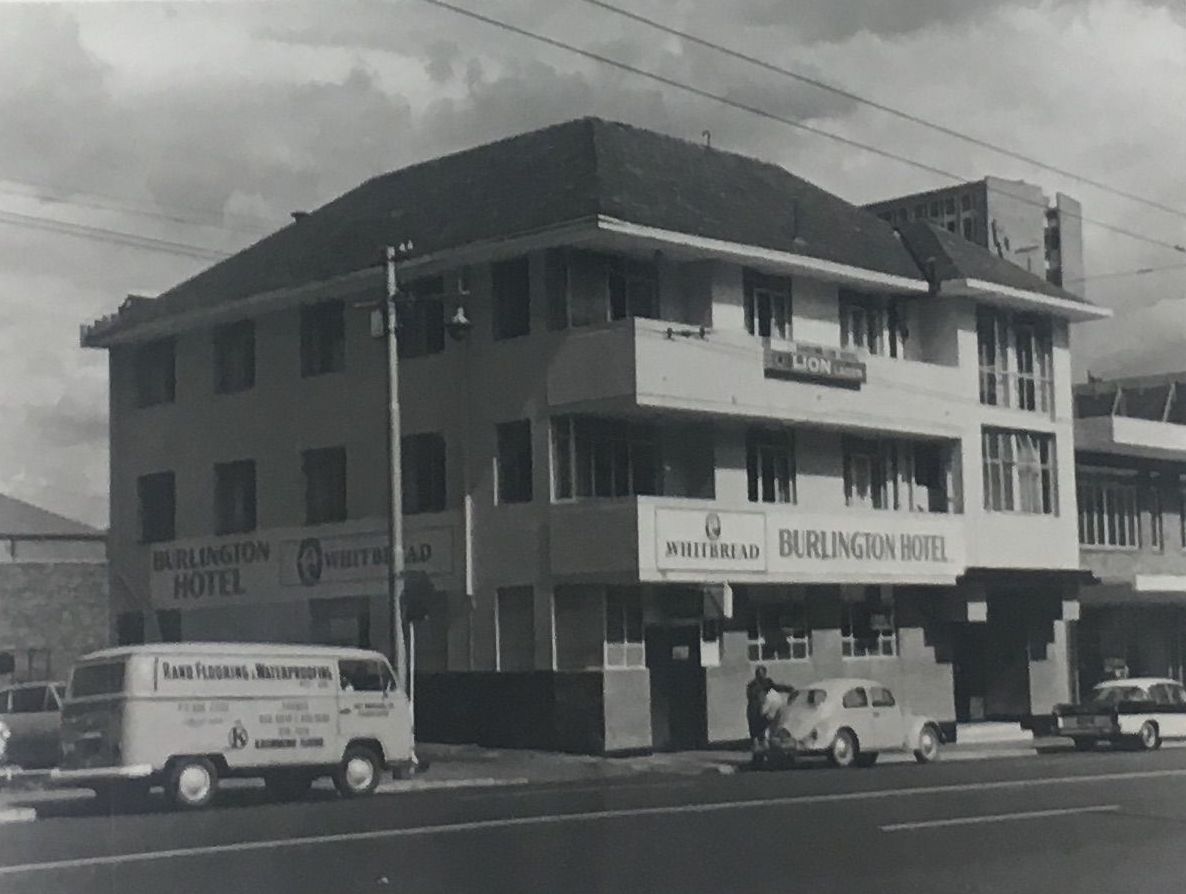
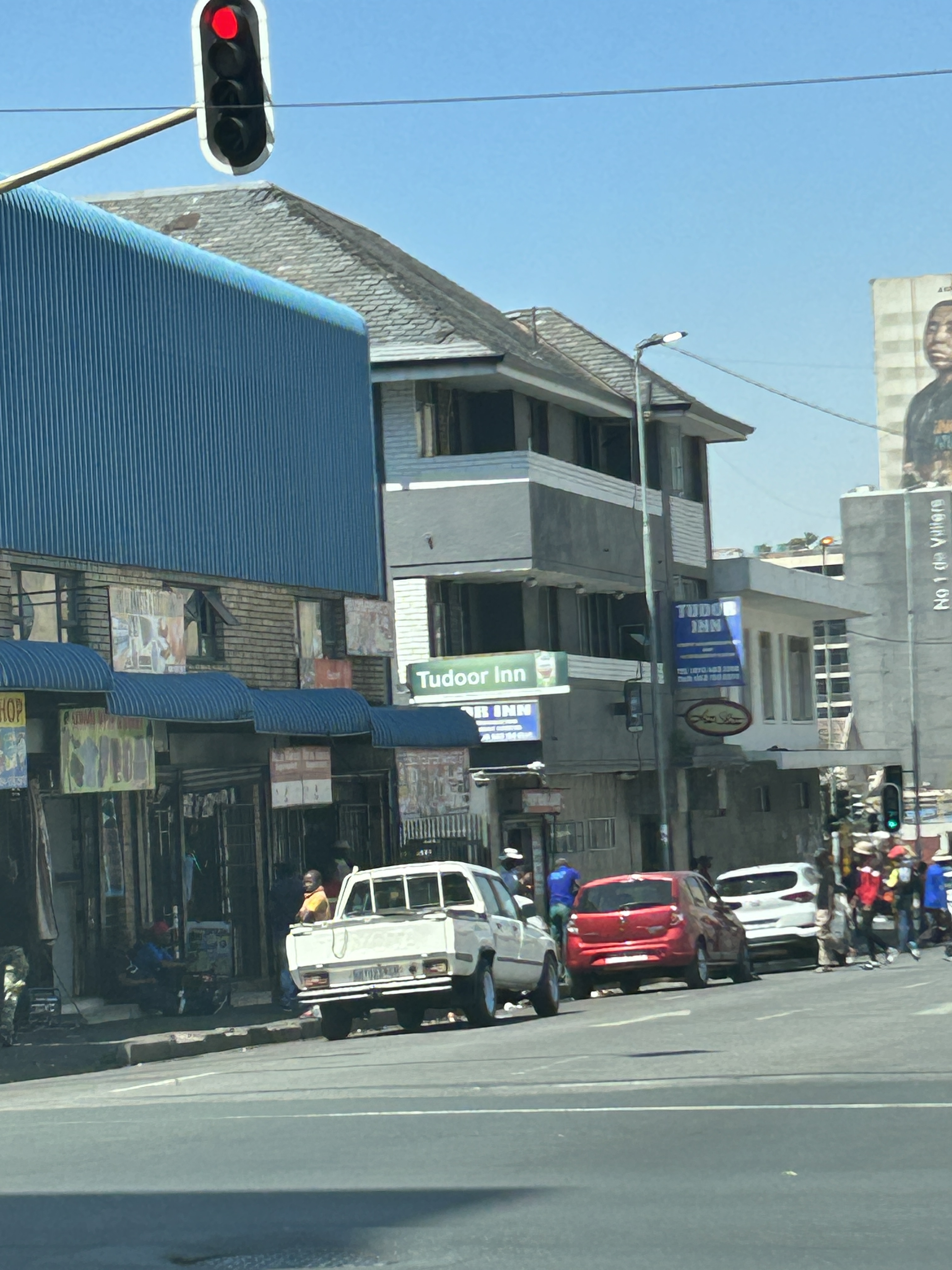
Burlington Hotel – Harrison Street
An Edwardian-style hotel that was rebuilt in the 1930s. The rebuilt building is still extant and called the Tudor Inn. The original Burlington was the haunt of Australians, as well as the police and prison department officials.
City & Suburban Hotel / Federal Hotel – NE cnr of Commissioner and Polly Streets (Goads)
Appears on both goads maps and today is the site of the Federal Hotel, but likely just used as regular accommodation with retail stores on street level. The original hotel was a double-storey L-shaped structure with a balcony. The later 1930s building is still in good condition and distinctly Art Deco. It was listed as having 30 rooms. The sign outside the entrance c2022 reads ‘Pearl House’. The Federal is referenced by Drum photographer Jurgen Schadeberg in his autobiography. It was the frequented bar for the Drum and Rand Daily Mail editorial staff.

Clarence Hotel – SE cnr Kerk and Simmonds Street (Goads)
A wood and iron structure that is no longer listed in 1937. Said to be a favourite of French visitors.

Continental Hotel – 211 Commissioner Str between Nugget and End Streets
The building still stands at this address. Possibly still the original building, although modified over the years.

Cornucopia – 113 Commissioner Street (Goads)
Between Eloff and Von Brandis Streets.
Golden City Hotel / Craven Hotel / Gladstone Hotel – NE corner Von Weilligh and Commissioner Streets (Goads)
It was built in 1905 and designed by H. A. Reid in the style of a private home and incorporated elements of Neo-Queen Anne style, with a gable, balconies, and a corner tower. Artifacts claim this became Gladstone Hotel and is listed as 46 Commissioner Street cnr Von Weilligh. This building is extant and diagonally opposite Carlton Centre.
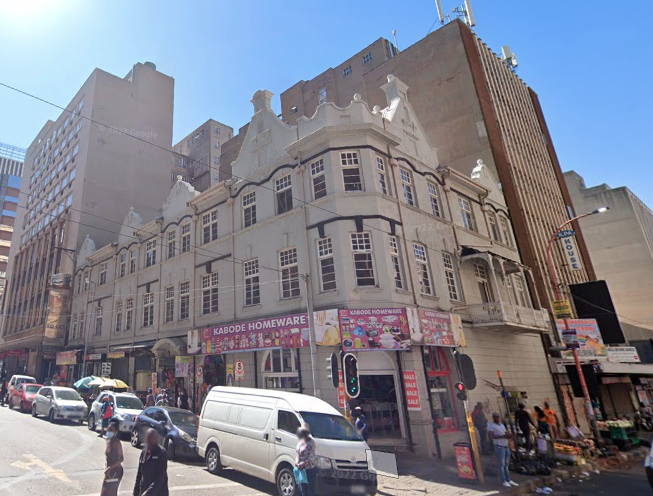
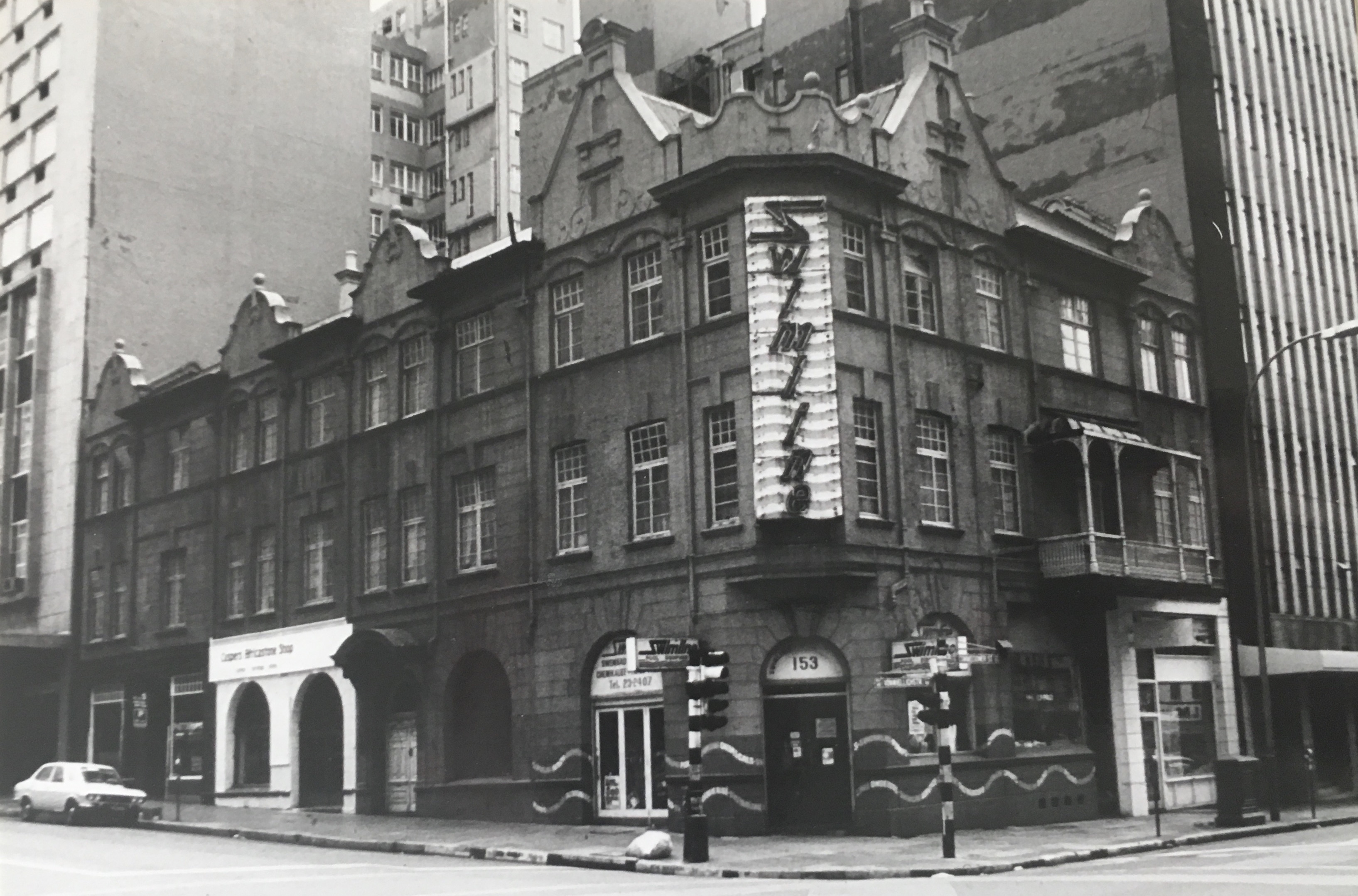
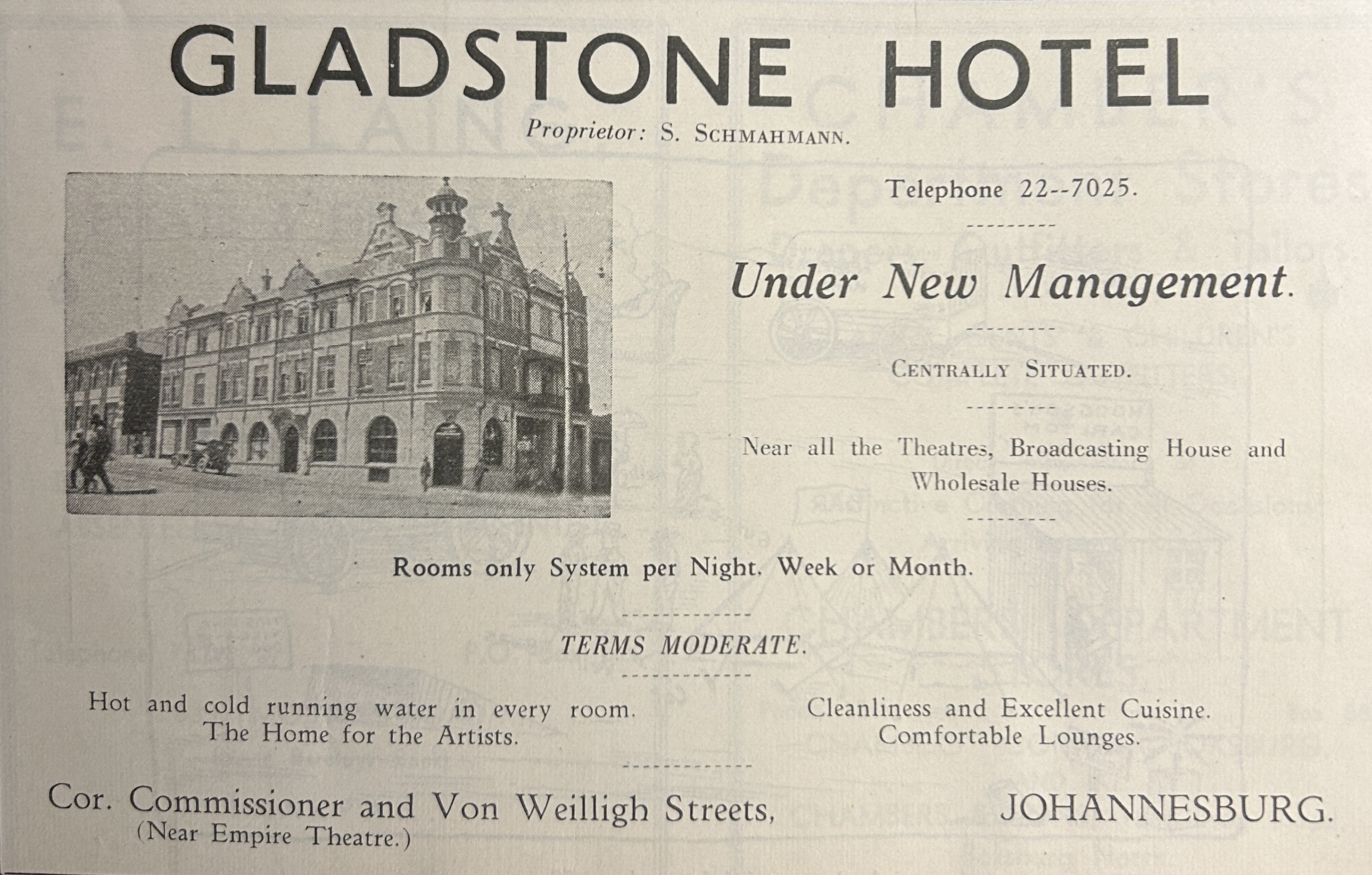
African Theatres used to book all their actors who were playing at the Empire, His Majesty’s, and The Standard into the then-named Gladstone Hotel (1930s-1940s)
Douglas Hotel – SW cnr Fox and Von Brandis Streets (Goads)
Small corner stand hotel with a billiards room. Likely double-storey. Listed in the 1962 JHB guide as having 28 rooms with weekly tariffs.
Engineers’ Hotel / Majestic Hotel – SE cnr Marshall & Kruis Streets (Goads)
Appears on both Goads maps. Engineers in 1910 and Majestic in ’37. Listed as Motor Spares Centre in 1973.
East London Hotel – 22 Loveday Street between Pritchard and Kerk (Goads)
Listed in the 1910 map, it’s also in the ’37 map with a note ‘under construction’. The building is extant and is in the Art Deco style designed by Cook & Cowen in 1937. Listed in 1962 as having 40 rooms with only 2 having private bathrooms, weekly rates, with no bed & breakfast.

Outside signage suggests the building was still known as East London Hotel until 2015.
Forfarshire Hotel / York Hotel – Sauer Street bounded by Anderson and Frederick Streets (Goads)
Situated on the SE cnr of Anderson and Sauer and extended to Frederick. This is an unusually narrow block. It appears the hotel changed names and was rebuilt using reinforced concrete in 1936/7. Goads ’37 indicates ‘concrete floors under construction’. This lines up with Artifacts that claim the hotel was designed by Saul Margo in 1937. In the 1964 guide, it’s listed as having 31 rooms. It was still listed as York Hotel on the 1973 Curries map. The whole block from Sauer to Simmonds Streets is now one building c1980s called Metal Industries House.
Hotel Bristol – NW cnr of Jeppe and Harrison Streets (Goads)
Took up almost a corner stand on the block and featured a bar, billiards room and dining room. Rooms were upstairs with the Entrance on Jeppe Street.

“Located on this site as well as at 135 Jeppe and 69 Harrison Streets, (adjacent corner Stand 1213) between 1903 and 1919 was the famous Bristol Hotel, erected for the entrepreneur Ludwig Feldmann. This magnificent three-storey edifice was designed by the architect H.C. Brauer and included a Basement, comprising various cellars as well as a shooting range. It was constructed at a cost of no less than ₤12 000, which explains its extensive collection of ornamentation, including pilasters, balustrades, cornices, finials, as well as the tall spire surmounting the corner tower of the building. The particularly fine elevation drawings executed by Brauer testify to his preference for ornamental detail.
In 1905 and 1910, the architect Theo Schaerer attended to various minor alterations to the Bristol Hotel. The architect John Adams likewise attended to minor alteration work to the buildings (i.e. drainage) in 1909 on behalf of the architect Schaerer.
It is recorded by Norwich that the building was attacked by anti-German supporters in 1917. See below. (Authors’ note: the building survived this attack only to be partially demolished a few years later.)” Bruwer
“This fascinating and unique three-storey building, the Bristol Hotel was situated on the corner of Harrison and Jeppe streets. It appears in the Brady Directory of 1910. In 1915 during the First World War, anti-German sentiment ran high, especially after the sinking of the Lusitania, and an angered mob went on the rampage, setting light to German-owned businesses and homes. This hotel was among those attacked as it was in German hands at the time.” Norwich
Part of the building facing Jeppe Street was demolished in 1919 and a warehouse erected designed by Bertram Avery that was home to the Italian Warehouse Co, a clothing factory, a Price n Pride Store and in the 1990s, a showroom for J.D. Group furnishers. It was cladded in 1983 which destroyed much of the Edwardian detail.
Monis Mansions replaced what was left of the hotel and the rest of the Harrison Street facing block in the 1970s
Hotel Edward – NE cnr Von Weilligh and Pritchard Streets (Goad)
Not listed on the 1910 map as outside of the survey area and not on the 1911 map. It first appears on ’37 map and is situated behind Luthje’s Langham Hotel. Would have been demolished in the 1970s for the Sanlam Centre city block.

Hotel Florence – SE cnr of Smal and Commissioner Streets (Goads)
Appears on the 1911 aerial map. It would later become the Grosvenor Hotel (see later)
Hotel Norman – 57 Bree Street between Hoek and Keizer Streets (Goads)
Hotel Windsor – 110 Pritchard Street between Von Weilligh and Delvers Streets
Doesn’t appear on the 1910 map as it was out of the survey area. This small hotel appears on the ’37 map. It’s listed on a boxing tournament flyer in 1927 as the ‘Headquarters of the Transvaal Corps of Commissionaires’ with the proprietor as W. Riddler.
In the 1962 JHB guide, it’s listed as having 24 rooms, 6 with private bathrooms. It was demolished in 1973 and replaced by Kelhof building.
Grosvenor Hotel – 152 Commissioner Street cnr Smal Street
Previously the Florence Hotel that was built in the early 1900s. The later Grosvenor on the same site was built in the 1950s and evidently started life as the Rio Grande Hotel. It’s listed as Grosvenor in the 1962 and 1964 JHB guide. The hotel had 66 rooms, 5 with private bathrooms and was likely a long-term hotel connected with Castle Breweries or the theatres. The 1964 guide lists it as having 130 rooms. It would have been demolished prior to the Carlton Centre being built.
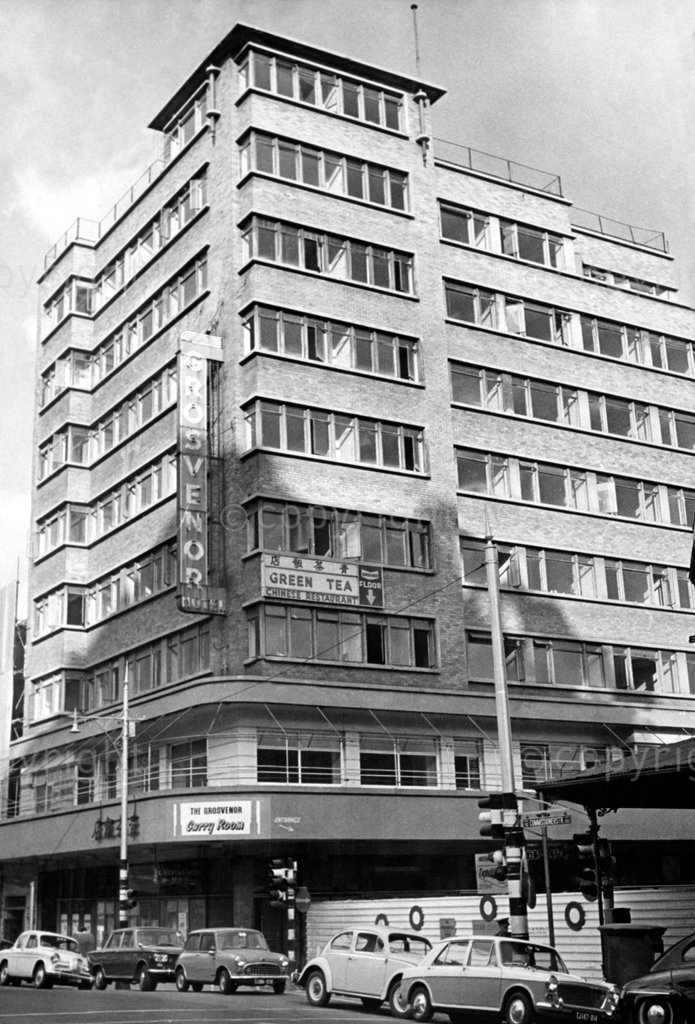
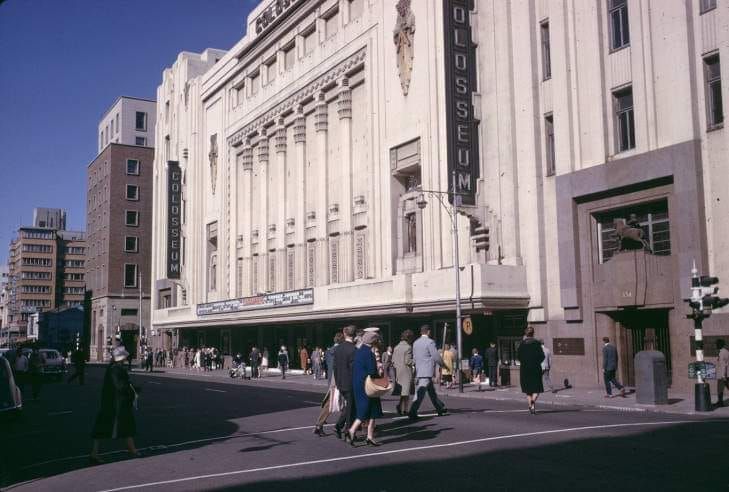
Kings Hotel – SW corner Von Weilligh and Fox Streets (Goads)
Listed in both Goads maps. Demolished for Carlton Centre in late 1960

Lyngford Hotel – NE cnr Wolmarans and Wanderers Streets
Estimate build date early 1920s. In its later years, the building was a residential hotel run by the Townsend husband and wife team (between 1950-1970) and leased from the owner Mr. H. Jacobson. The hotel had 40 rooms made up of a combination of single and double rooms and was styled as an ‘old-style home away from home’. The rates were relatively low and appealed to low-income earners young and old. Some older residents had been there for over 15 years prior to demolition. There was also a dining room and the hotel advertised their menu on the outside of the building hoping to pull passing trade in for a meal.

The hotel was demolished in the 1970s and there were plans for a modern hotel that never materialised. It was eventually replaced with a two-storey warehouse/shop building. That was demolished in 2017 and a new block of flats was put up around 2020.
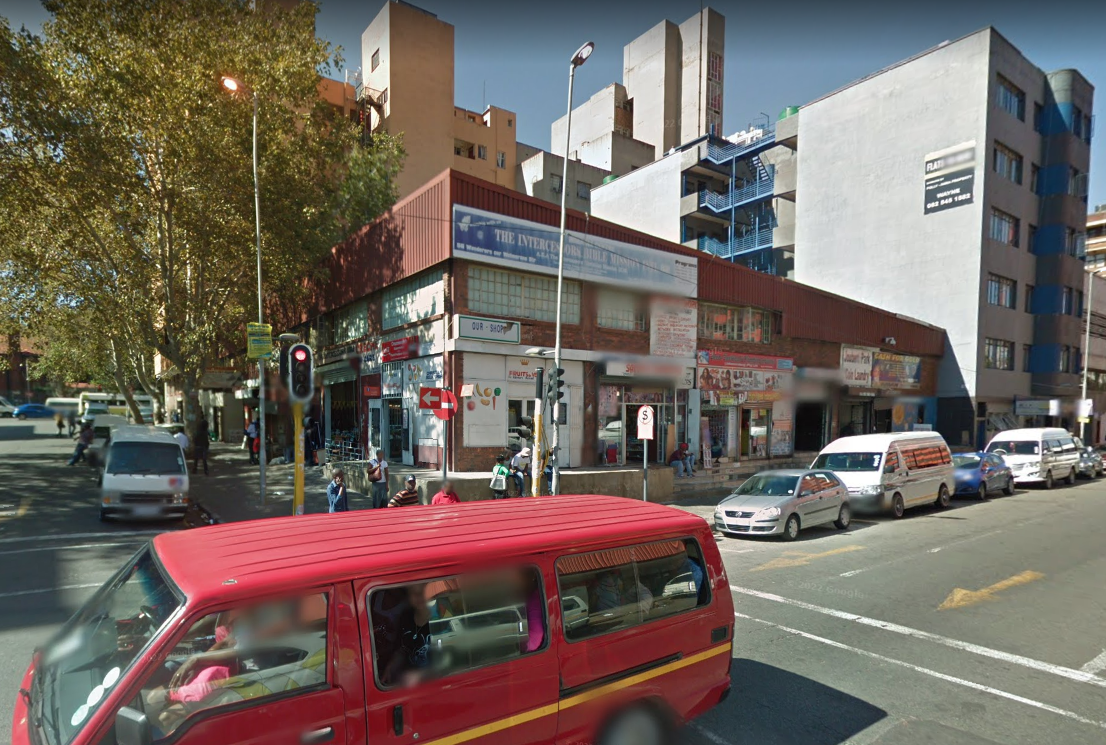
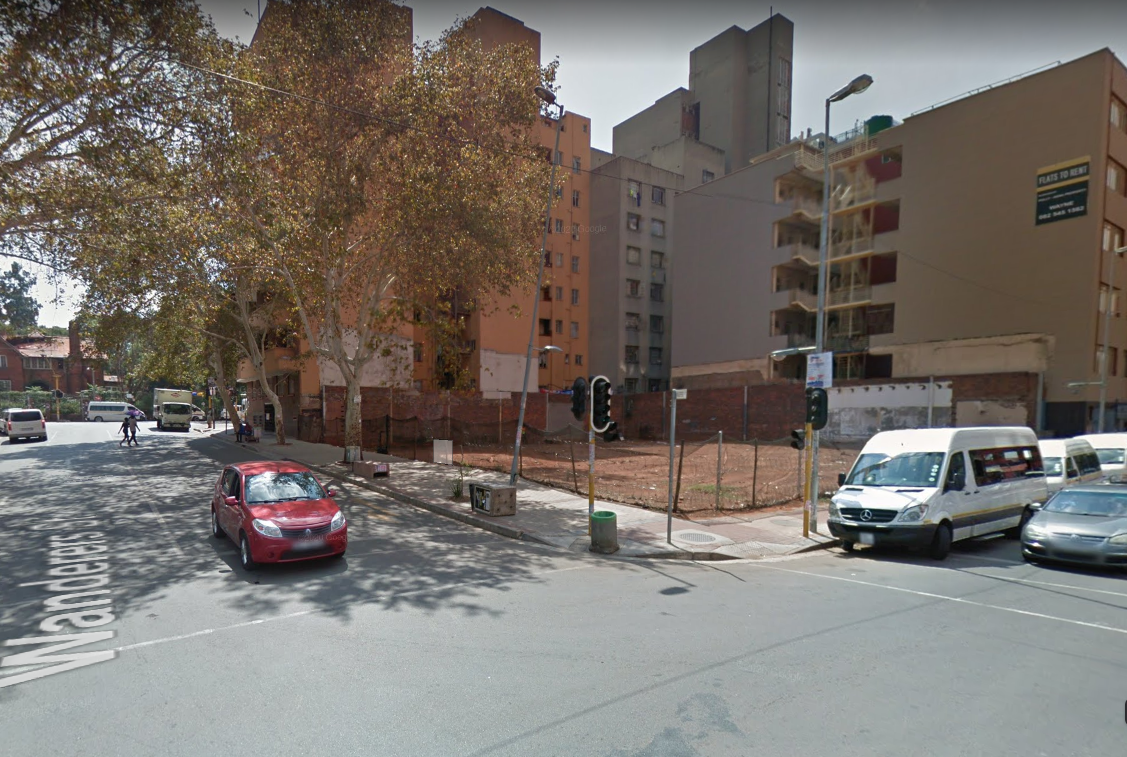
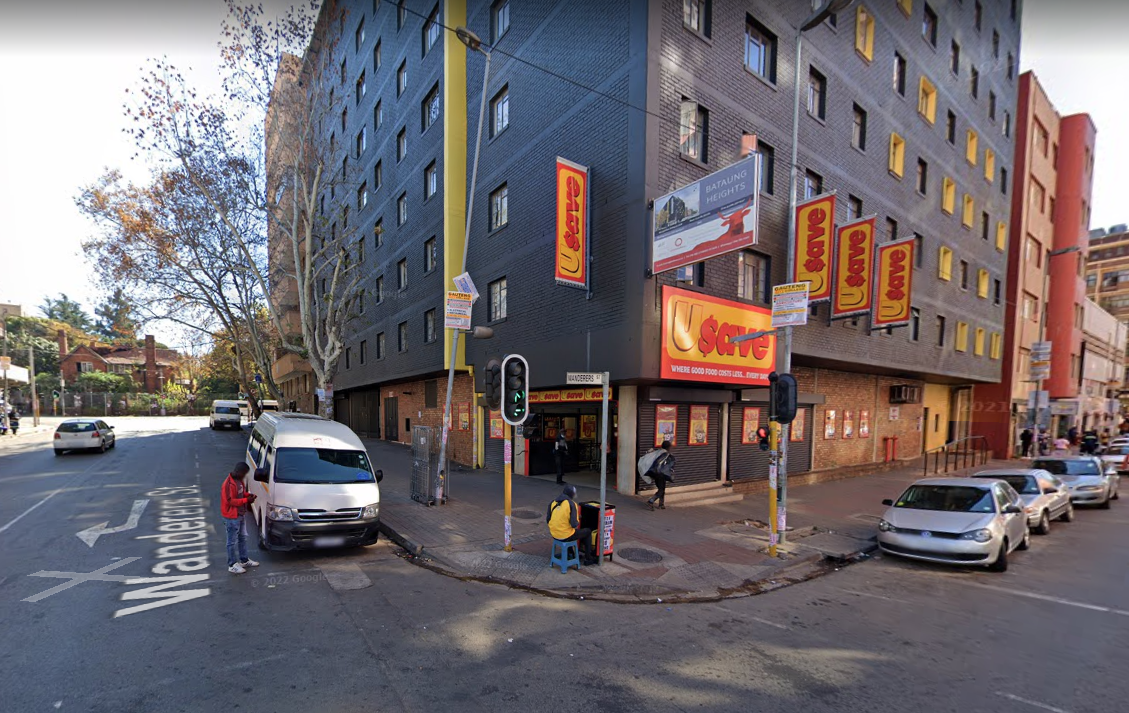
Manchester Hotel – NE cnr Goud and Commissioner Streets (Goad)
Built in 1897 and designed by the H Lindhurst, it was still standing in 2015 but burnt down after being invaded by squatters. There were appeals to try and save the building, but it was demolished by 2017.
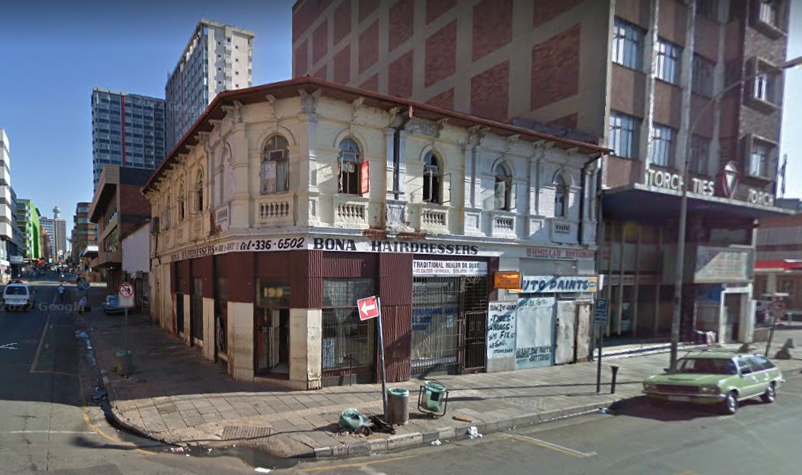
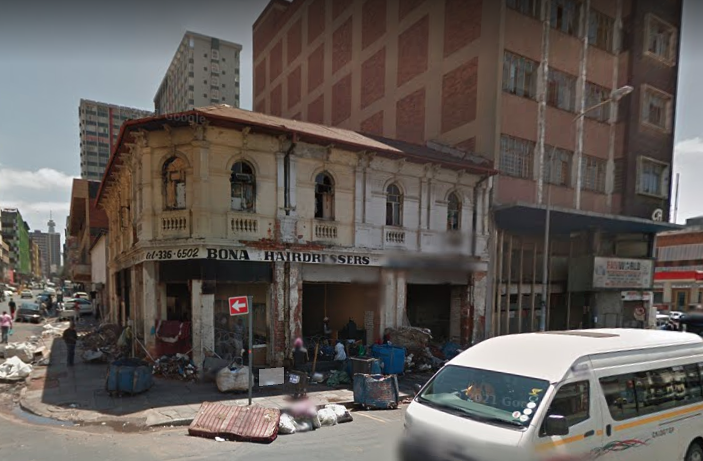
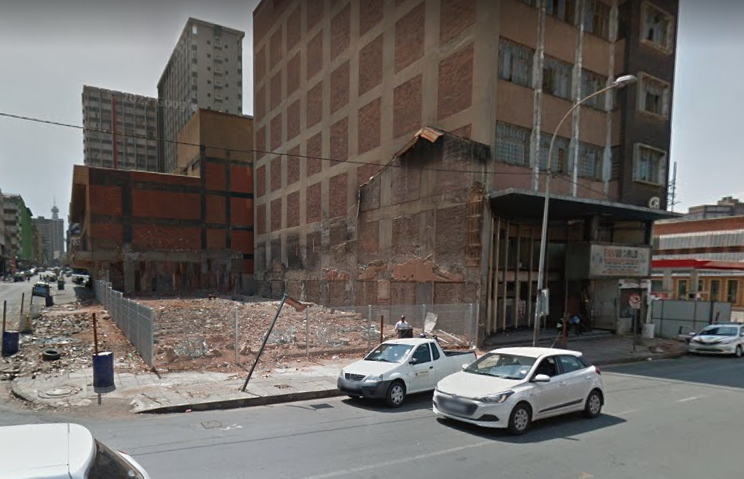
“Flo Bird of the JHF believes the significance of the building has been considerably enhanced by the publication of Professor Charles van Onselen’s book ”Showdown at the Red Lion”. The book draws attention to the Irish immigrants who arrived via Manchester. They included John O’Hara who owned a mines concession store and went on to become Mayor of Johannesburg and a founder of the University of the Witwatersrand.” Heritage Portal
Metropole Hotel – 48 Market Street near cnr Kort Street (Goads)
Listed as Metropole Theatre Chambers in front of the Gaiety Theatre. Not sure if this is a proper hotel. Bedrooms are indicated on the plan. Still listed on Goads ’37, but Gaiety Theatre is listed as ‘Grocery & Provisions Whse’. By 1973, the entire block had been demolished and replaced by African Eagle House.
Moonlight Hotel – Commissioner Street
Mentioned by Charles Van Onselen in his ‘Johannesburg’s Jehus, 1890-1914’, this hotel was likely in the Ferreraisdorp part (western section) of Commissioner Street. It was a base for the cabbie strike of 1905. No other information has been found.
New Zealand Hotel – NW cnr of Pritchard and Sauer Streets (Goads)
This was diagonally across the road from the Arundel Hotel.
North Rand Hotel – Smal Street near cnr Albert (Goads)
A small hotel long since demolished.
Palace Hotel – SE cnr Harrison and Frederick Streets
Appears to have been a double-storey with a balcony not unsimiliar to Kitcheners. It is still listed as Palace Hotel in Goads ’37 and Curries ’73 maps. A carpark is situated there today. It’s behind the Standard Bank Gallery
Palmerston Hotel – 39 Commissioner Street (Goads)
This small hotel was near Kort Street close to the Gaiety theatre.
Progress Hotel / White House Hotel – SW cnr of Marshall and Smal Streets (Goads)
A 1930s-style 3-storey building called White House Hotel stands on the site as of 2022. Progress Hotel is on the 1910 map and White House on ’37 map. Artefacts list White House Hotel c1930 designed by Arthur James Marshall (may have been alterations). Listed in the 1962 JHB guide as having 30 rooms with a weekly rate.

Railway Hotel – 11 Jeppe Street between Simmonds and Fraser (125 Jeppe Str today)
A small hotel with a bar and dining room is listed on both Goads maps as well as the 1973 Curries map. The building went through some changes over time. The current frontage looks post-1950s.

Roma Hotel – SW cnr Fraser and Jeppe Streets (Goads)
Adjacent to the Universal Hotel, it featured a bar, billiards, and a restaurant with rooms upstairs. It was still operational in 1937.
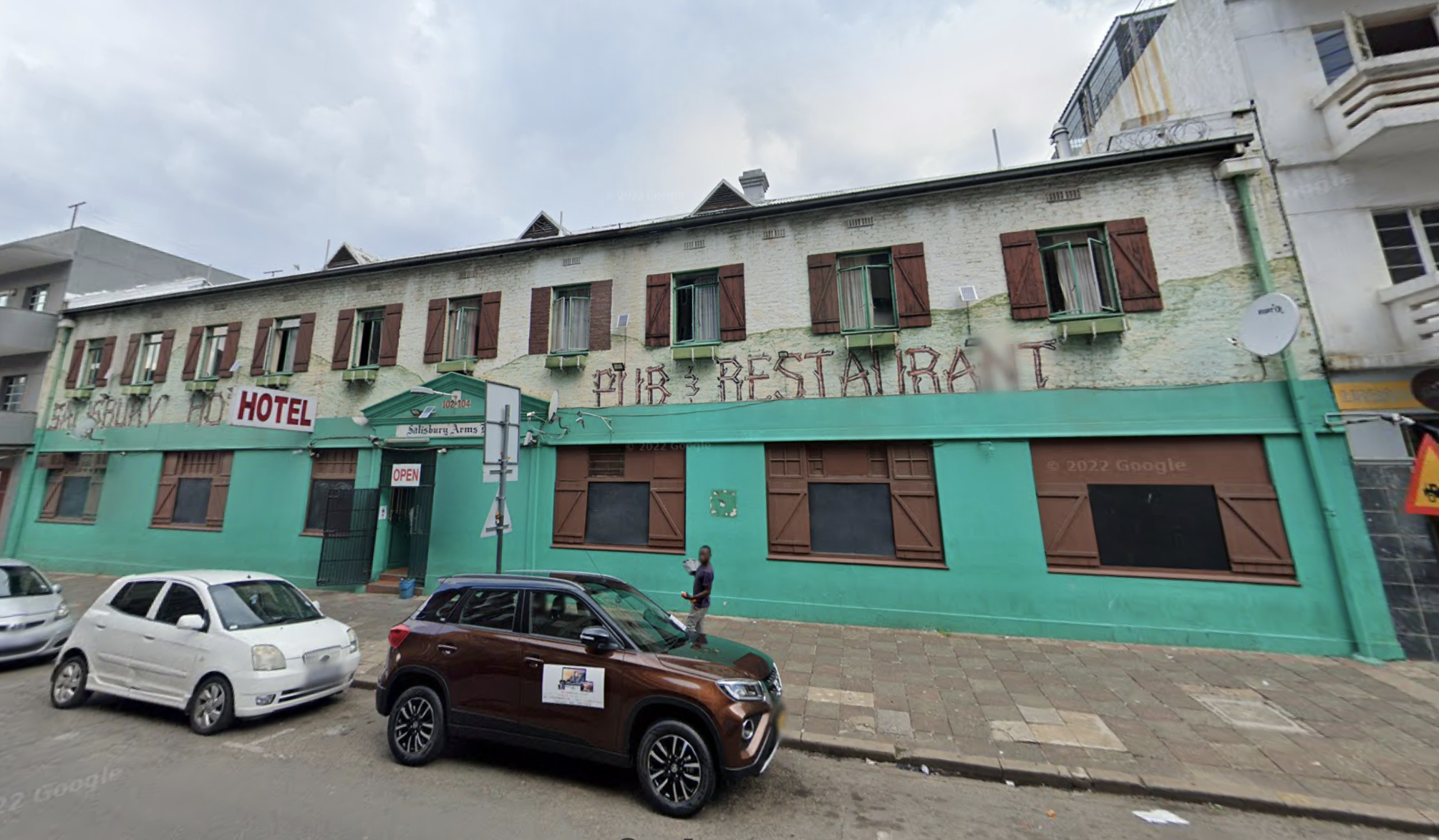
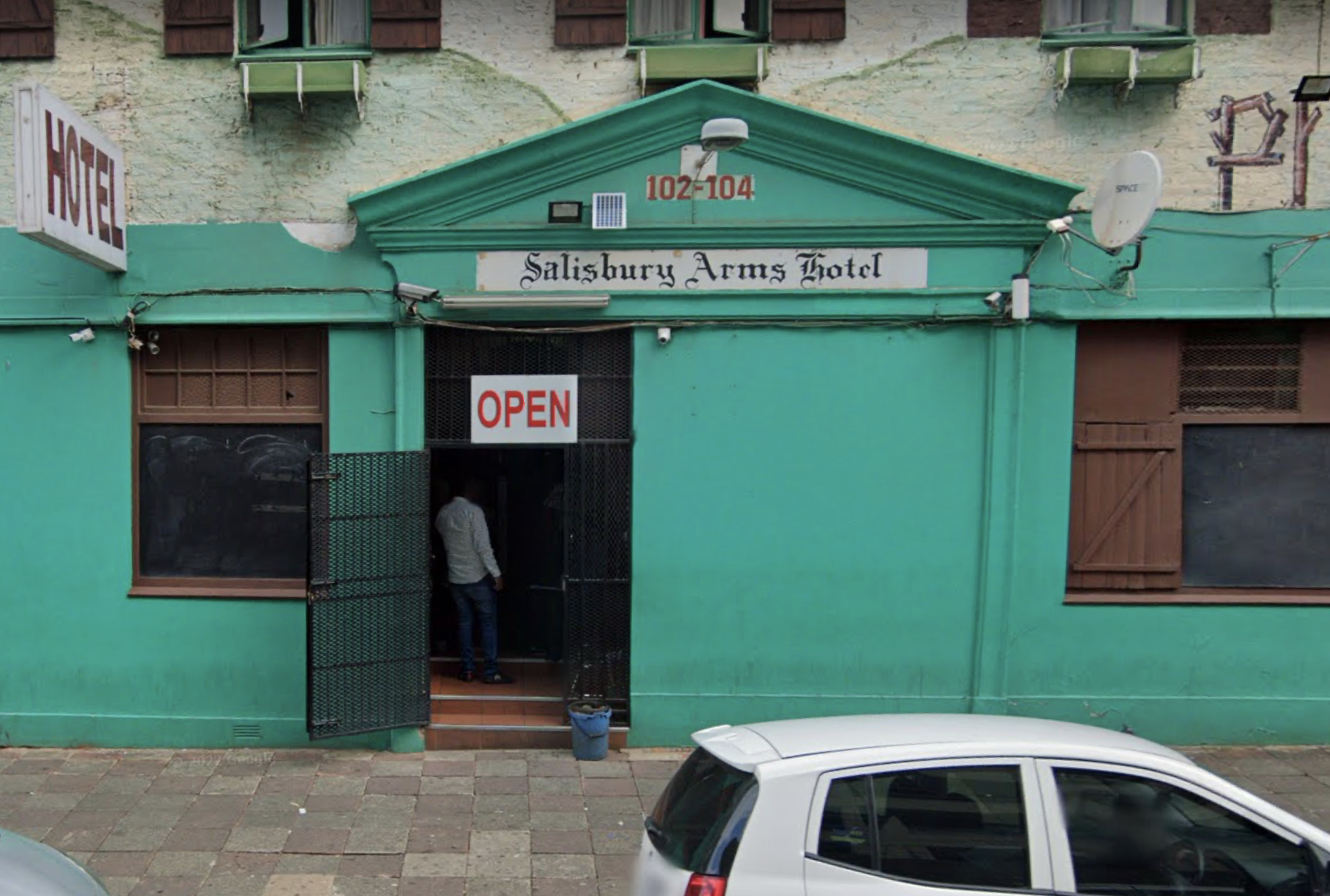
Salisbury Hotel – 102-104 Anderson Street between Kruis and Von Brandis (Goads)
This building is still extant. The signage outside says ‘Salisbury Arms Hotel’. Appears in both Goads maps. In 1962 it was listed as having 14 rooms, one of the smallest hotels at the time (Glossop was slightly smaller with 13 rooms)
Savoy Hotel / Hotel Imperial – 82 Jeppe Street between Von Weilligh and Delvers Streets
Small hotel and likely a double story with a balcony. The name changed to Hotel Imperial on ’37 map. Part of the block was demolished for Samlam Towers. Listed on Artefacts as designed by Donald Landsdowne Nurcombe in 1935 so was likely rebuilt. In 1962 it is listed as having 52 rooms and no private bathrooms.
South Western Hotel – 44 Market Street (Goads)
Small street-facing hotel with rooms above and at the back of the block. The hotel shared its frontage with a general store and outfitter. It was roughly behind the Gaiety Theatre.
Tivoli Hotel – 32 Kerk Str cnr Harrison SW corner
Built c1906. Listed in Goads 1910. Tivoli and Australia Hotel were across the road from each other. The block is now one of four that form part of ‘Bank City’ development.
Upington Hotel – NW cnr Main and Troye Streets (Goads)
Listed both Goads maps. In 1973, it was listed as Hoover.
Union Hotel – 206 Market Street between Gold and Nugget Streets (Goads)
Listed in ’37 map, but not part of the 1910 survey. The building has been demolished.
Universal Hotel – 6 Jeppe Str between Sauer and Fraser Streets (Goads)
Small hotel with a restaurant, billiards, and rooms upstairs.
Vienna Hotel – 19 Harrison Street between President and Pritchard (Goads)
Small hotel with a bar, dining room and rooms upstairs.
Weddells Hotel / Toners Hotel – SW cnr Main and Von Weilligh
Weddels in 1910 and Toners in 1937. In 1962 it had 26 rooms with 3 private bathrooms. It stood facing Von Weilligh Street where the Carlton Ice Rink and parking are today.

White Horse / Old Flag Hotel (Goads)
Sheet 5 block 36. Not found. There is a Douglas Hotel on 36, but also a ‘Hotel’ on 37 next to the SAB offices. It’s similar to Douglas in shape. This is on the NW corner of Main and Kruis Streets. It’s also listed in the 1964 guide as being in Fox Street (off Eloff) and had 28 rooms.
The Old Flag Hotel is also mentioned as being on the corner of Kruis & Main and was demolished for the Carlton Centre complex for a vehicle exit. It ties up with the NW corner.

1930s and 1940s
“The Johannesburg Publicity Association was formed in 1925 and early travel guides (from 1929 or 1930) were published in association with South African Railways and Harbours. The aim was to promote the city and show places of interest to travellers. In the late 1920s, hotel and tourism legislation was introduced which created between the hotel industry and liquor interests. During 1928 under state legislation licensees of existing bars in South African urban areas were forced to provide a minimum of 10 rooms in order to retain a liquor license thereby ushering in an era during which for many hotels the provision of accommodation services became of secondary concern to profits accruing from the bar trade.” (Norval, 1936; Rogerson, 2011; Walker 1977).
Many of the existing hotels in Johannesburg at this time had been in existence for 20 or 30 years, and there was much complaining in the press about the state of many of these old hotels. The demand for high-end hotels was limited by the number of visitors, but those that came were attended to by the likes of the Carlton and Langham Hotels which thrived during this period. Many older hotels were also upgraded or rebuilt in the 1930’s.
During the 1930s, there appear to have been several hotels erected around the new 1932 station buildings compared to earlier. Notably, the old Victoria Hotel was rebuilt and took up half the block, being best placed to take advantage of its proximity to the station.
Tourism growth in Johannesburg also increased during the WW2 period (1939-1945) especially coming from ex-pats in colonial Africa who couldn’t visit Europe during the war. Theatre, nightlife, restaurants, shopping, the zoo, mine visits, and sporting events were all highlights of the guidebooks.
Alexandra Hotel – cnr Market and Fraser Streets (Goads)
Listed on sheet 10 block 95, but not there. There is an Alexandra Hotel on the ’37 Goad’s map on the corner of Market and Fraser Street which matches the Artifacts listing of a ‘Hotel for Mrs Malkin’ dated 1939 designed by Margo, Breedveld & Margo. The hotel was likely built earlier, as according to the SAB index card, the hotel was tied to an SAB contract until 31 October 1932. It was run by an Israelsohn.

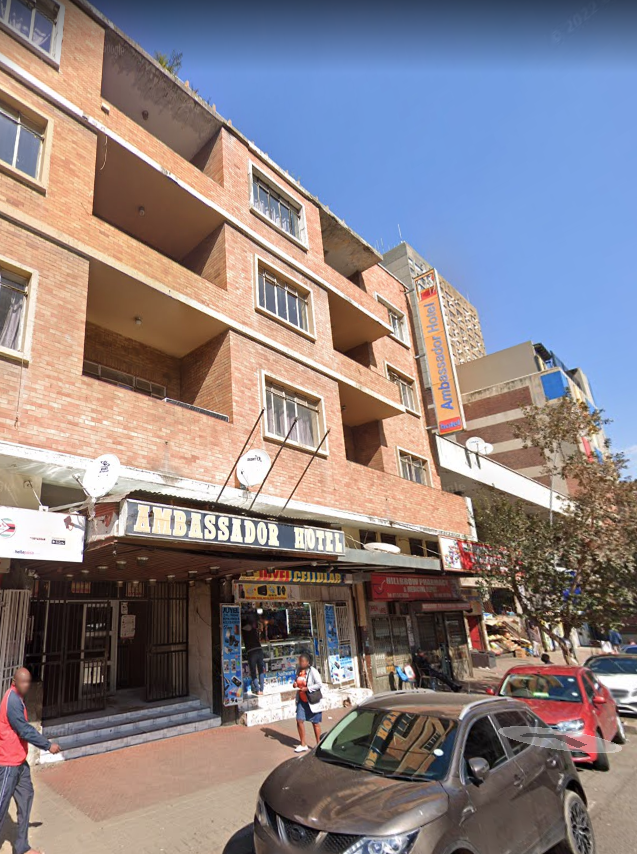
Ambassador Hotel – SW cnr Pretoria and Banket Streets Hillbrow
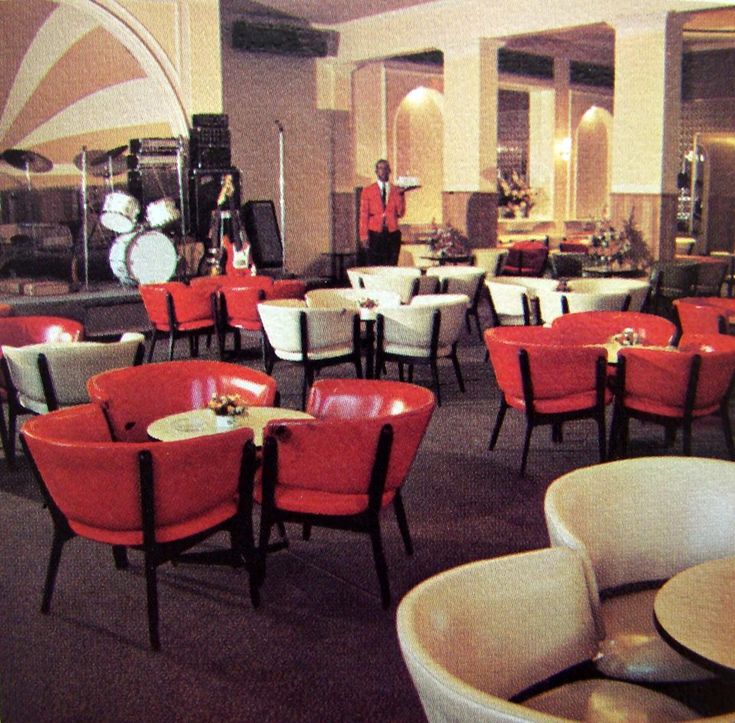
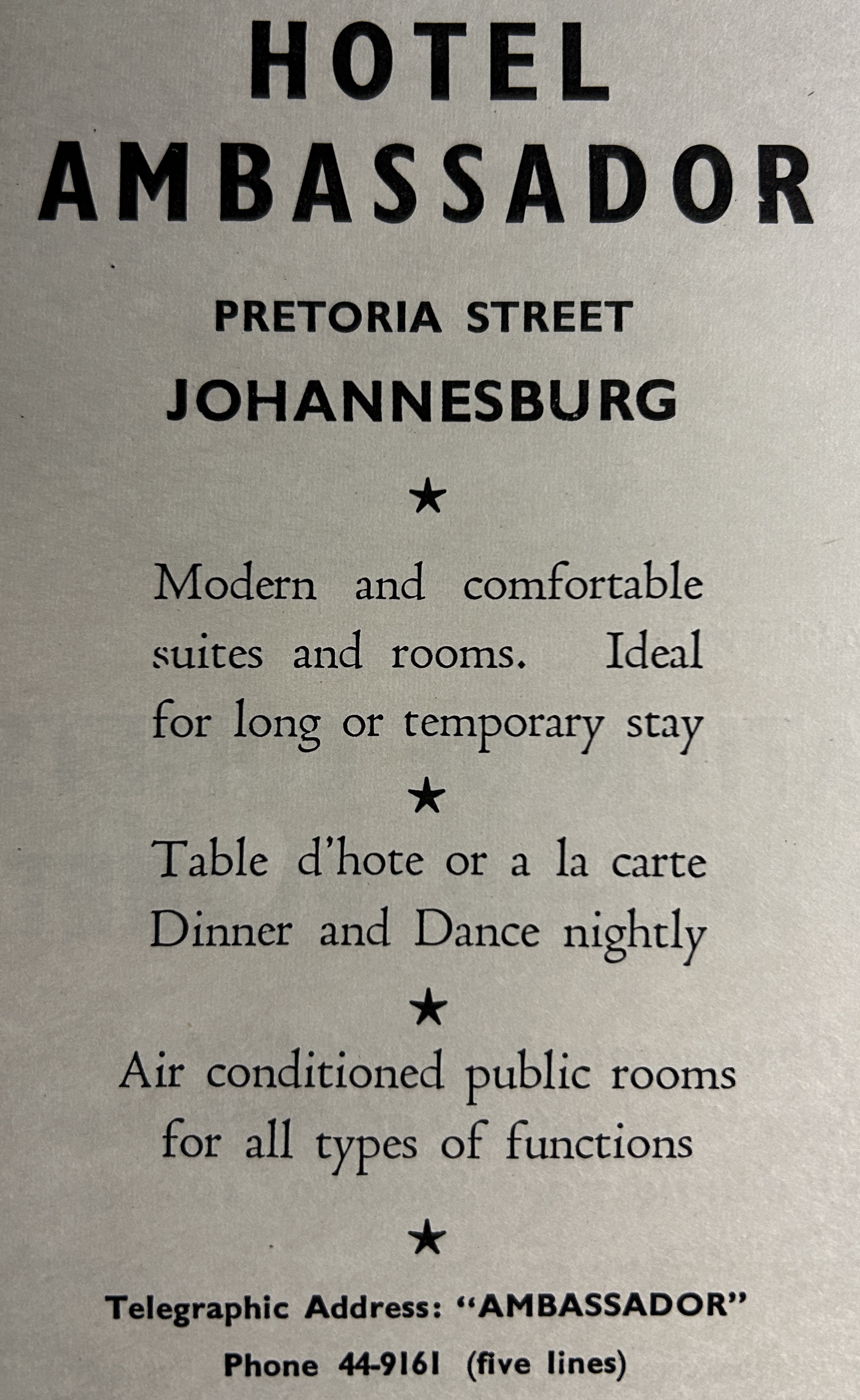
Designed by Wolf Percik in 1947. Had 57 rooms, 24 with private bathrooms. Home of the multiracial club Pink Cadillac in the late 1980s. Members of Napalm Death stayed there during the Johannesburg leg of their tour in 1993.
Belmont Hotel – SW Cnr Van Der Merwe and Banket Street Hillbrow.
Designed by Joseph Lockwood Hall (unconfirmed) in the 1930s. The hotel had a ‘shebeen’ in the late 1980s where one could purchase alcohol on a Sunday (which was then still prohibited by law)

Berkeley Hotel – SW cnr Bree and Von Weilligh Streets (Goad)
Listed in ’37 Goad map, this was previously the site of the old Presbyterian Church which later became a Catholic Church. In 1962 and 1964 it was listed as the ‘New Berkeley’ having 60 rooms, 12 with private bathrooms. In 1973 it was listed as ‘Philadelphia’. The building was demolished, but looking at the demolition outline shape on the building next door, it was at least 5-stories and had an old-style angled roof, which could mean it could have originally been built around the 1920’s or early 1930s. Artefacts list a Buxton Hotel at this intersection designed by Saul Margo in 1928.

Chelsea Hotel – Catherine Ave Hillbrow/Berea border
Listing this as it’s more synonymous with Hillbrow than Berea given that the hotel faces west down Kotze Street.
The building appears to be late Art Deco. In the 1964 guide, it is listed as having 80 rooms and offering full board. Chelsea Hotel was once managed by former Olympic swimmer Herbert Scheubmayr and Woodstock attendee Dave Marks. This was likely in the 1970s when the hotel had a reputation as a folk hangout.

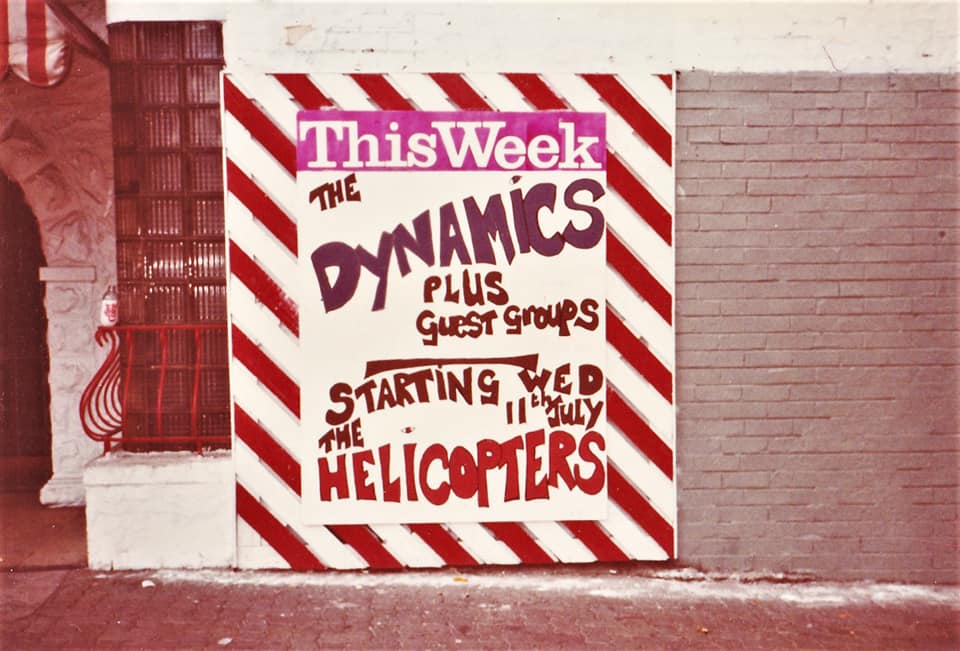
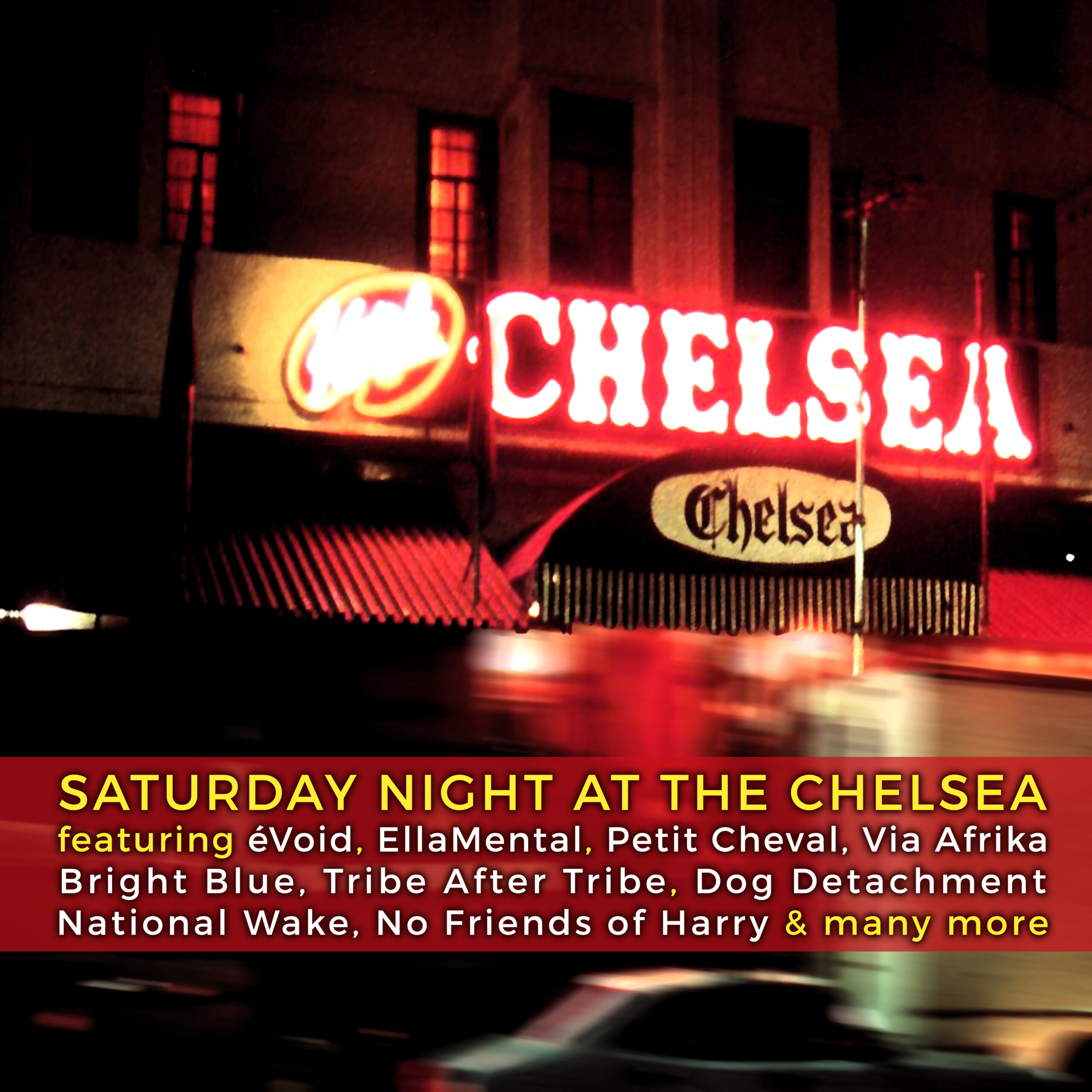
Chelsea Hotel was well known by a different crowd in the 1980s for its alternative live venue and nightclub known as ‘Chelsea Underground’ which featured bands, DJs, and theatre. Some influential left-of-centre bands played there like e’void, Petit Cheval, No Friends of Harry, Bright Blue, Via Africa, Dog Detachment, Tribe After Tribe, and The Dynamics.
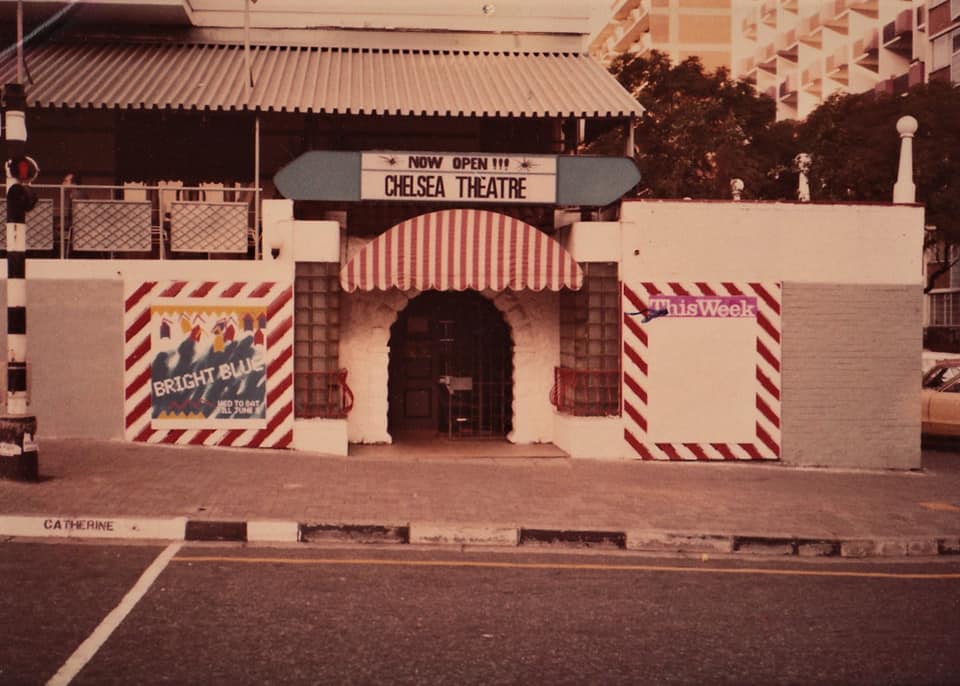

The building deteriorated in the 1990s and 2000s, but it’s now part of Joshco’s social housing project.
Chevenham Hotel – 58 Banket Street
Opposite the Christian Science Church near the corner of Wolmarans Street, this hotel is listed as a private hotel in the 1962 JHB guide with 39 rooms. Design is Art Deco.

Club Hotel – NE cnr Eloff and Marshall Streets (Goads)
Listed in Goads’37 map. Also on Curries ’73 map as Club Buildings. The building is extant. Also listed in the 1962 JHB guide with 24 rooms. Weekly rentals were available with no bed & breakfast option, so was likely a short-term residential concern.

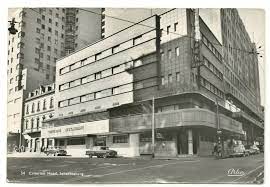
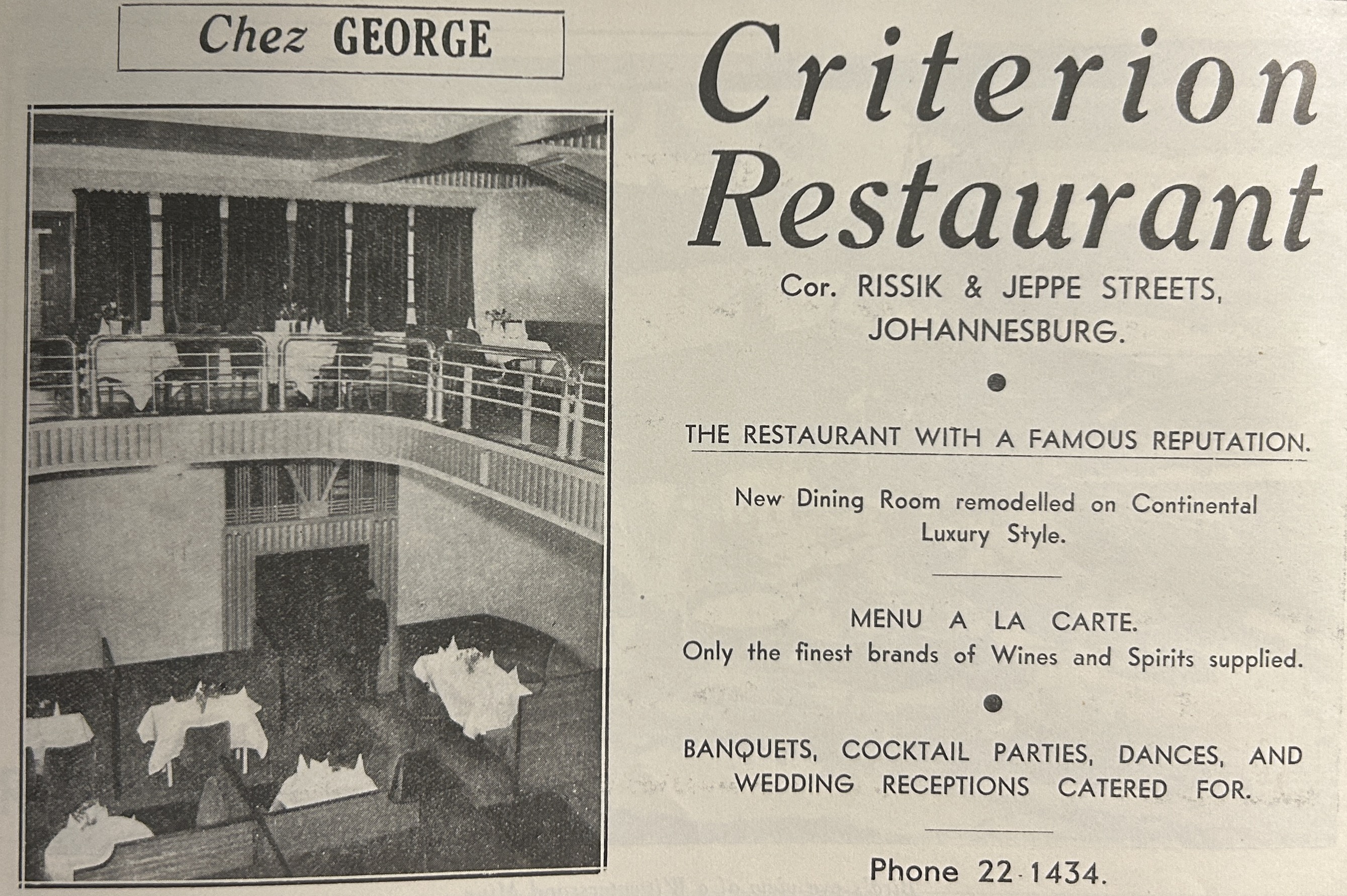
Criterion Hotel – SE cnr Rissik and Jeppe Streets
Designed by Cook & Cowen in 1939. It had 36 rooms with bathrooms. It was more expensive (almost double the price) than most of the listed licensed hotels at the time and on par with the Carlton Hotel’s daily bed & breakfast price. The building was demolished in the late 1990s along with Africa House and the Hertier building (old custom house) for a Woolworths.
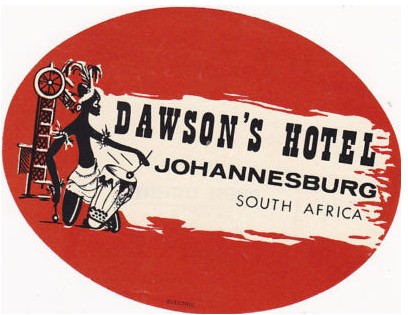
Dawson’s Hotel – NE cnr President and Von Brandis Streets
According to Goads ’37 map, the building on the site used to be known as Hieman’s Buildings. The hotel was designed by Wilfred Clement Von Berg c1935 and the building is still extant. It had 41-45 rooms with 26 having private bathrooms.
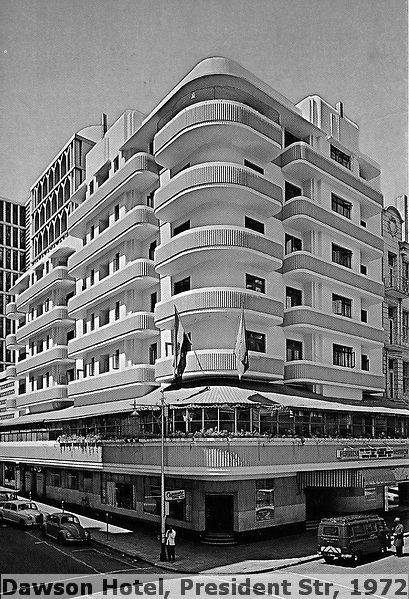
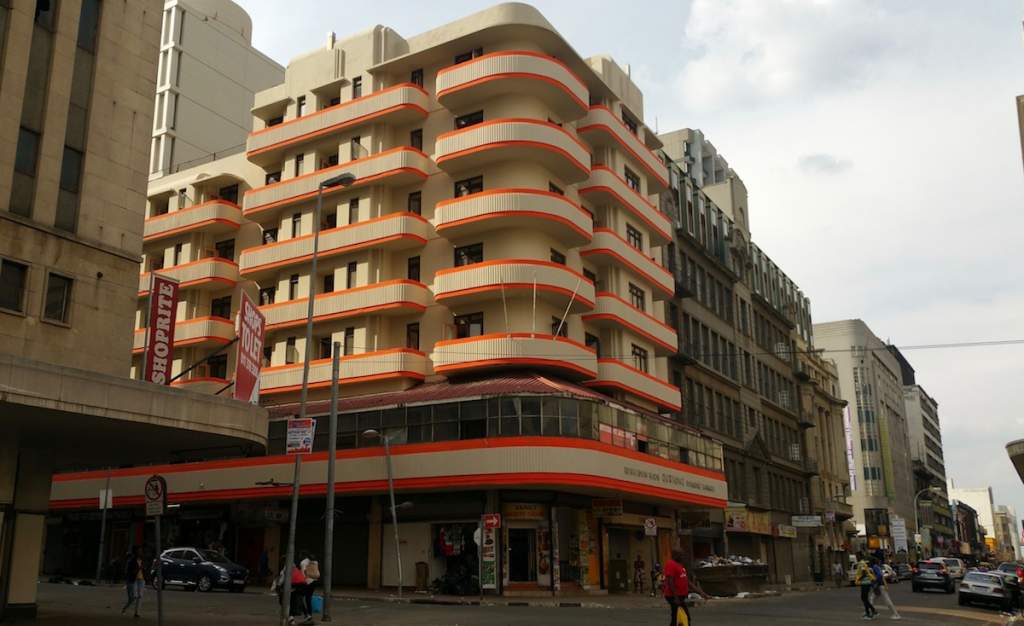
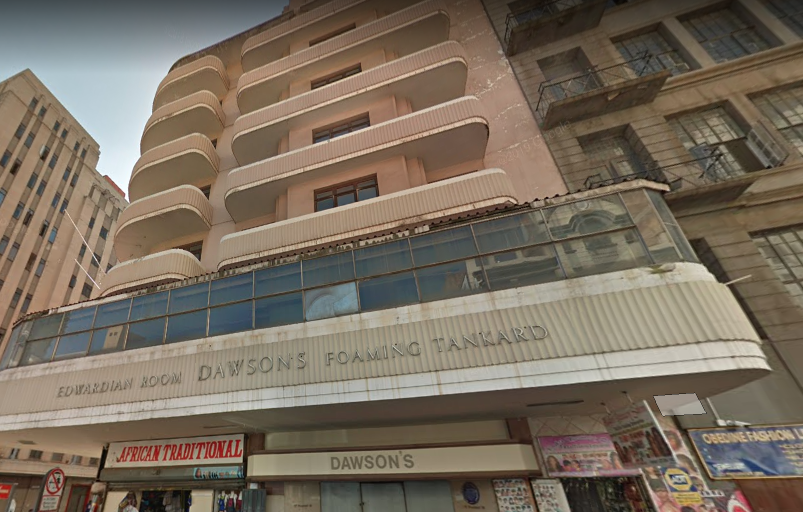
Street level signage reads “Edwardian Room DAWSONS Foaming Tankard”. The entrance was on President Street and there appears to be Blue Plaque on the right of the old entrance. The hotel and bar ran until the late 1980s or early 1990s.
It’s used as student accommodation c2022.
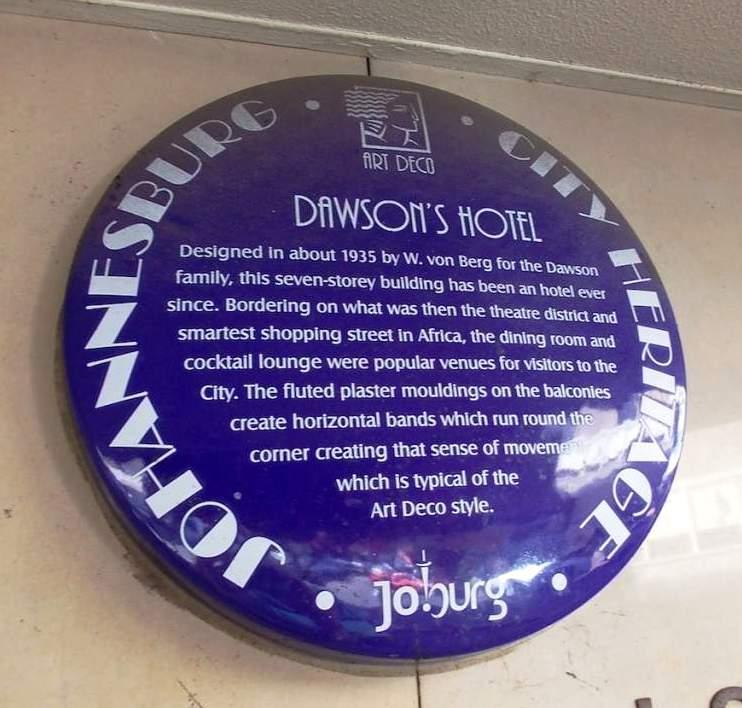
From the Blue Plaque:
Designed in about 1935 by W. von Berg for the Dawson family, this seven-storey building has been a hotel ever since. Bordering on what was then the theatre district and smartest shopping street in Africa, the dining room and cocktail bar were popular venues for visitors to the City. The fluted plaster mouldings on the balconies create horizontal bands which run around the corner creating a sense of movement which is typical of the Art Deco style.
Europa Hotel / Sherbourne Hotel – Claim Street
Artifacts list this as a pre-1927 building designed by S. V. Mann. The building looks Art Deco so not sure. There is a Europa building on the corner of Claim and Smit Streets, but not sure if it’s the same. Curries list Europa Hotel on the same site. I remember the signage from the 80s. A 1962 and 1964 guide lists the same site as Sherbourne Hotel with 125 rooms, and 14 with private bathrooms. It was the site of a police raid in the 1990s due to concerns over child prostitution.

Grand Hotel – Kerk Street between Delvers and Troye Streets (Goads)
Listed in Goads 1915 as sheet 6 block 52, but nothing is there. On ’37 map, there is a Grand Hotel on Kerk between Delvers and Troye Streets. The building is extant and still called the Grand Hotel. Appears to be Deco in style.

Grand National Hotel (2nd) – 114/5 De Villiers Street between Hoek and Wanderers Streets (Goad)
This hotel was under construction in 1937 and listed as Grand National Hotel. The 1962 JHB guide lists 106 rooms, 28 private bathrooms and all the trimmings. In 1973, it was listed as Golden City Hotel. The building is extant. It was designed by Cook and Cowen in 1935.

Faylands – 2 Yettah Street Hillbrow
Listed as a private/unlicensed hotel in both 1951 and 1962 JHB guides. It had 200 rooms. The building was in front of the Mimosa Hotel bordering Clarendon Place and was demolished in the 1970s or 1980s. At one time the site was a garage/service station in the late 1980s.

Glossop Hotel – SE cnr of Bree and Claim Streets (Goads)
Appears on ’37 map, but was out of the survey area for 1910. The stand is blank in 1973, but this was the site of The Junction nightclub in the late 1980s and early 1990s. The newer building was fairly modern, so I suspect the hotel was demolished to make way for what was a more business-centred premises, where later, the top floor became the nightclub. I recall there being a car radio installation centre at street level in the mid-1980s. (Niall’s Car Radio). In the 1962 JHB guide, it was listed as having 13 rooms and no private bathrooms.

According to Nicky Arden in her book, she remembered the red and green neon sign that flashed GLOSSOP HOTEL! LION BEER!
After some searching, I finally found a photo of the Glossop Hotel – looking south from the kink in Bree Street.

Great Britain Hotel – Anderson, Frederick and Delvers Streets (Goads)
Listed in ’37 map. Was a carpark by 1937 and appears still to be.
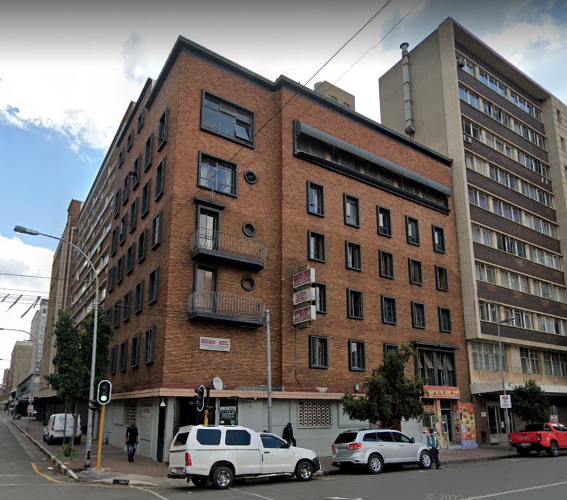
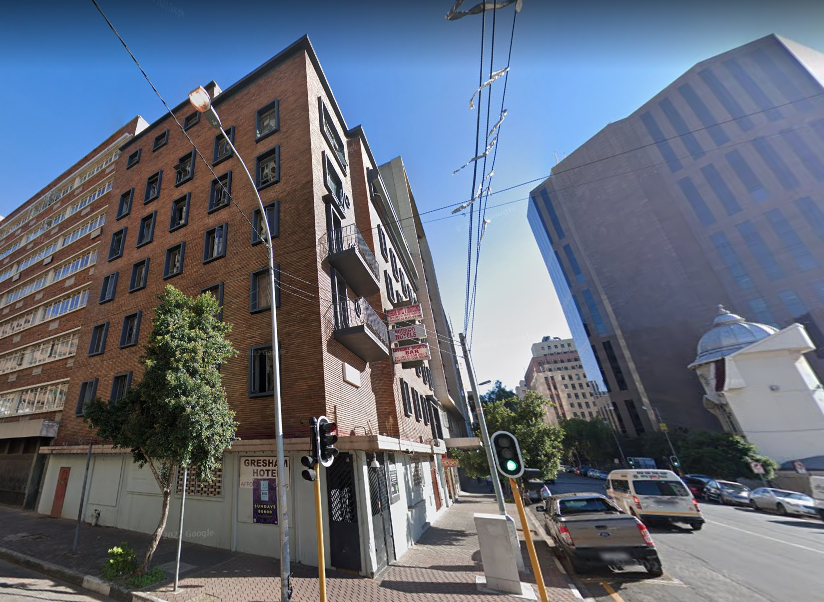
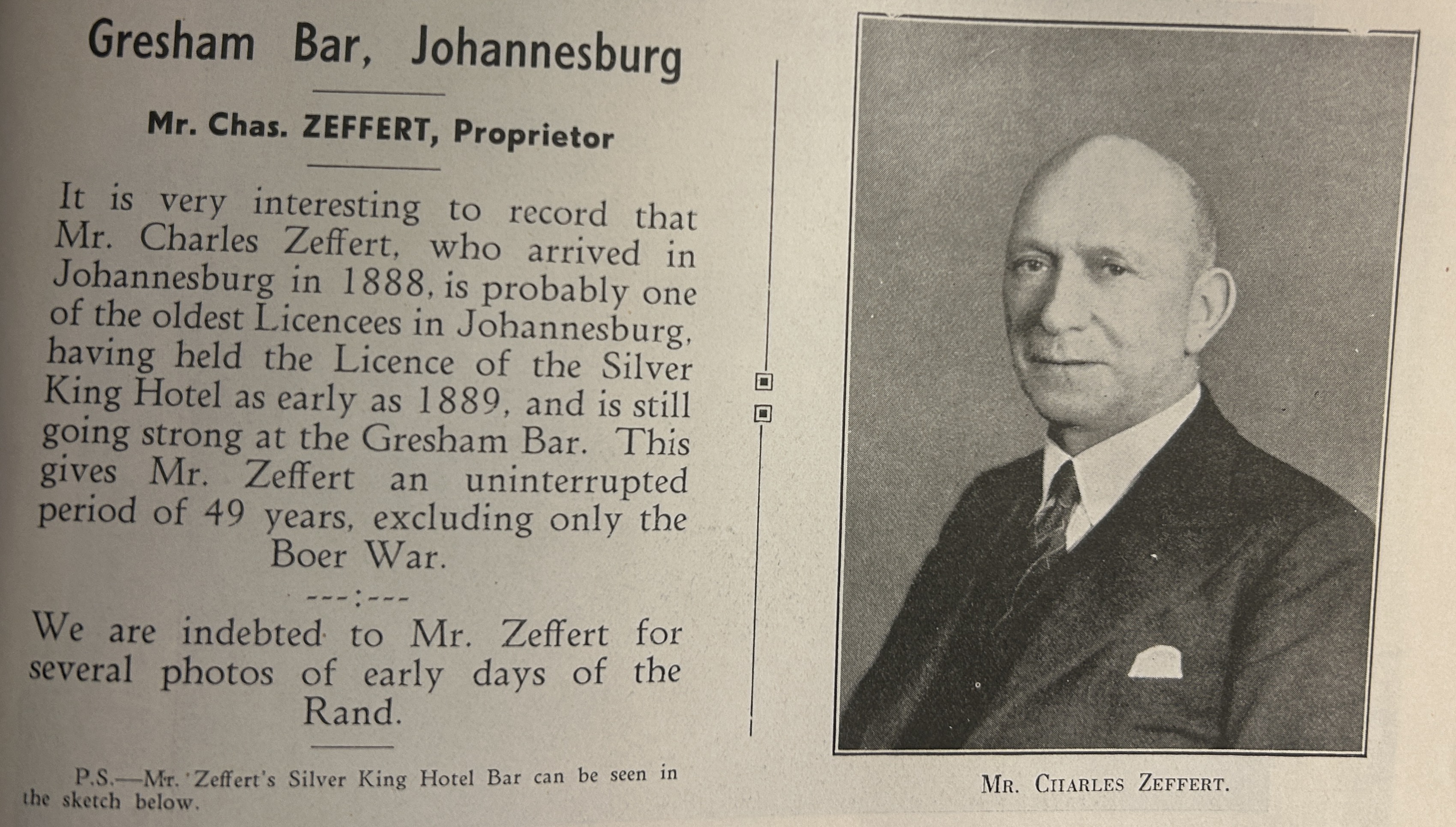
Gresham Hotel – cnr Loveday and Anderson Streets
Not listed on Goads ’37, this building looks like a late Art Deco design. It replaced a motor accessories building and had been known as Gresham Hotel as far back as the 1960s, but possibly before that. Artifacts list it as designed by Saul Margo in 1938. It had 34 rooms, with 6 private bathrooms.
Hotel Elgin / Park Royal – NW cnr Klein and Plein Streets (Goads)
Adjacent to the Ritz, this was a fairly large hotel. In 1962 it was known as the Park Royal and listed as having 120 rooms all with their own bathrooms (1964 guide only lists 65 rooms). It was in the exclusive price range along with Luthje’s Langham at this time. The block was demolished by 1973 and a new building known then as North City was erected. It’s known as Shell House today.

Hotel Rissik – SW cnr Rissik and Plein Streets (Goads)
The site is not covered on the 1910 map and does appear on 1937 Goads. By 1973, most of the block was demolished and Mobil House was erected in its place.
Joubert Park Hotel – 23 Edith Cavell Street
Listed in the 1962 JHB guide as a private hotel with 31 rooms. The odd design could be Art Deco but may be earlier. The Building is called John Court c2022.

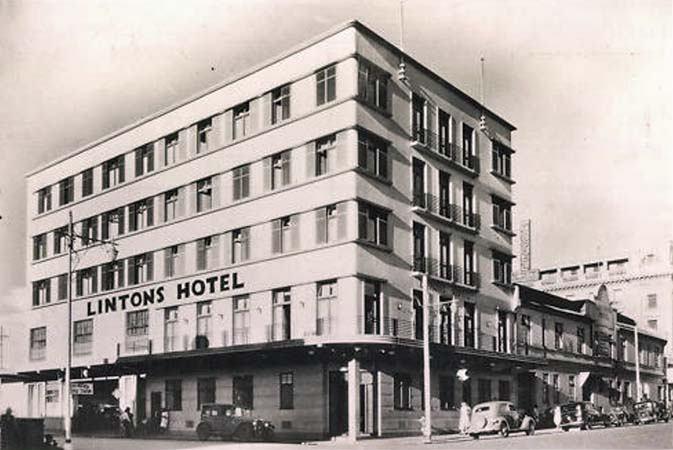
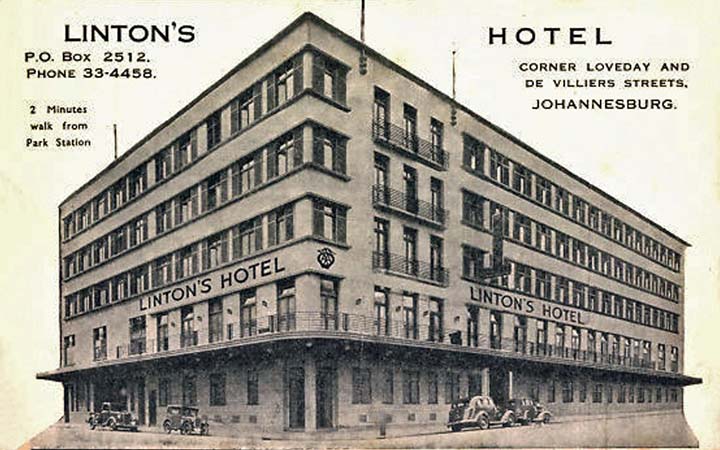
Linton’s Hotel – NE cnr De Villiers and Loveday Streets (Goads)
The building is still extant and called Duncan House (listed as Duncan House as far back as 1973). Artefacts lists as designed by Kallenbach, Kennedy and Furner in 1930. 2nd photo shows an extension that never happened.
Library Hotel / New Library Hotel – NW cnr Commissioner and Fraser Streets
“Constructed in the Streamline Modern style, the New Library Hotel was designed by the architects Louw & Louw (Architects of Volkskas Building) in 1936. For a period of time, the building was home to one of the first Gay clubs in Johannesburg.” (McKechnie and Keeling, 2017).
“The Carlton Hotel had become a popular meeting spot for gay men, and then the Astor on Smit Street. Gay meeting places and gay clubs shifted throughout the inner city, determined by where gay men felt safe and where they wanted to congregate. A woman called Chick Venter opened a club near Park Station – a popular cruising spot in its own right – in the late 1950s where mostly gay men went but was also deemed safe by lesbian womxn. Gay clubs moved from place to place throughout the inner city, but by the 1960s this changed as The New Library Hotel, situated on Commissioner Street, promoted itself as a gay venue.
Rocky’s at the Continental and The New Library both opened in the early 1970s, and later still, The Butterfly Bar at Skyline Hotel would become one of the most packed gay venues in the city. The Together Bar, or T-Bar as it was often called, was opened for lesbians in 1974 in Hillbrow’s Hilton Court Hotel.” J. Botes

The New Library Hotel is listed in the 1951 JHB guide and the 1964 guide lists 22 rooms. Listed on Curries ’73 map and appears to have been active until the 1980s. The signage still exists but the building is gutted.
Newtown Hotel – Cnr NE corner Bree and Becker Str
Listed as a tea room on Goads ’37 map, this building looks like a late Art Deco addition. The building is still extant.

Nugget Hotel – NW cnr of Marshall and Nugget Streets (Goads)
This simple orange brick Art Deco building appears on the Goads ’37 map and is extant.

Stanley Tollman and his wife bought the Nugget Hotel in 1954. Tollman took on the role of managing the front of house of the hotel, taking care of guests, the bar and restaurant and financial operations, while Beatrice managed the back of house, which included decoration, housekeeping, purchasing, and all the cooking for the restaurants and functions. Tollamn would go on to buy the Hyde Park Hotel and later open the famous Tollman Towers, which were later incorporated into the Southern Sun Johannesburg Sun & Towers complex.
In 1962 it had 22 rooms with no private bathrooms and only a daily rate.
Queens Hotel – Bree Street between Hoek and Wanderers (Goads)
Listed in Goads ’37 map. In 1973 it was known as Metro Arcade. It would have been next to the old Metro Cinema. Artefacts list the architects as W. and C.W. Reid dated 1927.
Ritz Hotel – NE cnr King George and Plein Street (Goads)
Listed in Goads ’37 map and the 1962 JHB guide, this was a small corner hotel with 40 rooms. It was next to Hotel Elgin which later became Park Royal Hotel. The entire block had been demolished by 1973 and a new building known as North City was erected. It’s known as Shell House today. Artefacts list Kallenbach as the architect and dates it to pre-1927
Royal Hotel – 14 Plein Street between Loveday and Rissik (Goads)
Small hotel with stairs indicated, so like two or more stories. Only listed in Goads ’37. Curries map lists the site as ‘Sancura’. In 1910, the block was listed to have scattered or single dwellings.
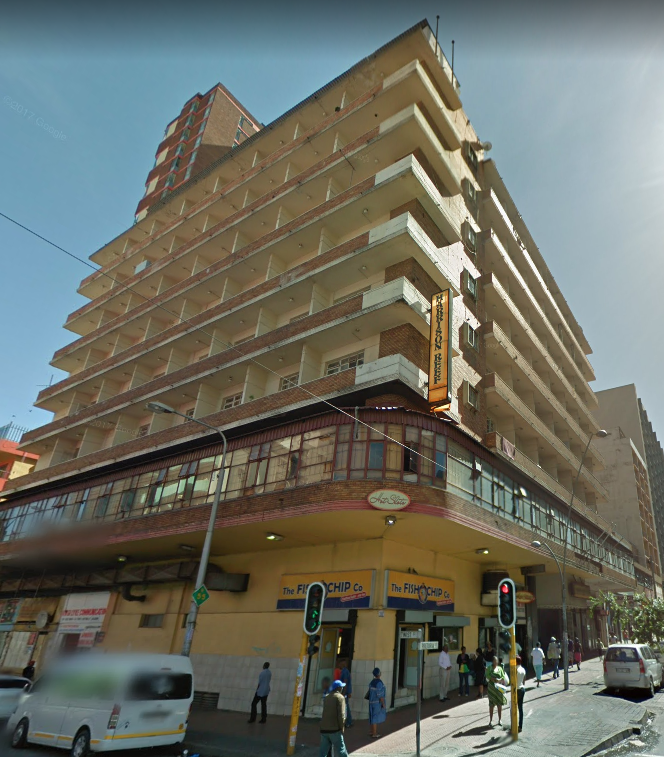
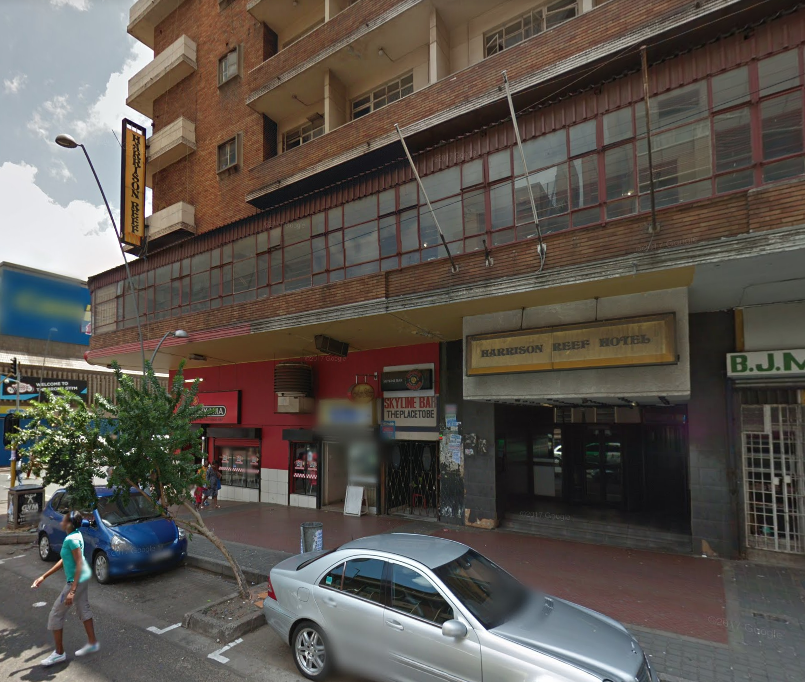
Skyline Hotel / Harrison Reef Hotel – cnr Pretoria and Twist Streets Hillbrow
Designed by Wayburne & Wayburne in the 1940s. In 1962 it had 108 rooms with 89 having private bathrooms and was the most expensive hotel in Hillbrow. It was built by the African City Property Trust and the Glazer brothers whose company claimed to own six of the highest-valued properties on Eloff Street (including the Waldorf Hotel). Now known as Harrison Reef Hotel. In the 1980s, its bar known as ‘The Butterfly Bar’ was a popular gay and lesbian venue.
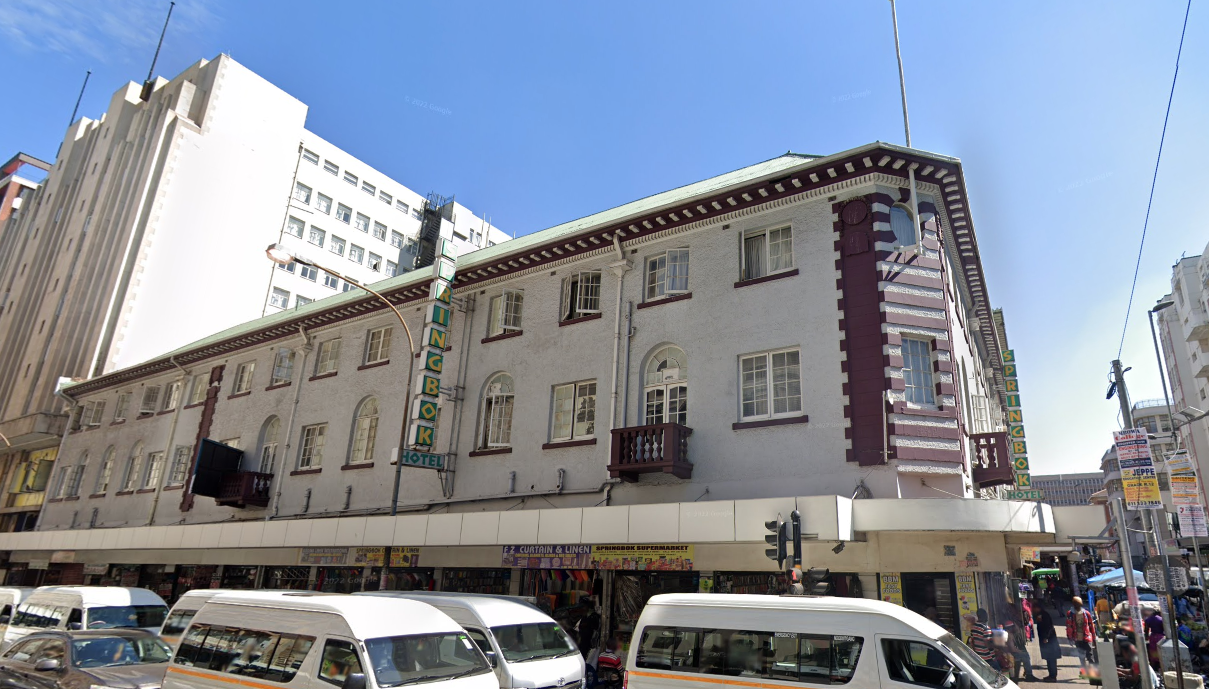
Springbok Hotel – NW cnr Bree and Joubert Street
It’s a tricky one to date. It’s been listed in the 1973 map as Springbok Hotel, but in 1937 it was the YMCA building. The current layout is different, which suggests the YMCA was demolished and replaced with the current building or greatly altered inside while preserving some original elements of the frontage. Some elements look Edwardian (roof trim and brick design around corners and selected windows). It fell outside of the surveyed insurance area in 1910. Artefacts list a Springbok Hotel c1913 designed by Geoffrey Eastcott Pearse. In 1962 it had 46 rooms, 6 with private bathrooms.
Stirling Hotel – NE can Pritchard and Delvers Street (Goads)
Appears on the ’37 map. The building is still extant and is Art Deco in style, although it’s been clad in modern materials, with some of the original detailing still visible. On the 1973 map, it’s the Stiruno Hotel. On Google Earth c2010, the faded but illegible ‘AGS House’ can be seen above the entrance. In 1962, it was listed as having 36 rooms.

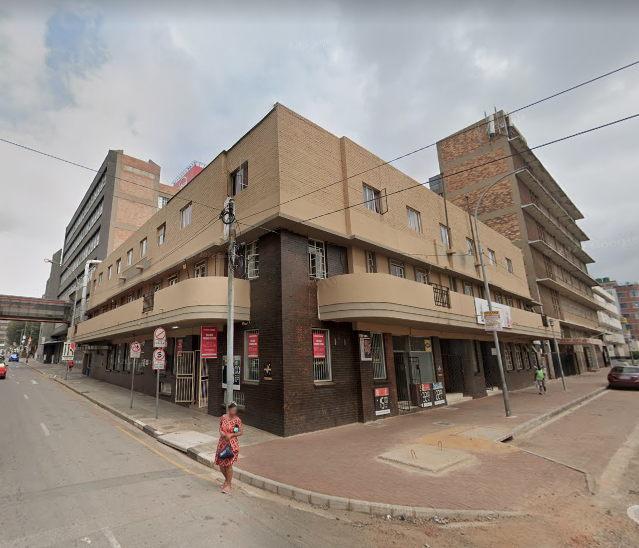
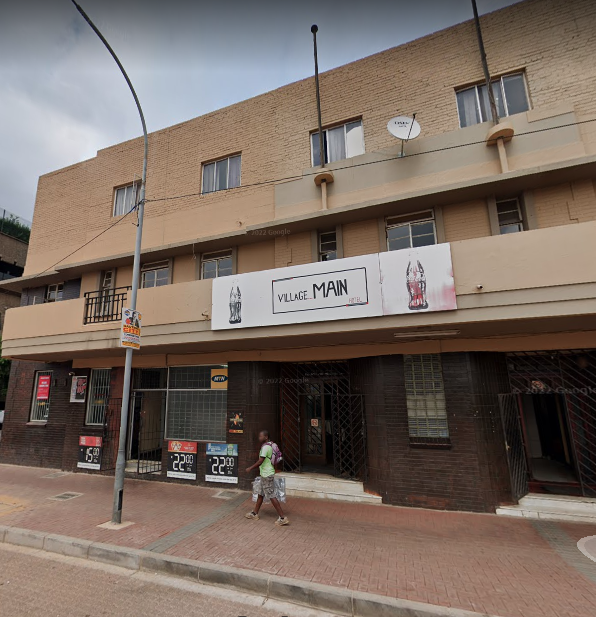
Village Main Hotel – NW cnr Anderson and Goud Streets (Goads)
Appears on ’37 Goads and Curries 1973 maps. The Art Deco building is extant and appears to be a going concern. It has 28 rooms and only 1 with a private bathroom. This is a good example of a likely small residential hotel with a connecting bar that survived the consolidation of the 50s-80s.
Waverly Hotel – NW cnr President and Loveday
Across the road from City Hall, this hotel is listed in the 1962 JHB guide and Curries map of 1973. It had 27 rooms, 2 with private bathrooms. It was demolished in the early 80s for a new building that took up the block.
After 1950s
“A growth of hotel numbers is observed as occurring in Johannesburg following the establishment of the apartheid government. In 1955 the building of two so-styled ‘continental hotels’ – the Waldorf and the Marlborough – was announced for completion in 1957. Such new constructions are explained by demand factors in terms of the improved flow of international tourists.” (The South African Hotel Review, 1955).
The system of grading hotels didn’t exist during the 1950s. “Grading in South Africa started as an initiative by the Hotel Board, and from 1965 only hotels were graded. In 1992 the South African Tourism Board (SATOUR) took over the responsibility of grading as part of their marketing portfolio. According to the Tourism Act 72 of 1993, the grading and classification scheme of SA-TOUR was voluntary. As a result, only a small percentage of the accommodation sector was accredited in accordance with the classification scheme and therefore standards could not be applied to the entire industry (Swart 1997: 96). This system was, however, discontinued in 1999, when some major hotel groups disapproved of the new grading system, claiming that it was not effective. As part of their restructuring process, SATOUR also realised that it was not their mandate to grade or set standards for the industry because it was primarily an international marketing agency. It was then decided to transfer the function to the Department of Environmental Affairs and Tourism (DEAT) together with tour guiding, which was also managed by SATOUR. The DEAT registered the Tourism Grading Council of South Africa (TGCSA) as a Section 21 Company in August 2000 (Tanner 2003: 33). It officially launched the national star grading scheme on 29 November 2001 (TGCSA 2002).” Engelina du Plessis & Melville Saayman.
SAB (then known as Castle Breweries) began to invest heavily in service industries from 1949 when an aggressive expansion thrust saw some £4.5 million invested in hotels and pubs.
In 1969, these interests were merged with a hotel chain owned by Sol Kerzner, to form a separate subsidiary known as Southern Sun Hotels. Kerzner remained with Southern Sun as its managing director for several years thereafter. In 1983 Kerzner left SAB, but remained a significant shareholder in the company.
Southern Sun eventually grew to become the leading hotel chain in South Africa, with franchises awarded by Holiday Inn and Inter-continental Hotels. By 1998, this subsidiary owned 74 hotels with 12,200 rooms, or about 22 per cent of industry capacity. Wikipedia
With the construction growth in the city from 1950’s -1980s, many of the smaller hotels closer to the city centre made way for new office projects. Bigger hotels in the city, as well as those out in Hillbrow, Braamfontein, and the suburbs, covered the demand. Some of the smaller hotels further away from the CBD did survive, but these operated more as ‘residential’ hotels, rather than for tourist accommodation. In the 1970s, SAB still had 67 licensed houses (bars and smaller sites) that were released to tenants. The real estate potential of these properties was constantly under review.
With the decline of the CBD from the late 1980s and early 90s, many of the large sites closed down with some being ‘mothballed’ (like the Carlton Hotel and Sun & Towers). Existing hotels outside of the CBD as well as new hotels established in Sandton, Rosebank, and elsewhere in the northern suburbs catered for the tourist trade during and after the city’s demise.
Astor Hotel – Smit Street
Listed in 1962 and 1964 JHB guide. Had 72 rooms. Appears to have been on the corner of Smit and King George Streets. It’s noted as being a gay meeting place in the 1960s.

Carlton Hotel (2nd) – Main Street between Kruis and Von Weilligh
Built in the 1970s as part of the Carlton Centre development, it had no connection to the original Carlton Hotel in Eloff Street which was demolished in 1964.
After the old Carlton Hotel was closed and demolished, there was a vacuum for a truly international standard hotel in the city. SAB MD Ted Sceales had a vision to build the best and biggest hotel in Johannesburg. SAB already operated the largest hotel chain in South Africa, and it’s been noted that they had ownership stakes in several private hotels in the city. Along with Harry Oppenheimer of Anglo American, they formed a powerful partnership. The city blocks where the brewery once stood were sold to the Schlesinger organisation after the brewery relocated to bigger premises in Isando. Schlesinger demolished the Edwardian brewery and other buildings and leased the land as an open parking lot. Other buildings demolished by Schlesinger included leftover buildings from the first Catholic Church, the second and larger church was used as stables (the church relocated in 1896 to new premises in Kerk Street). SAB and Anglo purchased the land back from Schlesinger as well as the blocks fronting Commissioner Street and applied to have the streets within the block (Smal and Fox Streets) closed to create a ‘superblock’. By the end of 1963, this was completed.

Architects Skidmore, Owings & Merrill of New York in conjunction with Rhodes-Harrison, Louw, Hoffe and Partners in SA presented the plans in June 1965. It included a 50-storey building, a hotel twice the size of the old Carlton, a garden plaza at street level, two floors of shopping below street level consisting of 160 shops, an Olympic-sized ice-skating rink, and underground parking for 3000 cars (later reduced to 2000).

The entire site included 5 and a half city blocks (4 bounded by Main, Commissioner, Kruis and Von Weilligh with Smal and Fox running between them, plus the block opposite on Main Street that became another parking garage with the Ice Rink on the roof). The NW corner of Main and Kruis was also earmarked as part of the complex and was intended to be an exit from the underground parking.
Also on the site were four existing hotels: Toners Hotel on Von Weilligh Street where the parking garage was built, King’s Hotel, on the corner of Von Weilligh and Fox Streets, and Old Flag Hotel on the corner of Main and Kris Streets, and the Grosvenor on the corner of Commissioner and Smal street (all mentioned earlier in the piece). Clive Chipkin also noted that Progress Buildings (1928) and Denstone Court (1937) were also demolished. These would have been by Schlesinger, before the re-purchase of the stands.
LTA was awarded the excavation contract, and Murray & Roberts the general contract for the whole project.
Opening on 21 November 1972, the 31-storey hotel building took the form of an inverted ’Y’, and had 663 rooms including 64 themed suites that could accommodate 1200 guests. There were ten restaurants including the exclusive The Three Ships with its extensive wine cellar, El Gaucho, Koffiehuis, and Roof Garden (with a rooftop swimming pool).
In 1983, the Carlton Court was built (where the Old Flag Hotel used to be that was intended to be a carpark exit) and linked to the main hotel by a skybridge. Each of its 63 rooms had a jacuzzi bath. Carlton Court restaurant was run as an exclusive club based on designs by similar clubs in London open 24 hours a day and was only available to Carlton Court guests and members of the exclusive Carlton Club.
The 5-Star hotel was then the largest in the Southern Hemisphere and one of the most luxurious in the world. Although operated by Western International Hotels, it was initially owned equally by SAB and Anglo-American Corp, with the remaining 10% held by Barclays Bank, under a company called Carlton Centre Limited. Anglo bought out SAB shares in 1972.
The estimated completion cost for the entire complex was R88 Million, with the hotel costing R23 Million of the total.
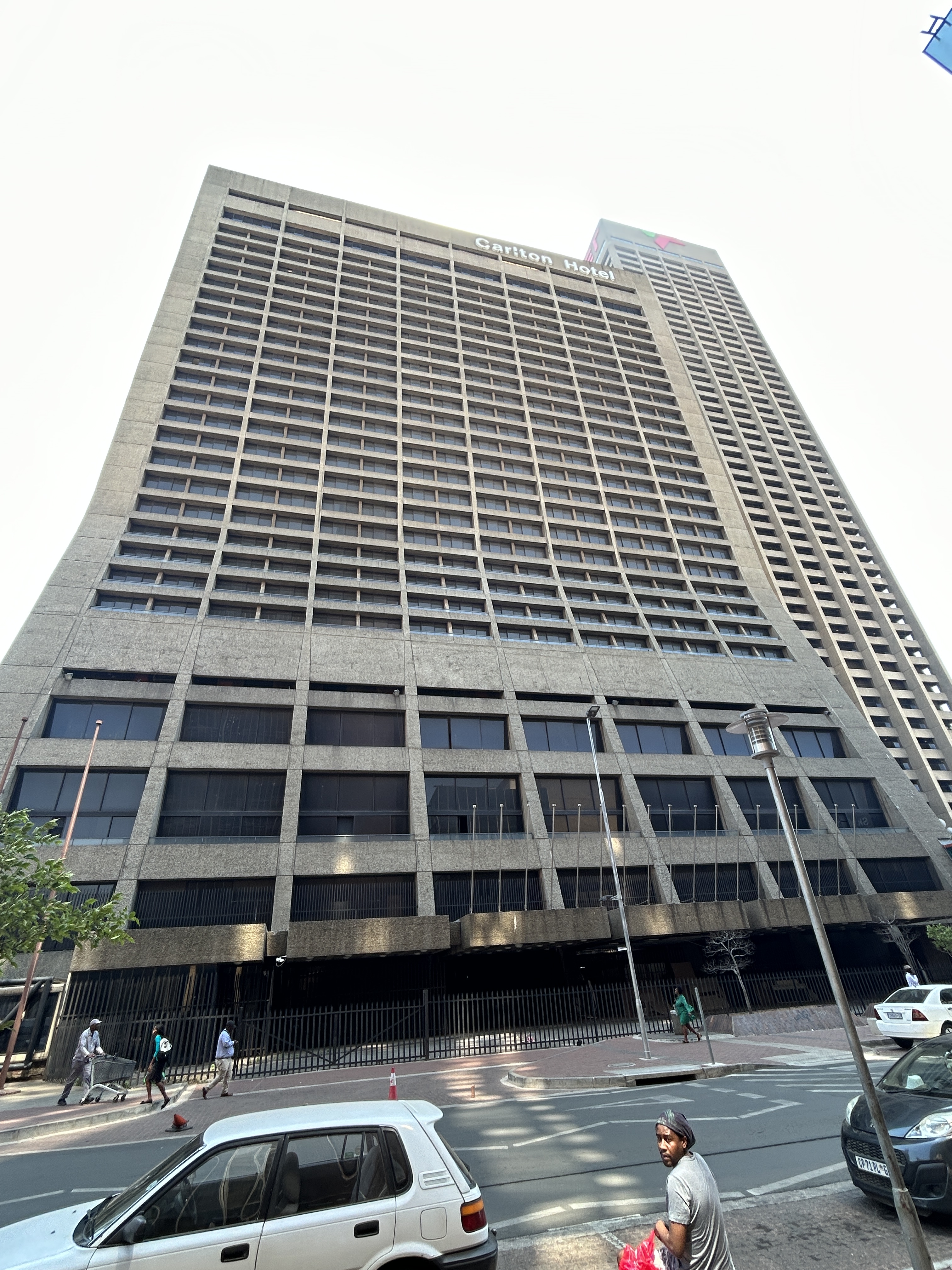
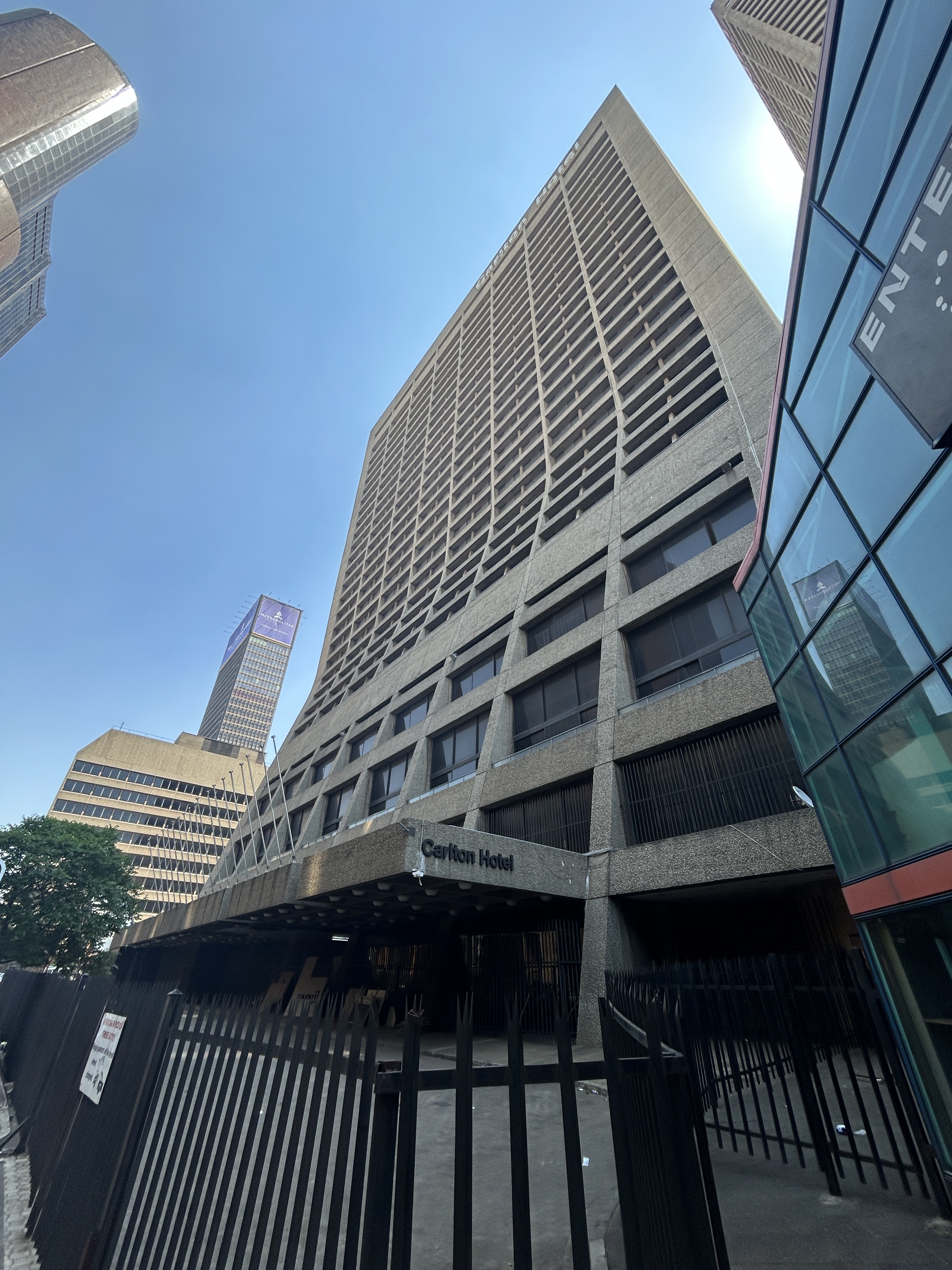
Some of its famous guests include Whitney Houston, Michael Jackson, Mick Jagger, John Lennon and Yoko Ono, Hillary Clinton, Margaret Thatcher, Jesse Jackson, Henry Kissinger, François Mitterrand, Sylvia Kristal, and Patrick Duffy. Its status as an ‘International hotel’, meant that black guests were able to stay there and apartheid rules fell away. By 1986, some apartheid laws had been relaxed, and hotels were able to accommodate guests of all races.
Nelson Mandela stayed in the presidential suite of the hotel in the early 1990s, and held a reception for Paul Simon after the cultural boycott was lifted. His daughter’s wedding took place there as well as his own 75th birthday party. The National Peace Accord was signed at the hotel in September 1991, and the ANC’s 1994 election victory party (with speech) was also held there. By then the hotel was already in decline, and roughly 60% of the hotel was mothballed and run on skeleton staff. It had run at a loss for most of the late 1980s due to the drop in foreign visitors because of pressure on international disinvestment and political violence in the country.

The main hotel was closed in 1997, and the Carlton Court in 1998 after a last-ditch casino license was declined. It remains mothballed. The closure was due to the general decline of the city centre in the mid to late 1990s, and business and capital flight from the city centre to the northern suburbs. There was no longer demand for 5-Star accommodation in the city.
In 2017, a book was published (from photos taken in 2013) called ‘Inside the Carlton Hotel’ showing the abandoned and derelict rooms.
The hotel building stands next to the once tallest building in Africa, the 50-storey Carlton Centre, which became the second tallest building in 2019 when it was eclipsed by the Leonardo in Sandton. The whole Carlton complex is owned by Transnet who paid R33 Million for it in 1997. There were plans in 2023 to put it up for sale.
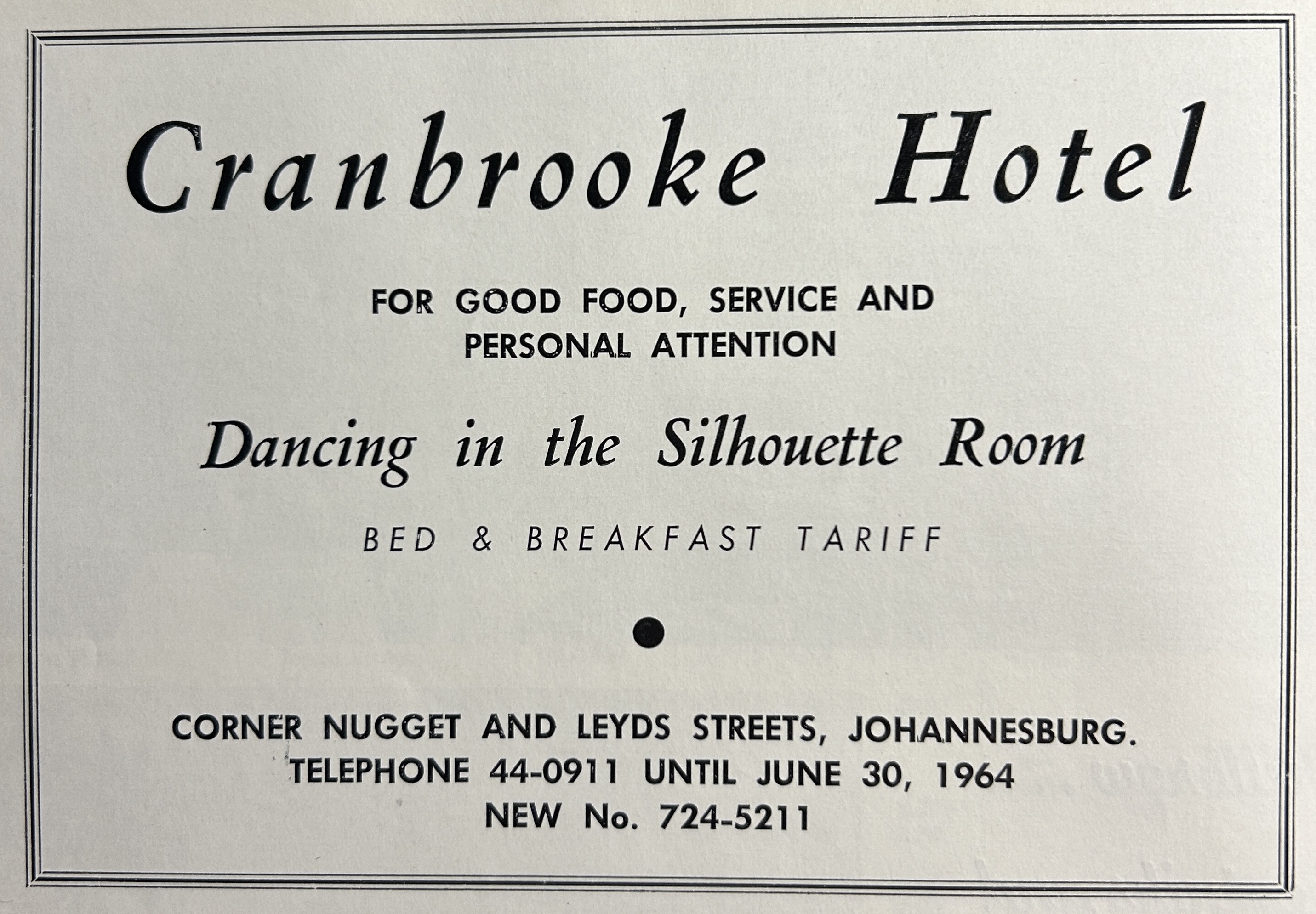
Cranbrooke Hotel / Royal Park Hotel – SW cnr Lleyds and Nugget Streets
Listed in the 1962 JHB guide, it’s now known as the Royal Park Hotel. It had 117-125 rooms with bathrooms, phones in rooms and dinner, bed & breakfast.
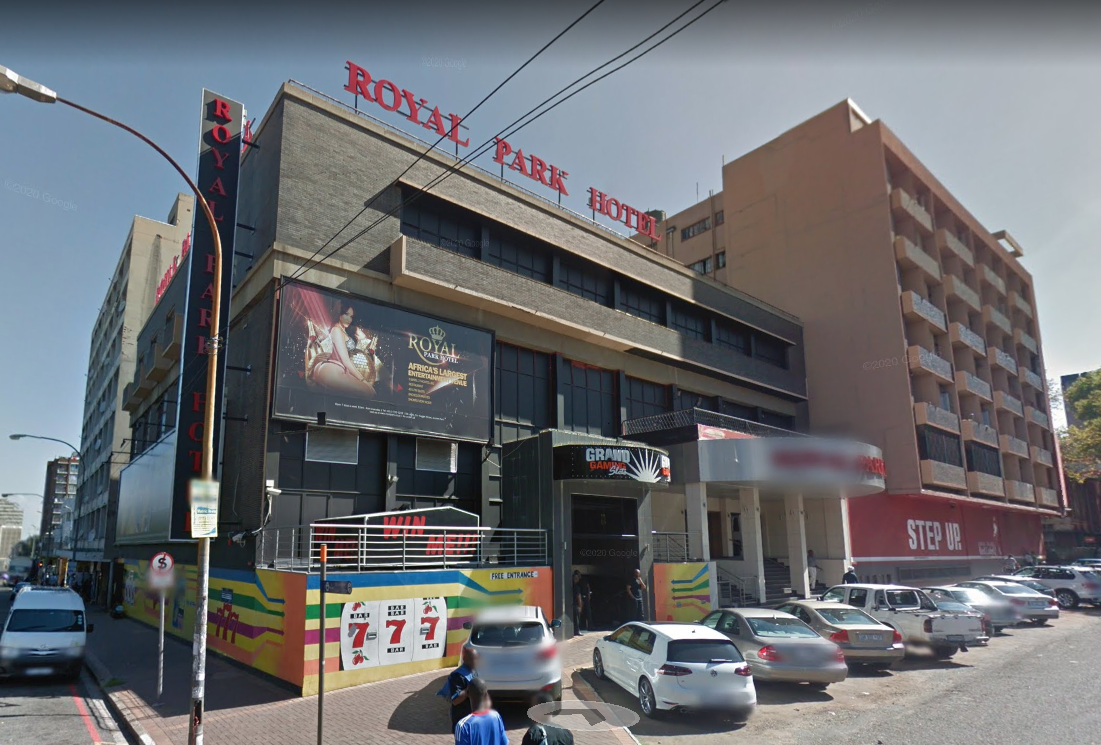
The Royal Park Hotel is better known as a strip club these days. They were raided in 2015 by Home Affairs and women from several countries were found working there without papers. The hotel even has a listing on sexadvisor.com
Cumberland – 43 Van Der Merwe Street Hillbrow
Listed as a 100-room private hotel in 1962 JHB guide. This was likely a long-term residential hotel for newly landed immigrants while they settled and found permanent accommodation. It’s now called the Hillbrow Inn.

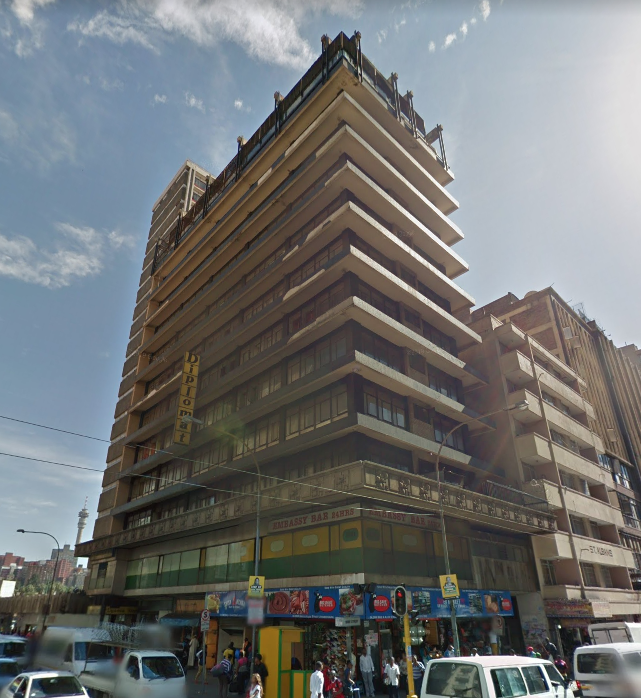
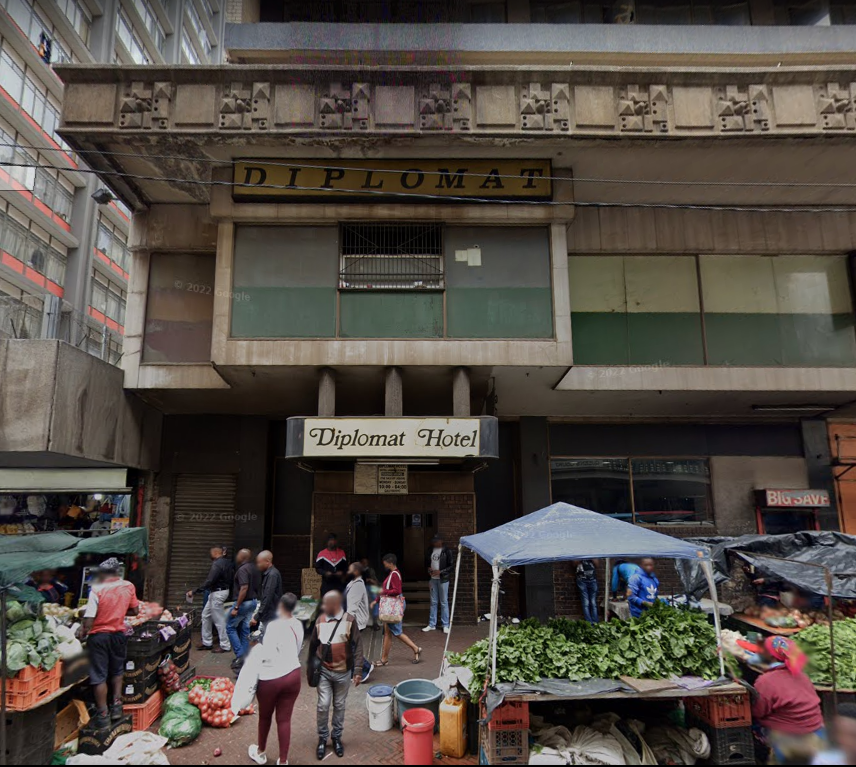
Diplomat Hotel – NE cnr Bree and Klein Streets
Diplomat Hotel is listed on Curries map and the signage still exists. The Embassy 24 Hour bar was a popular bar in the 70s/80s.
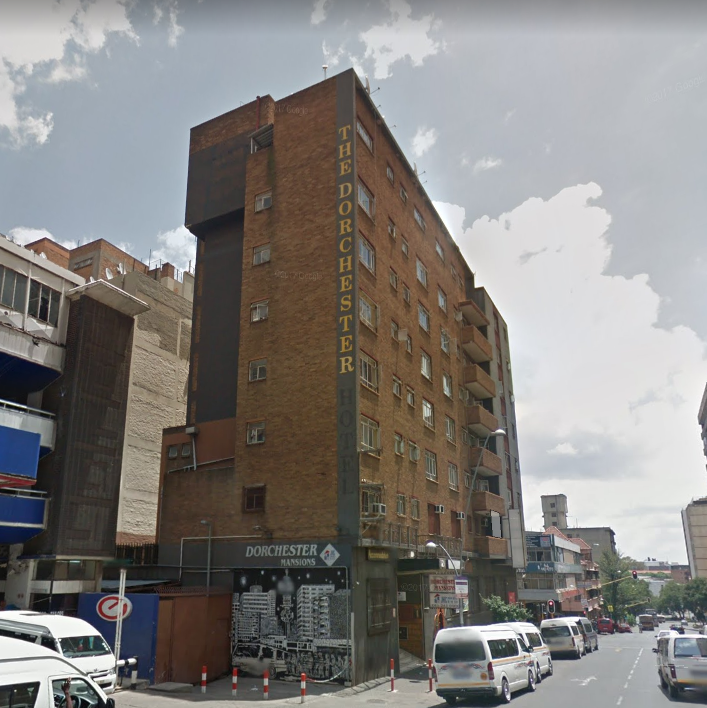
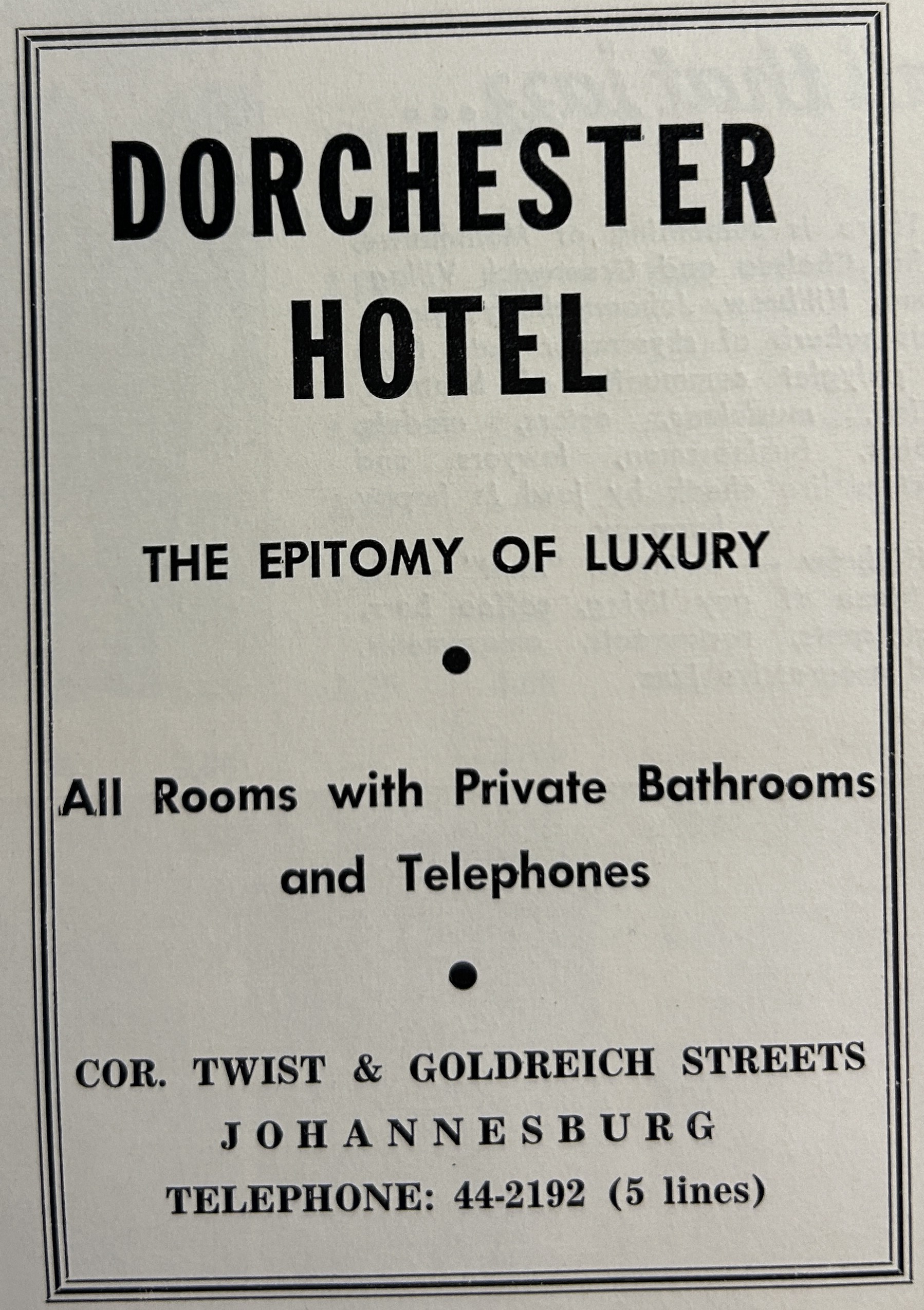
Dorchester Hotel – cnr Twist and Goldreich Streets Hillbrow
Listed in the 1954 JHB tourist guide, this monthly long-term/residential hotel had 84 rooms and was a non-liquor establishment. The building is still extant.
Elkro / Elkeron Hotel – Pieterson Street between Quartz and Claim
Listed on Curries map

Elmhurst / Park Lane Hotel – 54 Van Der Merwe Street
Listed in the 1951 JHB guide as an unlicensed hotel. Became the Park Lane Hotel later. The building is next to the Belmont Hotel and is now apartments.

Empress Hotel / Minerva Hotel – 271 Bree Street neat Quartz
Listed in the 1962 JHB guide as having 50 rooms, none featuring a private bathroom. It was called ‘Impala’ on the 1973 map. Now known as Perfect Hotel since 2010.

The Franklyn – 52 Esselen Street cnr Quartz
Listed as a private hotel in the 1962 JHB guide with 70 rooms. It was opposite the Hilton Plaza and likely another residential hotel.

Hilton Plaza Hotel – NW cnr Quartz and Esselen Streets
Listed on Curries map, Home to Le Poupee nightclub in the early 1970s and the Together Bar (or T-Bar) in the 1980s which was one of the few lesbian bars in the city. Several sources cite Hilton Court Hotel as being home of the Together Bar, but Andrew Wood has confirmed it was Hilton Plaza. The hotel signage still exists.

Hofman New Yorker Hotel – NE Cor Quartz and Kapteijn Streets
Listed on Curries map.

Ilanga Hotel – SE cnr Pieterson and Quartz Streets
Listed on Curries map.
Johannesburg Sun & Towers
Opened on 1 February 1986 on the site of the old automated municipal parking lot which was demolished in 1983. The new hotel incorporated the older Tollman Towers (which was built on the site of the William Booth Memorial Hostel, Prices Edward Mansions, and Irol Mansions).

From an article in Financial Mail June 1982 courtesy of Heritage portal:
“Southern Sun’s (SS) R100m plan for Von Brandis Square has given central Johannesburg its biggest shot in the arm since Carlton Centre. Indeed the development could do much to put the CBD back on the road to full recovery.
There are still loose ends to be tied up, it’s true. Not the least of them is provincial approval for the closure of the adjoining portion of Kerk Street to allow the Von Brandis site to be integrated at mezzanine level with with the existing Towers Hotel.
But that should be a formality now that the City Council has given the nod, and there’s no good reason why a start should not be made on schedule early next year.
From all accounts it is going to be a wondrous affair – Southern Sun’s biggest one-off development to date, bigger than Sun City at the planning stage and worth more on contract: 830 rooms, bars, eateries, conference rooms, mezzanine shopping, public terraces, a private lake with island restaurant, and 34-floor mirrored hanging wall.
Also important from the CBD viewpoint is that the development will include 600 parking bays, 450 of which will be available to the public 24 hours a day.
Ambitious, yes. Even over-ambitious perhaps? MD Sol Kerzner says no. Demand for Johannesburg hotel space, he tells the FM, is strong and should grow further over the three-year building period. And with a fair amount of overseas visitors included on the potential guest list, there should be no problem achieving an acceptable occupancy rate.
If the Carlton experience is anything to go on, he’s right. And like Carlton and the other new generation downtown hotels, it should bring in tourists with the kind of spending power the core needs right now.”
It had its own jogging track, and the two buildings were connected by an open-air pool deck. There was a gym, squash courts and a Finnish steam bath.
It was also the only hotel in Johannesburg with a Japanese restaurant – Suki Hama. Other restaurants were The St. James, and Lakeside Coffee Shop.
According to Clive Chipkin, the advancement in heat-resistant solar glass technology allowed buildings to be skinned in glass. ”When the architects for the new Johannesburg Sun Hotel were given a brief “to establish a modern landmark in Johannesburg’s CBD” they chose this thematic material constructing a 42-storey hotel – the biggest in the Southern Hemisphere – and facing the entire surface area of the main tower block with a flush-gazed skin of solar shield blue-green laminated safety glass (superbly rounded at the corners) together with top and bottom trim in white laminate panels. The existing Tollman Towers building on the adjacent site was refaced with matching flush-glazed surface and under its new name, The Towers, incorporated into the overall development which included closing of this portion of Kerk Street and the conversion of the old Smal Street into SMAL STREET MALL a succession of pedestrian routes leading to the Carlton Centre.”

Due to the decline of the area, it was reduced to 3 Stars when Holiday Inn took it over and the name changed to Holiday Inns Garden Court. It was eventually closed as the area declined.
It was put to use again in 2002 to house 2000 policemen. One shot a security guard which likely ended the arrangement. It was then owned by Mark Whitehead of Whitehead Enterprises.
The hotel is currently mothballed.
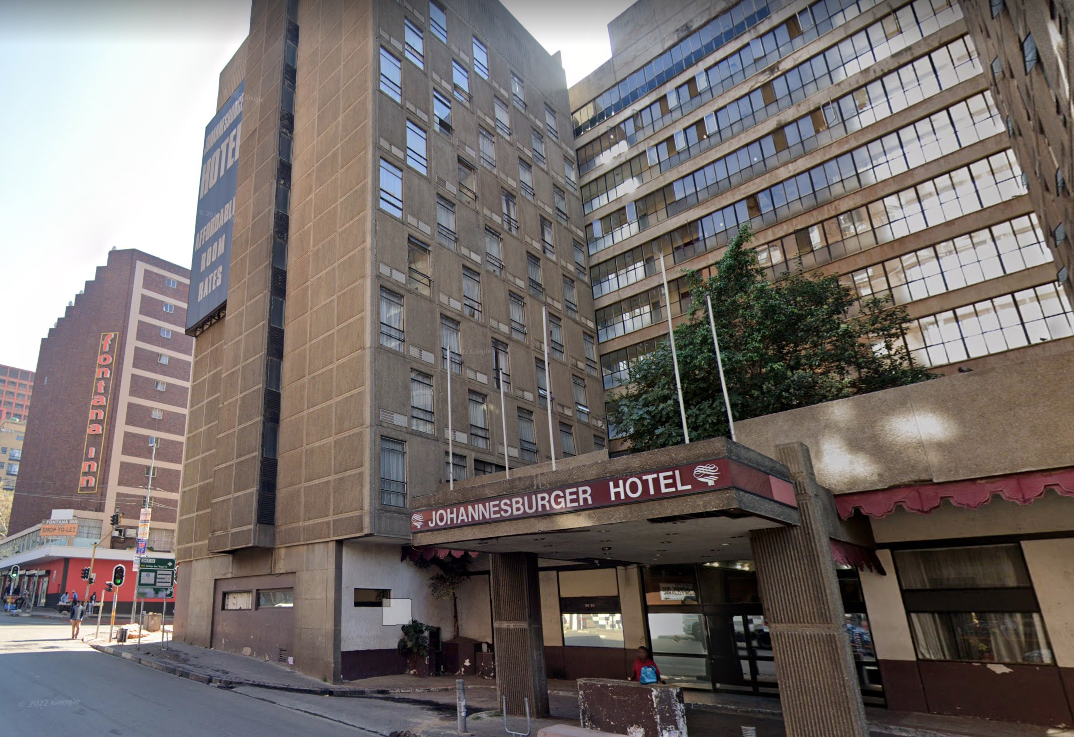
Johannesburger Hotel – Twist Street between Smit and Wolmarans
I recall this hotel from the 1970s. It’s across the road from Century Plaza near Joubert Park and still runs as The Johannesburger Hotel. The estimated build date is the early 1970s
Landdrost Hotel – Plein Street between Edith Cavell and Twist Streets
Listed on ’73 Curries Map. Built in 1973, the Landdrost was a 5-Star hotel and part of the Southern Sun Group. It was home to the Bali Hai tiki restaurant and bar. American boxer Bob Foster formally opened the restaurant Barnato’s, while singer Sacha Distell did the same for the nightclub Annabelle’s. John Foster’s wife Tini opened Ouma’s Kitchen Restaurant.

The hotel was frequented by the likes of Harry Oppenheimer and Louis Luyt. Bridget Oppenheimer was chair lady of the 100 Woman Club, and extra security had to be arranged for when they met due to all the furs and jewellery.
Lee Marvin, Roger Moore, Peter Sellers, Liza Minelli, Olivia Newton-John, Elizabeth Taylor and Richard Burton were guests.

The hotel was downgraded in November 1987 to a Holiday Inn and Bali-Has and Annabelles covered to conference rooms. It then became a police barracks and then converted into apartments in 2000.
Little Roseneath Hotel – SW cnr Smit and Quartz Street Hillbrow
Listed on Curries map. Old signage still exists indicating a one-star establishment.

Mariston Hotel – Hancock Street between Claim and Banket
Listed on Curries Map. Chipkin describes it as a residential Hotel on the site of the old Koch Street Marist Brothers school.

Mimosa Hotel – Louis Botha Ave & Claim Street Hillbrow
Estimated to have been built in the 1950s. During the 1980s it was a residential hotel but succumbed to hijacking in the mid to late 1990s. It even made the Washington Post in 2000 in a story about crack cocaine dealing and was raided in 2001 in a city-wide clean-up operation. 100 people were arrested including illegal immigrants. Drugs and stolen items were also found. It was claimed the building was controlled by Nigerians.

The building was later cleaned up and regenerated (no details on this). It’s now known as Mimosa Square.
Monte Carlo Hotel – Bree Street between Von Weilligh and Smal
Listed on Curries map. May also be the site of the Monte Carlo cinema. The building has been demolished.
Moulin Rouge Hotel – NW cnr Essellen and Claim Streets
Listed on Curries map, it was popular in the 60s and 70s for dinner, and live music. In the 80s it was home to a popular nightclub called ‘The Parks’.

Nederburg Hotel – cnr Wolmarans and Nugget Streets
Listed on Curries map. Became flats and then Nederburg Old Age Home.

Planet Hotel – 85 Mint Road Fordsburg
Listed here because in 1967, it was the only hotel in Johannesburg that catered for non-whites. Opened in 1964, it had telephones in all rooms, a hall in the basement as well as licensed restaurants and a bar with a private lounge.

Other non-white hotels listed were Merhabe Hotel in Orlando West and the New Yorker Hotel in Kliptown. Travellers to Johannesburg were encouraged to stay at the various hostels on the outskirts of town like Denver, George Goch, and Wolhunter Bantu Hostels (as they were listed). Wolhunter also had a women’s hostel. Beer halls run by the council were also attached to the hostels.
President Hotel – Plein Street between Eloff and De Villiers
Built in 1967/8, it officially opened on 3 March 1968 by then State President Jim Fouche and was Johannesburg’s first 5-Star Hotel (as per the new grading system). It was regularly patronised by state and political guests which included Prime Minister of Israel Ben Gurion, President of Botswana Sir Seretse Khama, and President of Malawi Dr Hastings Banda. Among the celebrities that stayed were Liberace, Sandy Shaw, Penelope Plummer (Miss World 1969), and soprano Elizabeth Schwartzkopf.
The hotel was built by Bernard Glaser with construction by Miodownik & Co. and cost R4 Million (another source states R7.5 Million). At the time there was a shortage of international status hotels. Glaser also owned the Waldorf (mentioned later) which was demolished in the early 1980s for a carpark.

Between-the-Chains was the popular cocktail bar in the President Hotel on the first floor. It was later refurbished by then GM David de Pinna and re-named Ezzio’s after the barman who ran it for years.
On the third floor was Eloff Gardens next to the pool and restaurant. There was also a club in the basement and a restaurant/club/bar on the top floor with panoramic views of the city.
The hotel offered a Presidential suite, 5 additional suites, 20 bed-sitters and 227 rooms. There was a restaurant called Robinson’s and an entertainment bar called Jolly Roger.
At one time it was owned by the International Trust Houses forte Group until it was eventually taken over by Holiday Inns Group which reduced it to 3-Star status. The President Hotel closed on the 17 October 1987.

This was previously the site of Victoria Mansions and the S.A. Club which stood across the road from the technikon and 1932 station entrance. The whole block which once included the Victoria Hotel appears to be owned by the Universal Church of God.
Quirinale Hotel – NE cnr Kotze and King George Streets Hillbrow
Listed in the 1964 guide as having 118 rooms. By the early 1990s, the building was a well-known brothel and drug den. In 1995, Brenda Fassie’s partner, Poppie Sihlahla, died of a crack cocaine overdose in the hotel.

In February 1996, the Hospitality Industry Pension Provident Fund (HIPPF) purchased the Quirinale to convert it to housing for its members. In July, tenants began moving into the 140 flats of what has been renamed Badiri House (Badiri is the seTswana word for workers). The building is extant and has been renamed again.
Rand International Hotel – Bree Street
Described as an important intermediary hotel, this 4-Star hotel was opened in December 1966 by AM van Schoor (former editor of Die Vaderland) and became one of the most popular hotels prior to the opening of later 5-Star establishments. It was built by Ralph Goldberg whose family owned the Luthje’s Langham Hotel.
The building was evidently not originally designed as a hotel, but rather as a block of flats. It’s reminiscent of The Metropolitan in Berea. Some early issues were a lack of boilers which resulted in either no hot water or no central heating. The laundry service was on the 21st floor and there was no service lift, so the guest lift had to be used until a service lift was later built on the outside of the building.

Despite all this, the hotel was busy from opening and ran at 100% occupancy. The two restaurants were the Golden Cockerel and the Tulip Room. A cocktail bar called the Golden Nugget was on the same floor as the Tulip Room. According to manager Bill Reith, more than 700 meals were served per day excluding breakfast. Chef Raphael Anatologia ran the kitchens.
The hotel was bought by the South African Clothing Company in 1969, and then SAB in the early 1970s. Southern Sun Hotels took it over later and still owned it in the mid-1980s.
In the late 1970s, the Tulip Room and Golden Nugget were converted into a nightclub called Raffles. It was opened by Sol Kerzner who also proposed to Anneline Kriel there (they were married in 1980)
In the mid-1980s, the hotel was refurbished but declined along with CBD and other hotels in the area. It’s now a residential building.
Rondebosch Hotel – NE cnr Edith Cavell and Pieterse Streets
Listed on Curries map as a hotel and in the 1962 guide as a private hotel. It had 110 rooms. Currently called Rondebosch Mansions.
Savoy – 75 De Villiers Street
This Savoy was opposite the Drill Hall and had 40-44 rooms with bathrooms. It’s listed in the 1962 and 1964 JHB guides. The building is extant.

This may have later been Cardiff Arms owned by Taffy White in the 1970s/80s and also the venue of clubs Metalbeats, and the more famous DV8 nightclub run by Martin Vogelman. It was also a metal venue in the late 1980s or early 90s. 40 Watt Club??
St. Bees Hotel – NE corner Lleyds and Claim Streets
Listed in the 1962 JHB guide as having 47 rooms. Also listed on Curries map. Now a carpark. Was behind the Jewish school and next to the Baptist church.
St. Tropez Hotel – Banket Street between Koch and Bok Streets
Listed on Curries map. Known as Maxime’s Hotel c2010 and is an adult entertainment venue.

The Summit – NE cnr Pretoria and Claim Street
Built in the 1950s, it’s listed in the 1962 JHB guide as a private hotel with 61 rooms. There is also an indoor swimming pool in the basement. In the 1980s, the Summit Club was a notorious strip venue and nightclub. It still operates today and likely has the longest-running nightclub in Johannesburg.
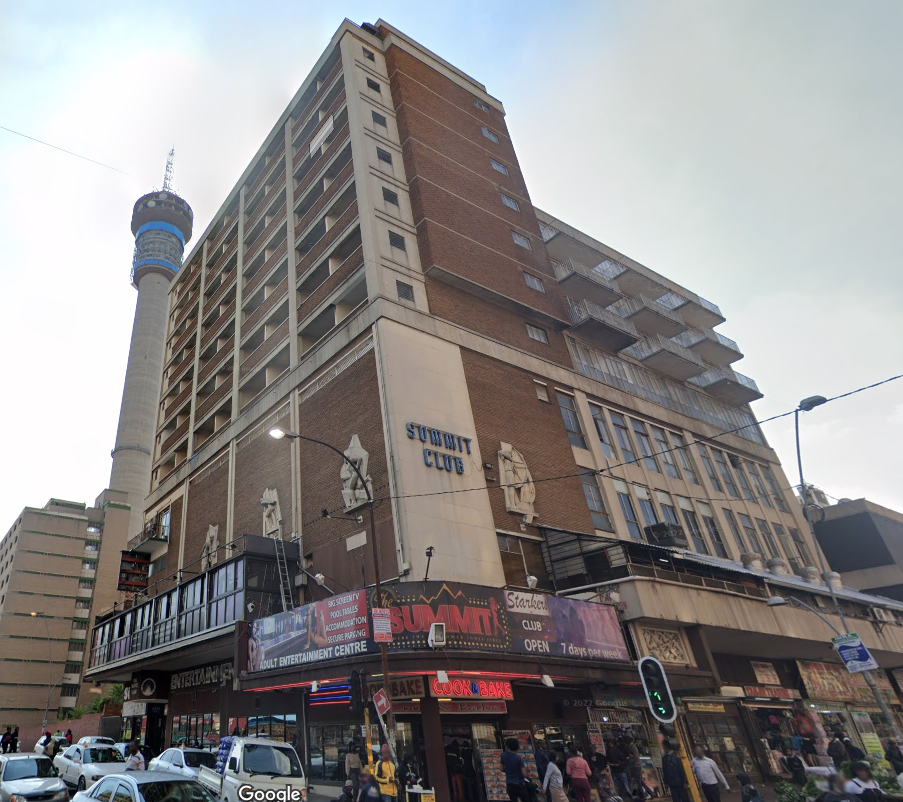
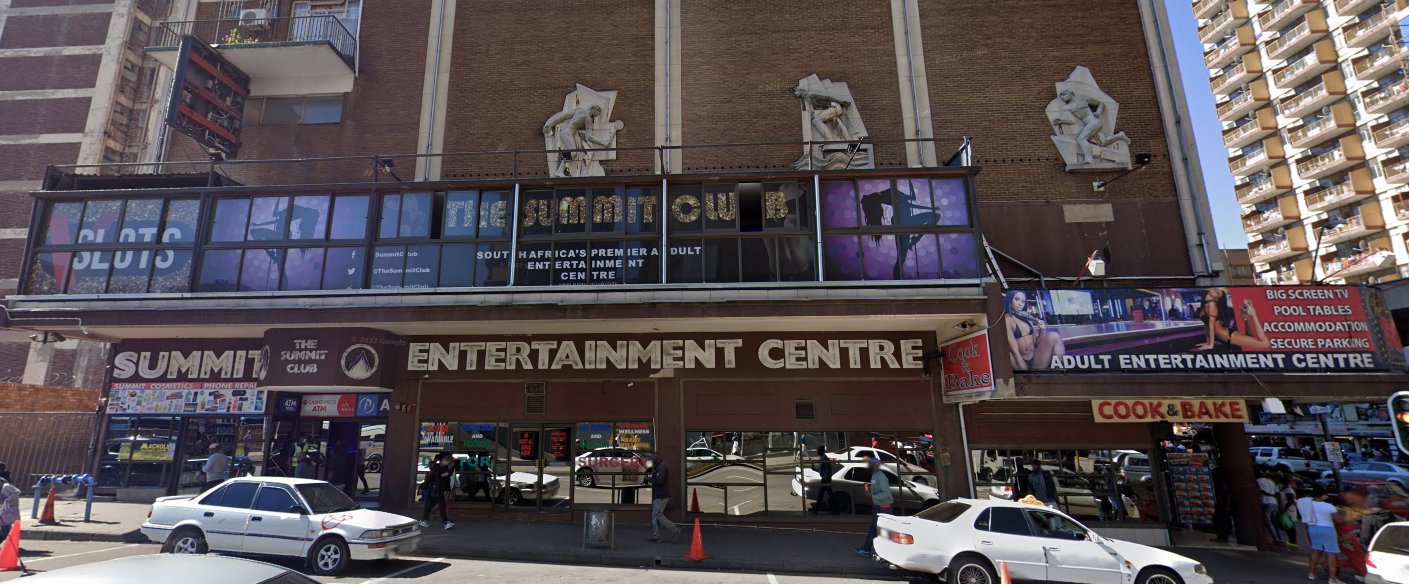
Tollman Towers – Von Weilligh and Kerk Street
Built in 1970 by Stanley and Beatrice Tollman, this was his family’s first luxury 5-Star hotel. He previously owned the Nugget Hotel and the Hyde Park Hotel. Despite apartheid laws, he allowed black guests and performers to stay in his hotel. He left the country in 1975 but returned in 1995.

Tollman Towers was bought by Southern Sun and incorporated into the Johannesburg Sun & towers complex in 1985.
Waldorf Hotel – NE cnr Bree and Eloff
Listed in the 1962 JHB guide as well as on Curries map in 1973. It had 45 rooms all with private bathrooms, so was at the upper price point at the time. The hotel was previously a building called Davidson Mansions and became the Waldorf in 1957. The hotel was owned by Glaser, who later opened the President Hotel. The building (likely late Art Deco), along with several other residential blocks like Manners Mansions and Walter Mansions, was once owned and managed by the African City Property Trust. They saw the value of Eloff Street in the 1950s and claimed many new developments in Hillbrow and other parts of the city. The Waldorf was demolished in the early 1980s and the site is now a parking lot. The Waldorf was noted as being a short-lived meeting place for gay men in the early 1960s.
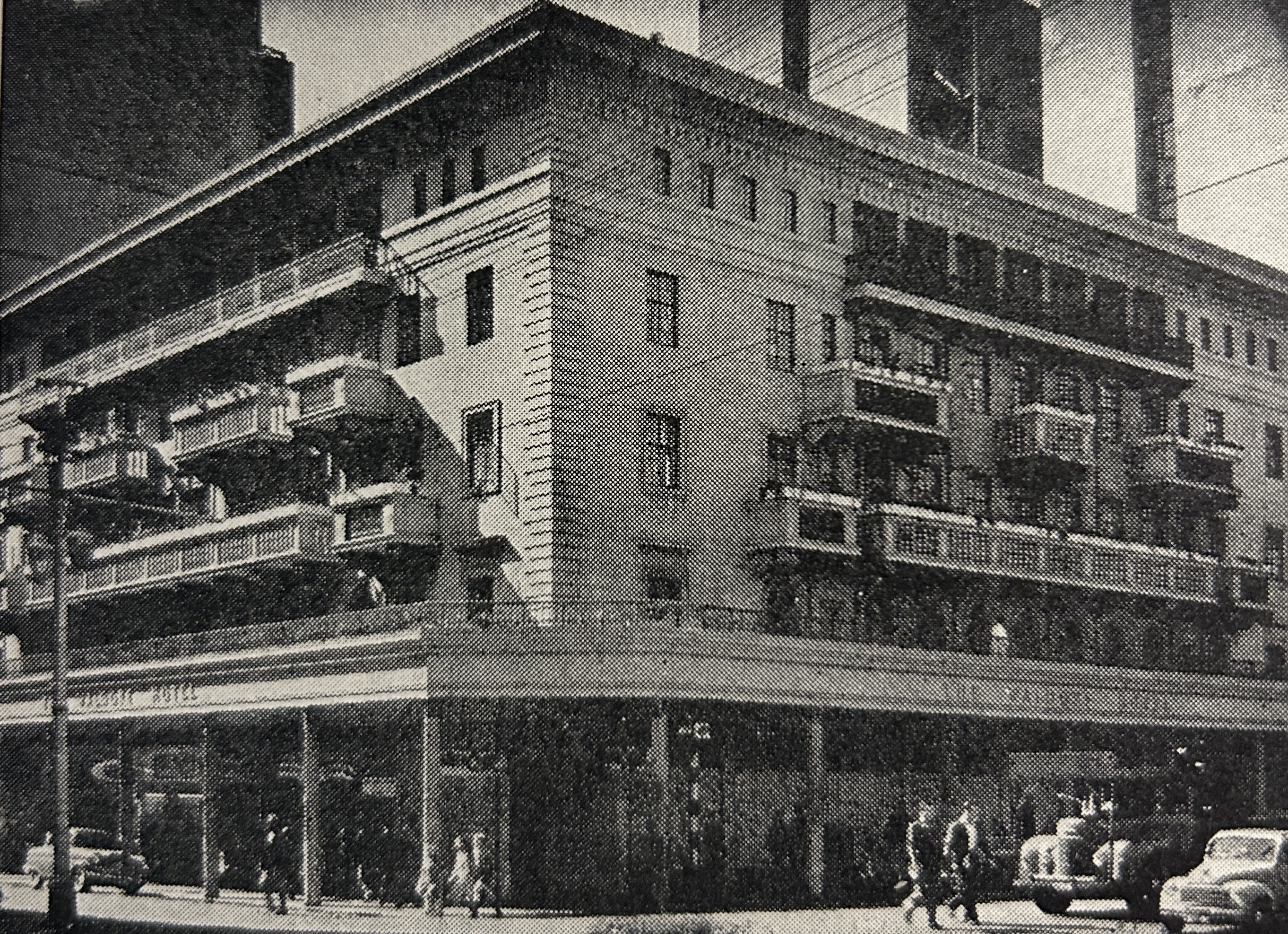
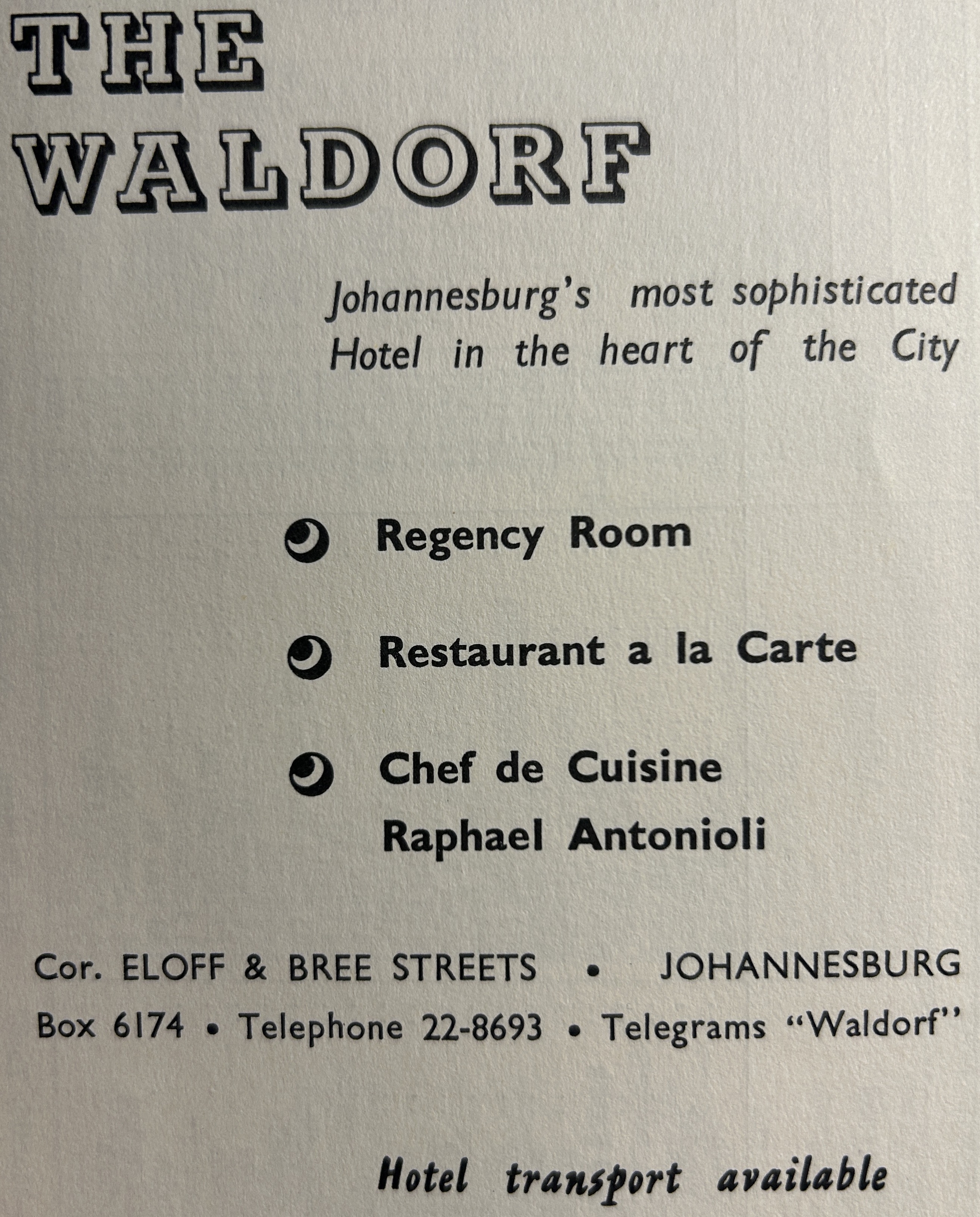
© 2023 Johannesburg 1912. Please don’t copy our content or images without permission — we work hard to research and produce everything you read here. If you’d like to share something, please link back to the original post. Thank you for respecting our work.
Reference:
Knox, P, & Gutsche, T, 1947. Do you know Johannesburg? Vereeniging: Unie Volkspers
Benjamin, A, 1979. Lost Johannesburg. Johannesburg: Macmillan
Cole,M, 1988. Room at the Inn. Johannesburg: Poplar Press
Norwich, O. I, 1986. A Johannesburg album-Historical postcards. Johannesburg: AD. Donker
—. 1966. Barnett Collection Vol.1: Johannesburg: The Star 1966
Rosenthal, E, 1972. Meet me at the Carlton. Johannesburg: Howard Timmins
Van Rensburg, C, 1986. Johannesburg – One Hundred Years. Johannesburg: Chris Van Rensburg Publications
Van Der Waal, G-M, 1986. Van mynkamp tot metropolis. Pretoria: Chris Van Rensburg Publications
Van Onselen, C. 1982. Studies in the Social and Economic History of the Witwatersrand 1886-1914, 2 vols, Johannesburg: Ravan.
Stark, F, 1956. Seventy Golden Years. Johannesburg: City Council of Johannesburg & Johannesburg Publicity Association
Bawcombe, P, 1973. Johannesburg. Johannesburg: Village Publishing
Leyds, G. A, 1964. A history of Johannesburg. Nationale Boekhandel Beperk
Neame,L. E, 1959. City Built on Gold. Johannesburg: CNA LTD
Chipkin, C. M, 1993. Johannesburg Style-Architecture & society 1880s-1960s. Cape Town: David Philip
Musiker, N & R, 2000. A Concise Historical Dictionary of Greater Johannesburg. Cape Town: Francolin Publishers
Suttner, S, 1967.Egoli – Guide to Johannesburg for Africans. Johannesburg: SA Institute of Race Relations.
Rogerson, J, 2018. The early development of hotels in Johannesburg ca 1928-1963. UJ
du Plessis, E & Saayman, M, 2011. Grading and price in the accommodation sector of South Africa. North West University.
Botes, J, 2020. Queering Johannesburg: Hillbrow and Soweto as Contrasting Spaces of Queer
Interaction, 1966–1996. WITS
Cartwright, A. P, 1968. Golden Age. Purnell & Sons. Cape Town
Shorten, J, 1970. The Johannesburg Saga. Johannesburg: John R. Shorten
Smith, A. 1976. Johannesburg Firsts. Johannesburg: Africana Museum
City of Johannesburg Official Guide 1962 (R. Beerman Publishers)
Johannesburg – City of Gold 1967 (Felstar Publishers)
Golden City – Tourist Profile of Johannesburg 1964 (De Freitas – Da Game Publications)
Goads Insurance Maps 1910 & 1937
Curries 1973 Johannesburg map
Websites:
https://artefacts.co.za/main/Buildings/bldglistframes.php?orderby=`tblbldg`.`name`&initial=A&lim_start=0 [Accessed 2 May 2023]
https://journals.lib.unb.ca/index.php/tric/article/view/7323/8382 [Accessed 2 April 2023]
https://esat.sun.ac.za/index.php/Lily_Langtry [Accessed 2 April 2023]
https://en.wikipedia.org/wiki/South_African_Breweries [Accessed 6 May 2023]
https://www.theheritageportal.co.za/review/inside-carlton-hotel-nostalgia-overlaid-depression [Accessed 6 August 2023]
https://www.timeslive.co.za/sunday-times/lifestyle/2013-11-10-phantom-hotel-/ [Accessed 6 August 2023]
https://en.wikipedia.org/wiki/Carlton_Hotel_(Johannesburg) [Accessed 6 August 2023]
https://www.timeslive.co.za/sunday-times/lifestyle/travel/2021-04-09-in-pics–glamour-gone-to-ruin-joburgs-lost-luxury-hotels/ [Accessed 17 September 2023]
https://www.theheritageportal.co.za/thread/manchester-hotel-johannesburg-destroyed [Accessed 21 September 2023]
https://mg.co.za/friday/2021-09-23-why-place-matters-in-celebrating-joburgs-club-history/ [Accessed 22 September 2023]
https://websterboothanneziegler.wordpress.com/2017/03/14/a-memory-of-dawsons-hotel-johannesburg-1962/ [Accessed 22 September 2023]
https://mg.co.za/article/1997-01-24-hotel-housing-for-the-workers/ [Accessed 22 September 2023]


 Johannesburg 1912 - suburb by suburb research
Leave a reply to Fortunate Cancel reply