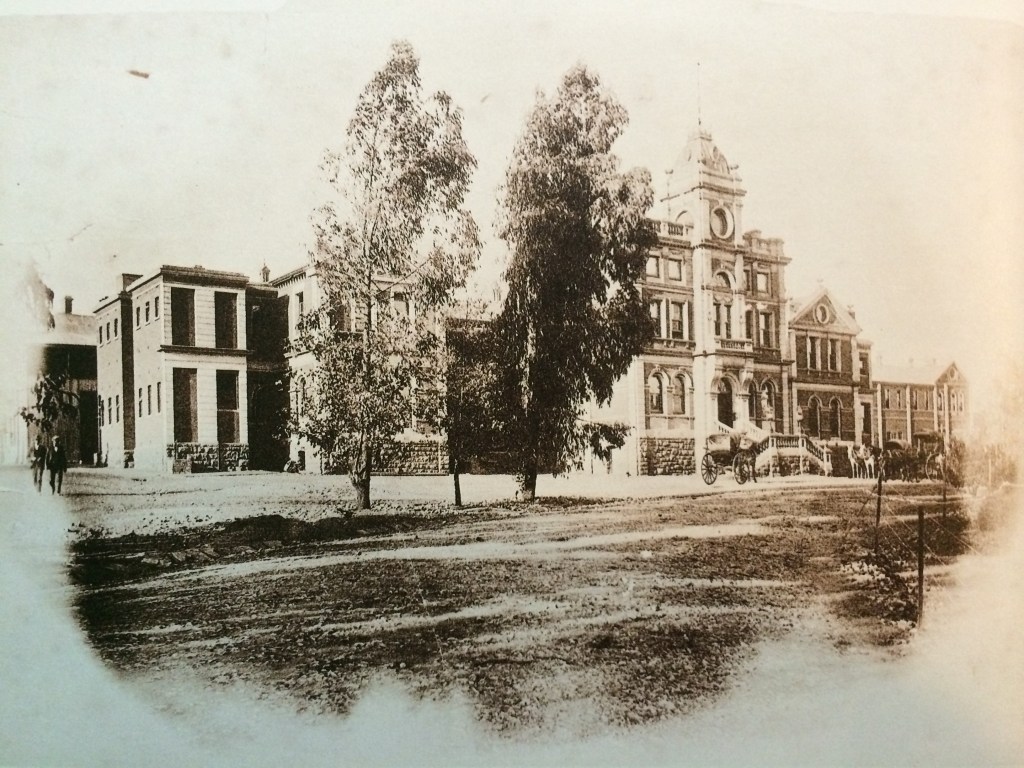
Hospital Hill was a popular name for the eastern part of the March 1888 surveyed part of the township of Johannesburg. It included the land on the hill where the first general hospital was built (the land granted by the government), Joubert Park and northerly surrounds, Kruger Park (which became the Wanderer’s Sports Club) and parts of the old railway station. Today it sits anonymously between Braamfontein and Hillbrow except for the fact that it houses a high percentage of medical and government-related buildings that form a wide strip from the bottom of Smit Street right up to the old Fort to the north, and over the hill down to the edge of Parktown.


Johannesburg’s first and temporary hospital was a three-roomed brick and thatch building at the Ferreirasdorp end of Commissioner Street that started out and also doubled as the goal. It opened in early November 1886. The first patient was miner Thomas Gray who most likely had typhoid. He died on the 4th of November. The second death was Charles Johnson who fell down No.2 reef in Doornfontein in December 1886. The first major surgery in the makeshift hospital was a gangrenous arm amputation of an African man by Dr Saur assisted by Colonel Ferreira who administered the chloroform. Interestingly, it was only in January 1887 that 12 stands were set aside in the area bounded by Harrison, Diagonal, Bree and De Villiers street for a small cemetery. It is not known where these men were buried. Read more on the history of cemeteries from an earlier post HERE.
In April 1887 a two-room galvanised structure was purchased to serve as a dedicated hospital situated next to the goal which appears to have been demolished in January 1888 according to a sketch by Ida Stone dated 11 January. Some sources say it burnt down.
On 15 March 1888, the first Johannesburg Hospital board was sanctioned under the chairmanship of William St John Carr. In April 1888, Foster & Mitchell’s tender was accepted to build a temporary hospital on the condition it was completed in two months. It took a little longer as Captain Von Brandis officially opened it on the 1st of August 1888. The temporary buildings were situated on Hospital Hill, A ward for eight black patients was opened in a tent next to the building and in March 1889, a ward for fourteen children was also erected. Between 1 August 1888 and 31 May 1889, 377 patients were treated.


It was not until October 1888 that the government agreed to funds and land for the erection of Johannesburg’s first proper hospital. The foundation stone was laid on 29 March 1889 by General N.J. Smit (Vice-President of the Transvaal Republic) and it was officially opened on 5 November 1890 by J. M. A. Wolmarans. Carr and Wolmarans both have streets named after them.

Carr was a Roman Catholic and persuaded the Holy Family Sisters to staff the hospital which they did until 1915 under Reverend Mother Adele. She started out at the temporary hospital with three nuns and continued in the new buildings. After 1915, the sisters continued to serve the public on a smaller scale at the Kensington Sanatorium.

The hospital was ‘lofty with handsome fireplaces’ and had 130 beds for black and white patients, an operating room, and surgical equipment. In 1893 the eastern wing was added and in 1895, wards 13 & 14 were erected for white patients and four more wards to the west of 13 & 14 for black patients (these remained in use until 1925 when the non-European hospital was opened). In 1897/8 the Barney Barnato block was completed and could accommodate 60 patients. The operating theatre was also built at the same time near the Barney Barnato block and was designed by Granger & Fleming. It operated (see what I did there…) until 1928 when the main theatres were built. It’s been used as a lecture room and butchery and still stands today.


On 27th September 1904, the foundation stone for the Stroyan Ward was laid by HRH Princess Christian of Schleswig-Holsten in the presence of Lord Milner. The ward was designed by G St John Cottrill and still survives today. At this time, plans were also prepared for the outpatient building, the laundry and powerhouse (which all faced Hospital Street) as well as the pathological departments, and the superintendent’s house.


In 1908, around a third of the hospital’s patients were African and coloured. Patients were charged by their ability to pay and the hospital served both the wealthy and the destitute. Even then, medical schemes by the mines and the government subsidised the bills.

The superintendent’s house (later known as Louw House after the 2nd superintendent Mr Louw)) on the corner of Hospital and Smits Streets is in danger of falling down. It’s been in a state of disrepair for a number of years. It dates to 1905 and was designed by W. H. Stucke. There have been reports of a possible renovation as of 2015. It’s the last of at least three old houses on Hospital Hill but certainly one of the most interesting from a design and architectural standpoint. My opinion is that now (in 2022) it is beyond saving due to imminent structural collapse.


The first superinendant was Dr Ronald Mackenzie who had graduated from Edinburgh University and arrived in Johannesburg after the 2nd Boer War. He held the position for 23 years.
A chapel, designed by Gordon Leith, was built on the hospital grounds in 1949.

East and West pavilions with operating theatres and combined bed accommodation for 112 beds opened in 1913. Both pavilions were designed by W. H. Stucke. The South African Railways contributed GBP 10 000 on the condition it could always accommodate 35 railway patients. In 1915, medical staff quarters, a dispensary and a central kitchen with provision for a kosher kitchen opened. A three-story building, named after Julius Jeppe, to accommodate a further 114 patients was completed in 1919 and designed by the PWD. Both pavilions and the Jeppe building still stand today.


The first Preliminary Training School for Nurses in South Africa was opened on a site consisting of three altered double-storey houses on the corner of Esselen and Hospital Street. It officially opened on 24 October 1921.

In 1925, a non-European hospital (another branch of Johannesburg Hospital) was opened across the road from the nurses school on what was once police barracks and part of the ZARPS parade ground. The non-European hospital used three existing buildings on Hospital Street as a base with additional wards built behind them. The three old houses were previously used for nurses’ training. The 1929 photos below come from a photo album date 1929 in the WITS Medical archive.


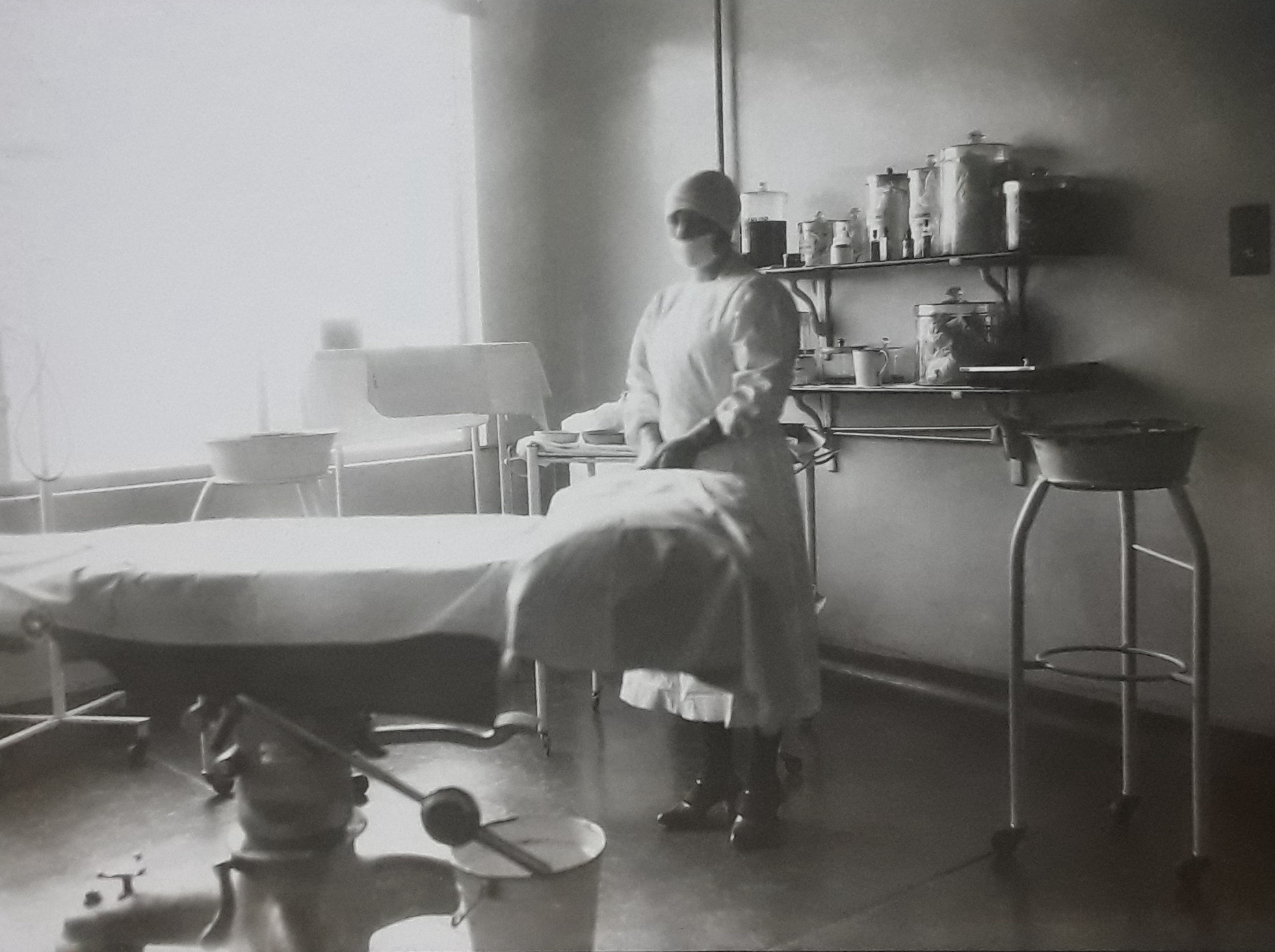
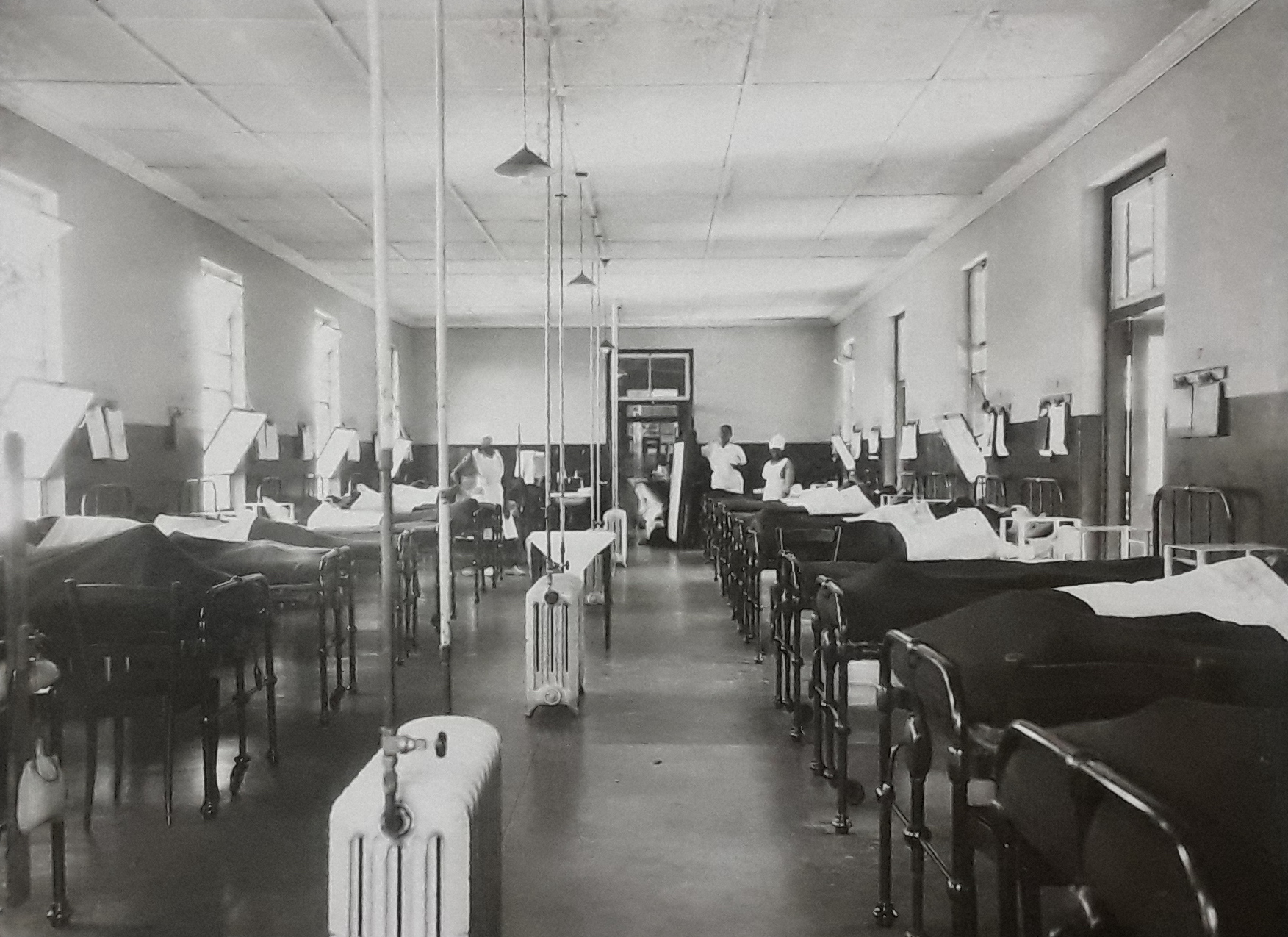
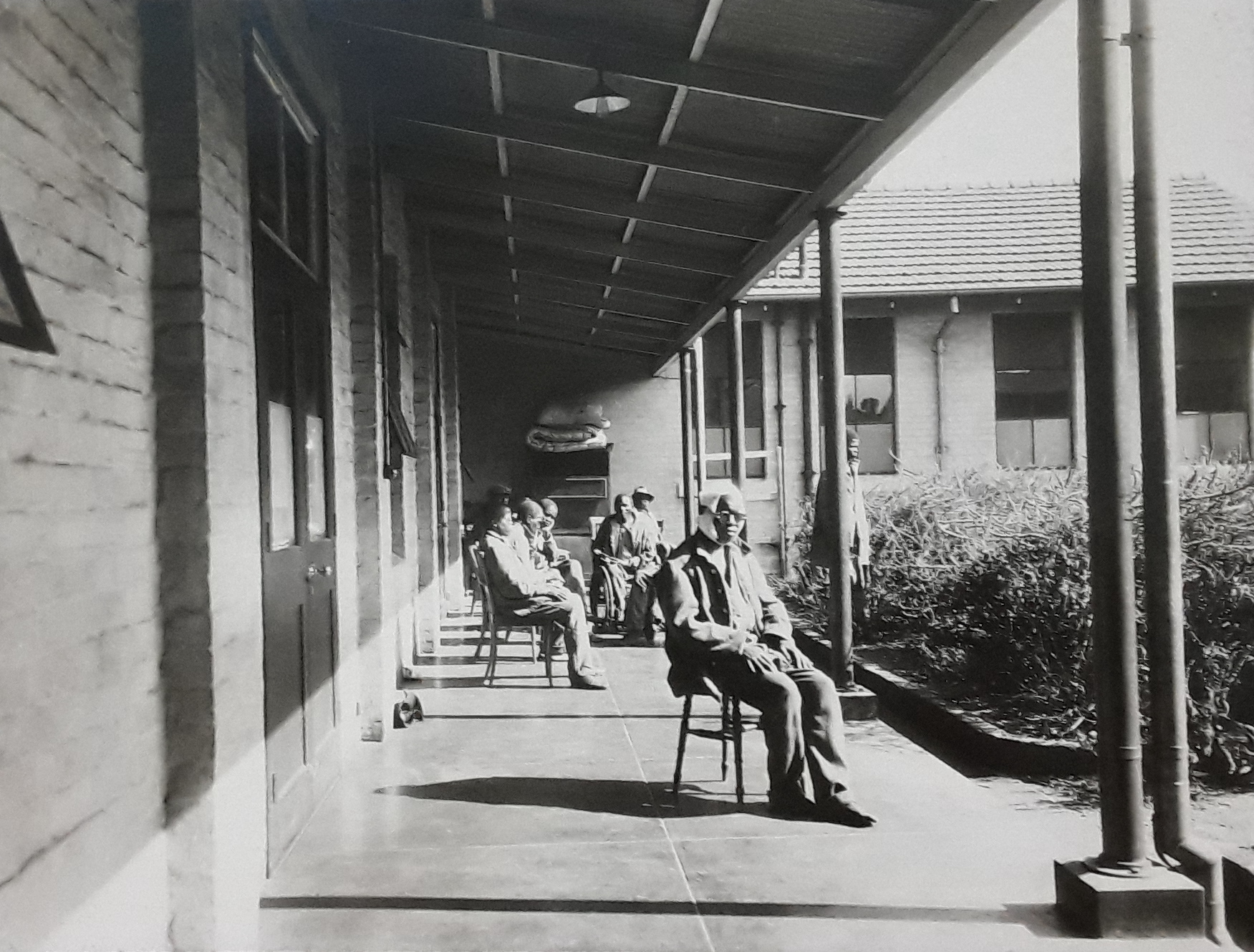
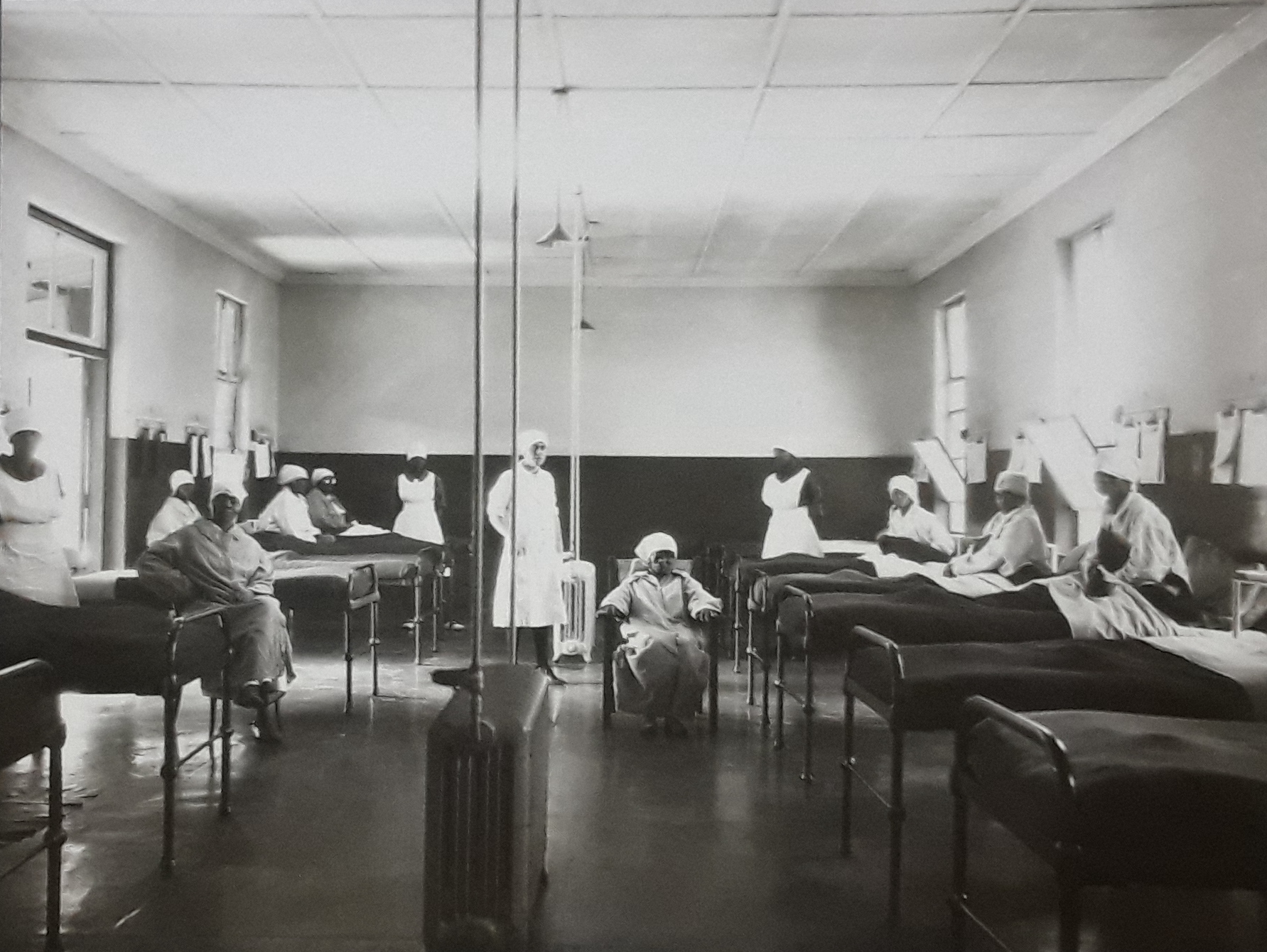
It provided for 183 patients who paid for care based on income. A three-storey nurses’ home was also built on the site of the old police barracks. Another 100 beds were added in 1930 via expansion.
In 1936 architect Gordon Leith drew up plans for the new central blocks of the Johannesburg General Hospital – Native Section. These plans were approved in January 1938. The central block replaced the three buildings facing Hospital street, although the central building was incorporated into the design and added to. All other existing wards, theaters, and the nurses home remained.


African nurses trained at the precinct until the 1940s. In 1947, the non-European hospital and nurses’ training moved to the new Baragwanath Hospital near Soweto. By the 1960s, there was a need for training facilities as well as an emergency/casualty section for non-Europeans, as there were no such facilities in the city centre. At the time, the closest hospitals for Africans were Baragwanath and Ferndale. Money was set aside to renovate parts of the precinct with strict instructions on the number of beds that were to be made available.
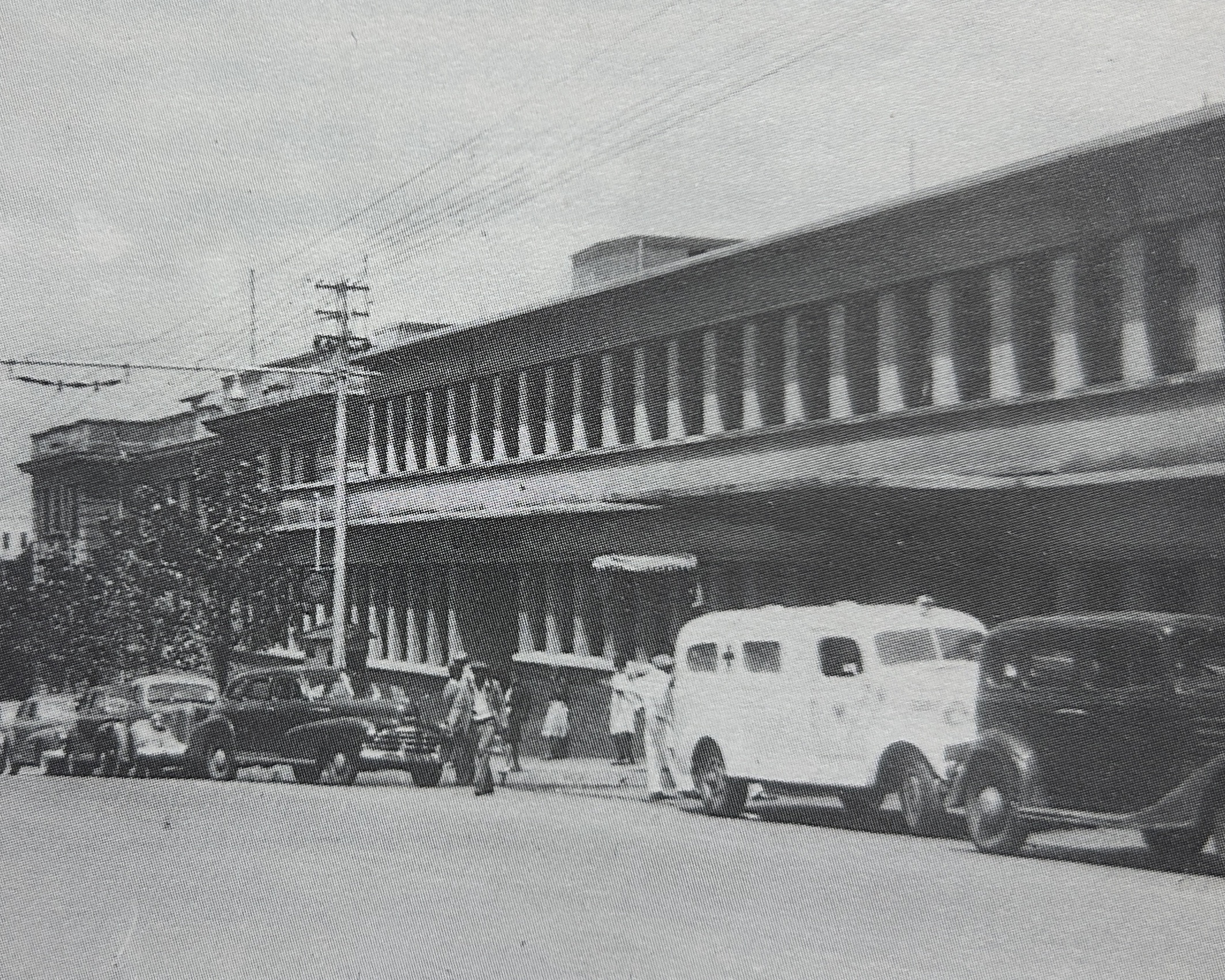
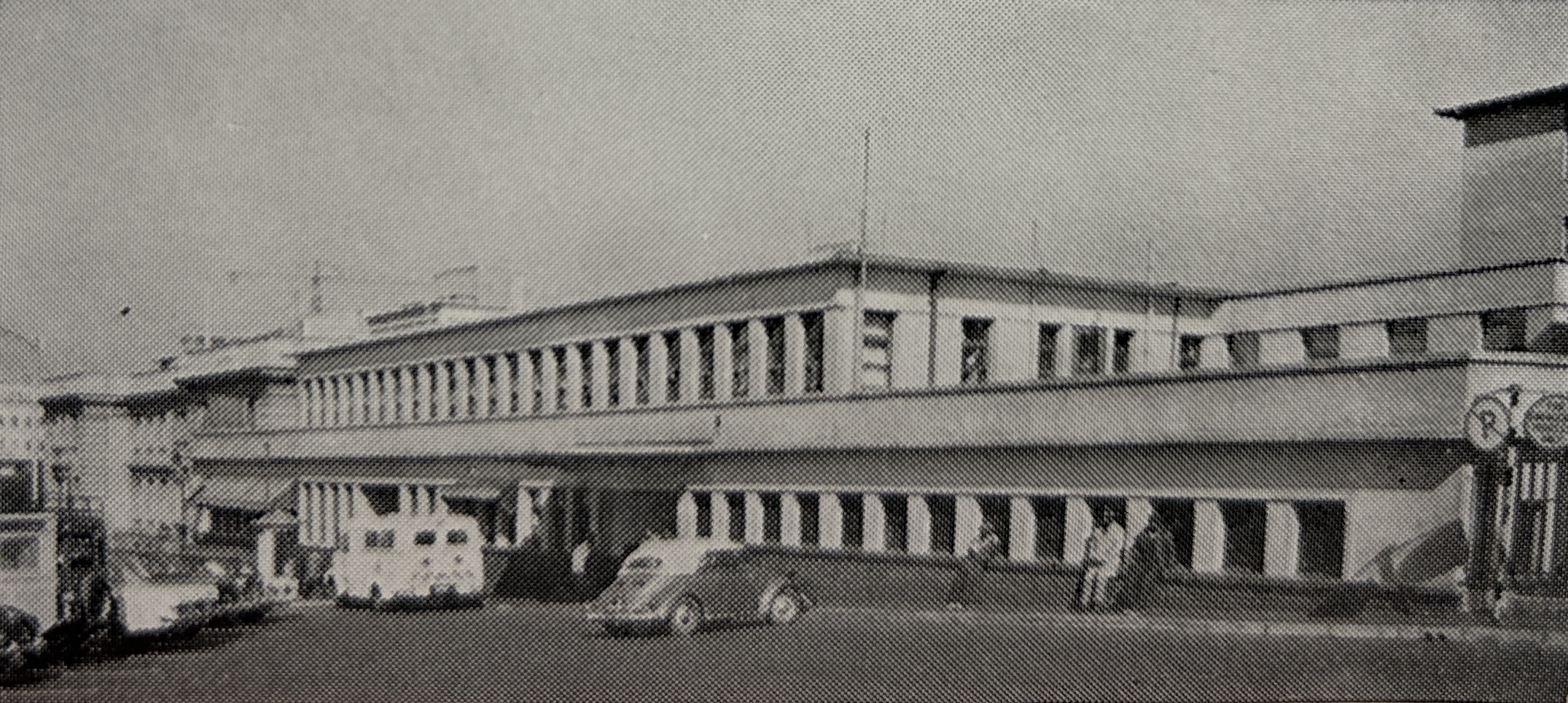


When the Constitution Hill Precinct was established, the old buildings behind the Women’s Jail were demolished for parking. These originally housed the old government mortuary buildings c1940s – c1999. The mortuary was re-located the old Non-European section.
As of 2024, the mortuary is set to move again to new premises behind the Helen Joseph Hospital. Most of the perimeter buildings in the complex are derelict and bricked up to keep out vagrants. This includes the old Indian Clinic c1934 (to the left of the theaters) which is inaccessible. An old ward behind the central block was demolished at some point to create parking as the usage of the precinct changed.
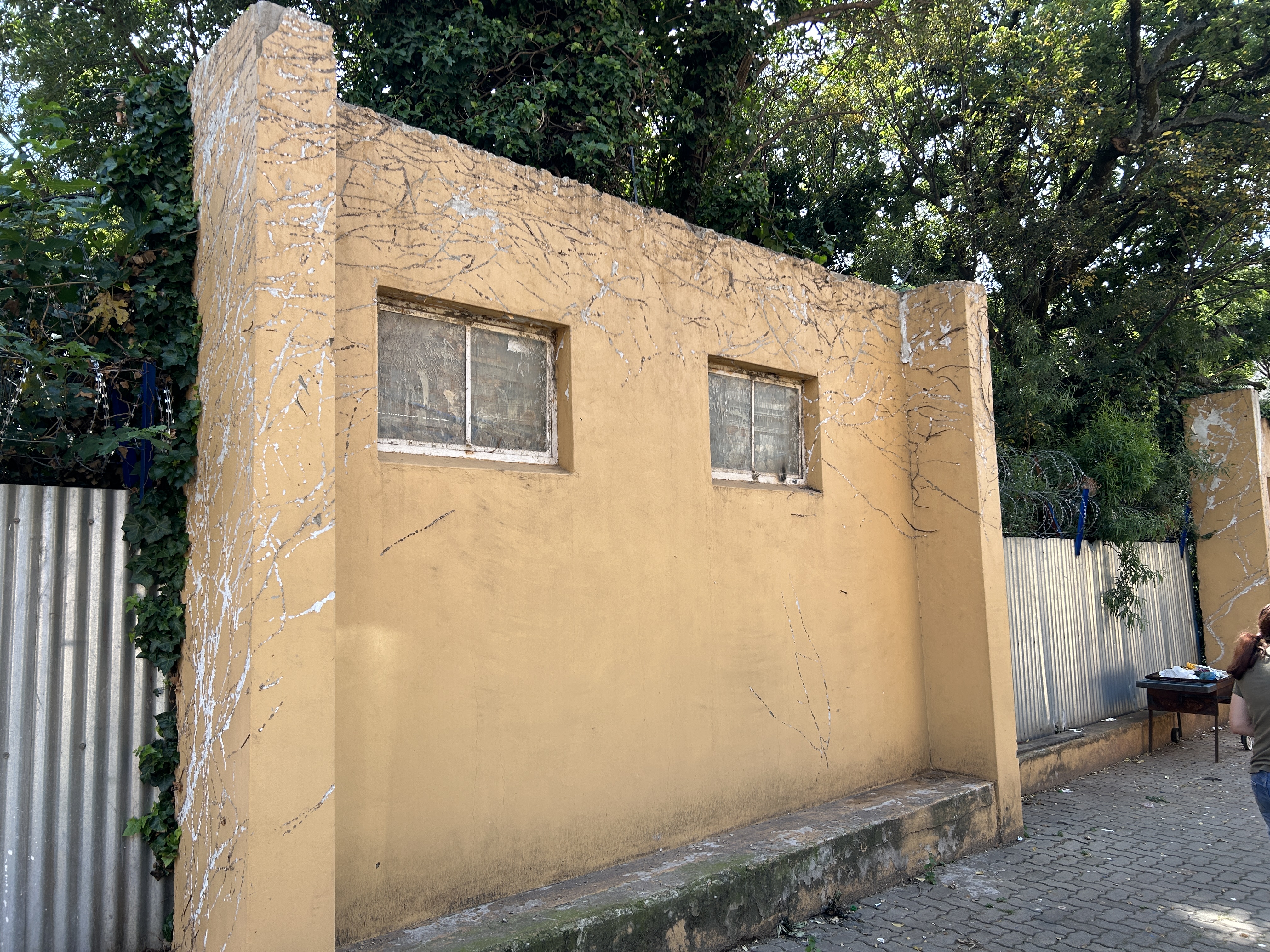
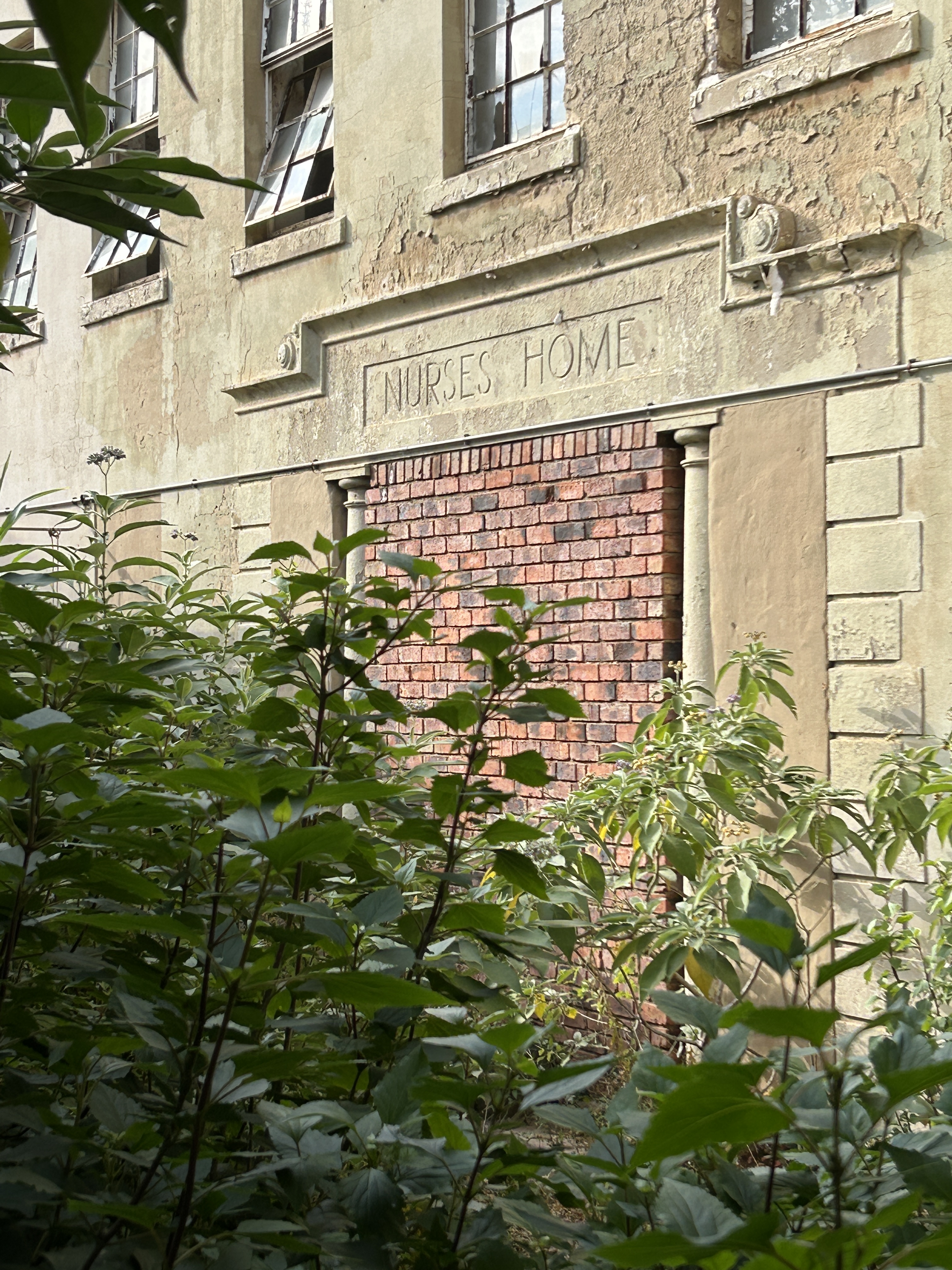
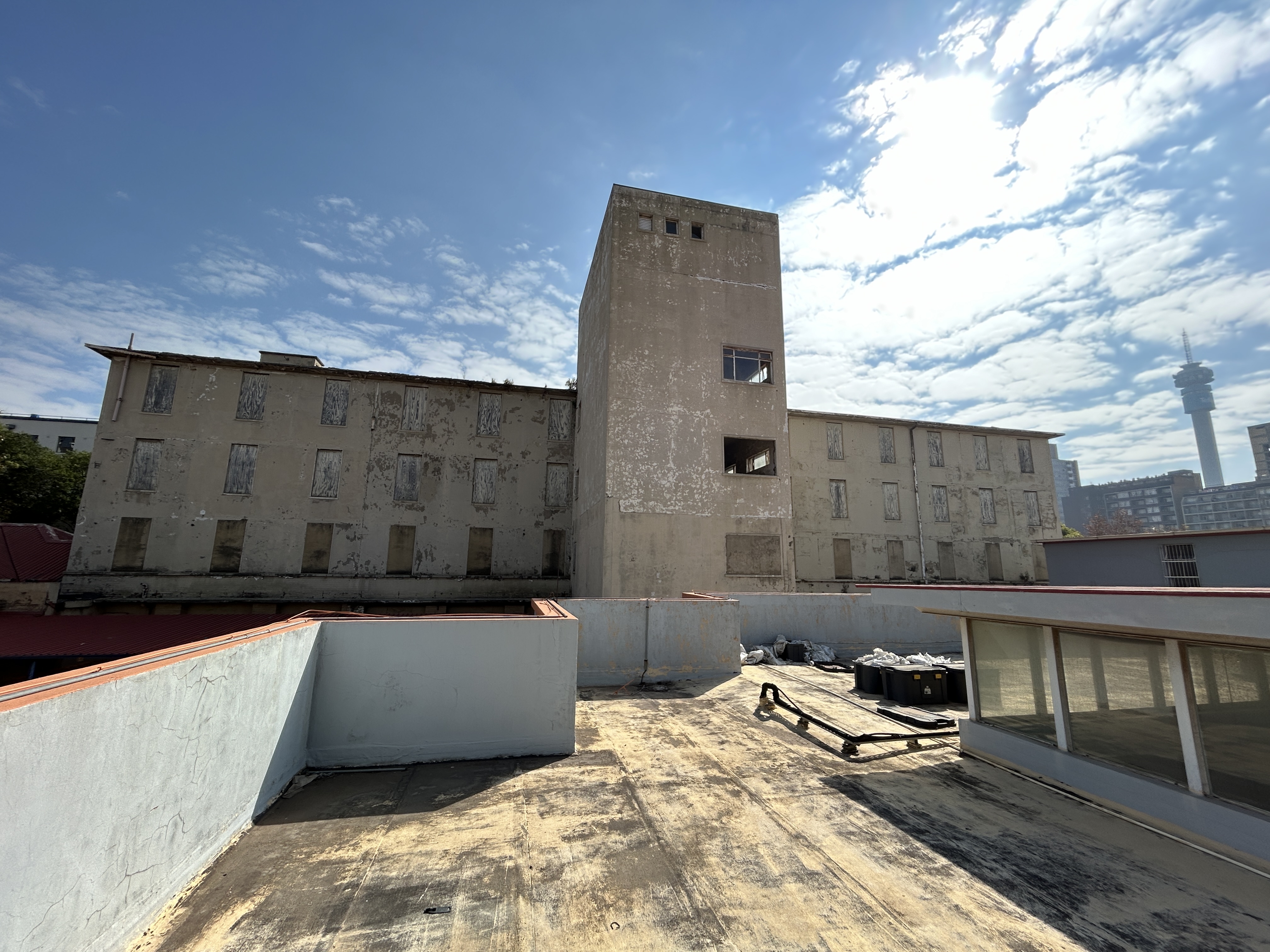
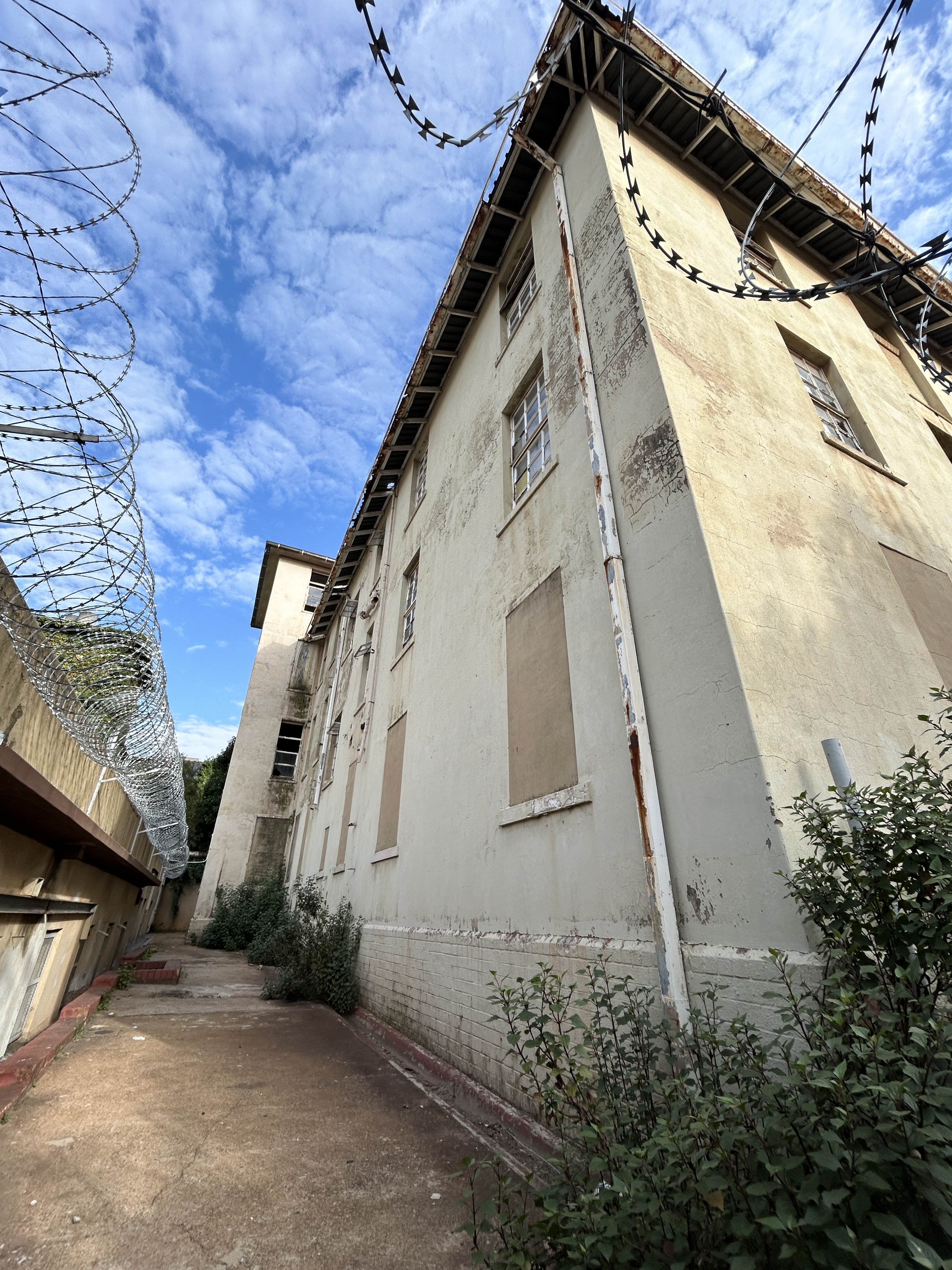
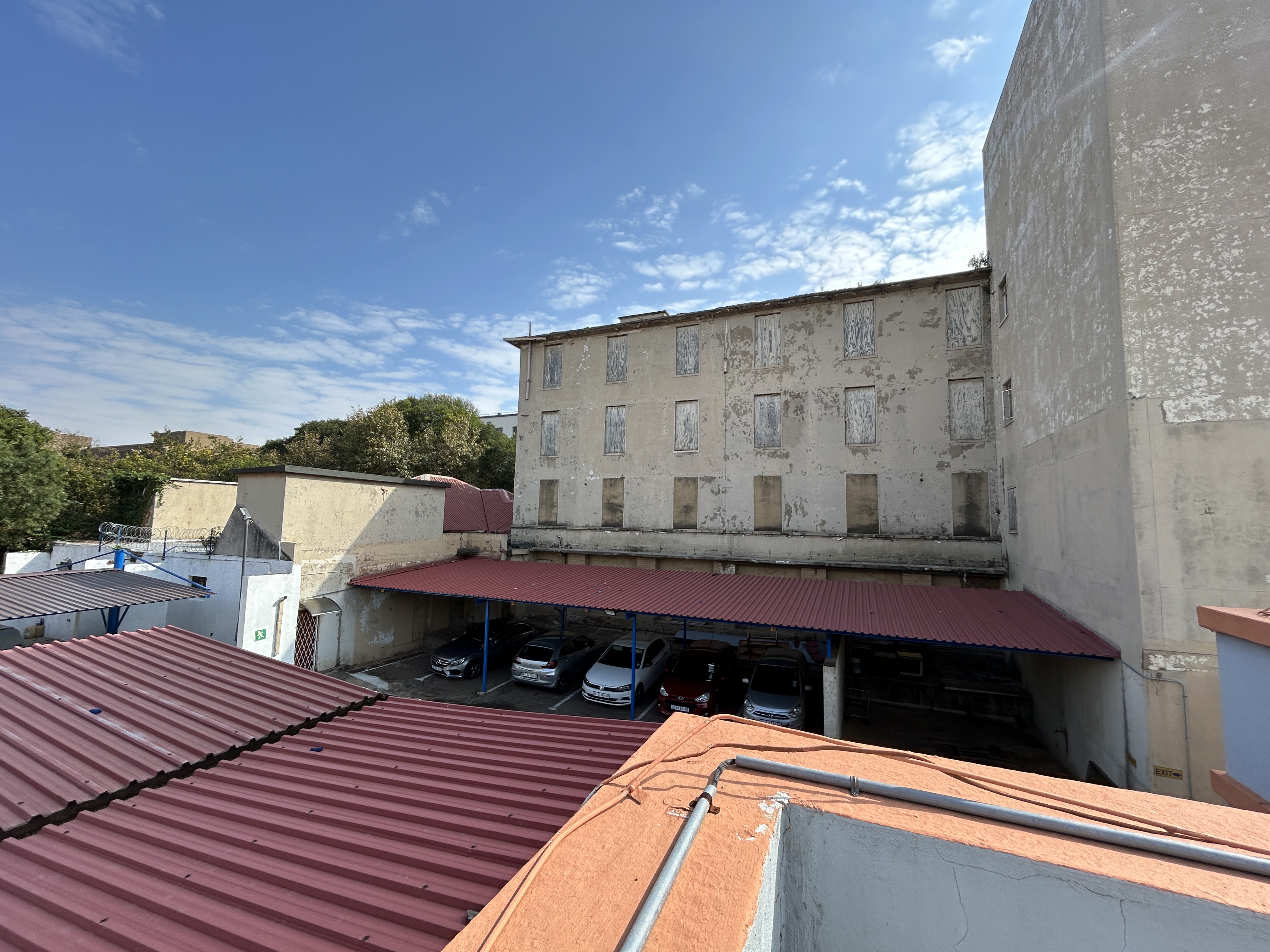
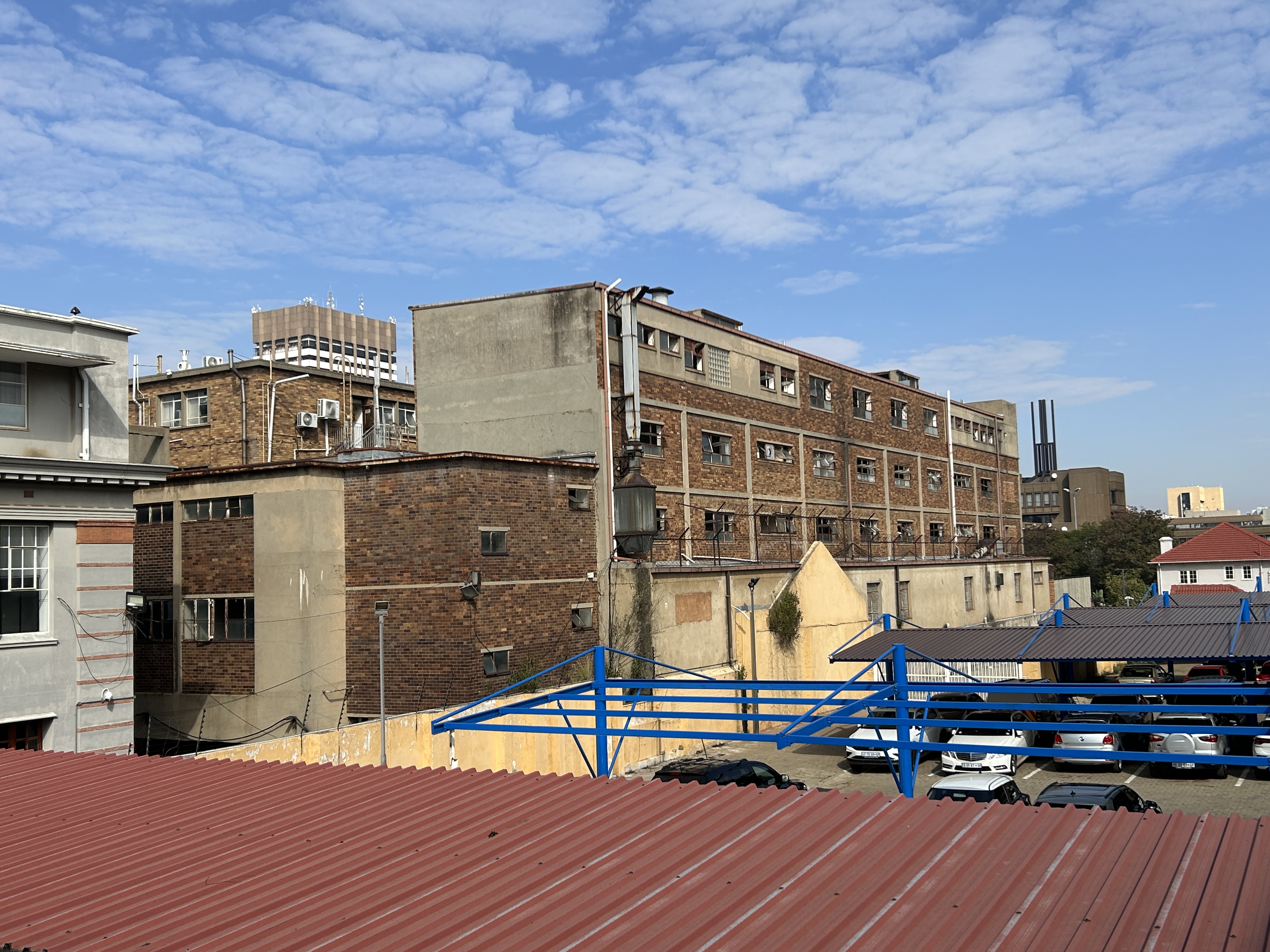
Some photos of the remaining buildings from April 2024 (Source: Marc Latilla)


In 1933, prior to the new Hospital, there were 1107 beds available in Johannesburg:
General Hospital – 511 Beds
Queen Victoria – 38 Beds
TVL Memorial Children’s Hospital – 133 Beds
Otto Beit Convalescent Home – 52 Beds
Non-European Hospital – 293 Beds
Fever Hospital – 80 Beds
The old hospital building from 1890 was demolished in 1937 to make way for the current Ronald Mackenzie Block which was completed in 1939 and designed by Gordon Leith.


This was one of three Leith-designed hospital buildings, the other two being the Queen Victoria Maternity Hospital (Braamfontein 1943) and the Chamber of Mines Hospital (Cottesloe 1937-9). All three were influenced by the ‘Steamboat Style’ inspired by the massive ocean-liners of the time. Van Der Waal described Leith’s design of these buildings as ‘streamlined effect…by rounding the corners, by giving the buildings a machined finish (smoothness), stacking the building forms and using parallel lines. In the General Hospital Leith used the Steamboat Style in the salient half-round balconies in the upper central section of the block-like building.’


Today, the old hospital complex still survives but was superseded in the 1970s by the Johannesburg General Hospital (now known as the Charlotte Maxeke Johannesburg Academic Hospital) which went up on Parktown ridge. The 33-acre site on the ridge was once the home of Sir Lionel Phillips known as Hohenheim and was the first house built in Parktown in 1894. The house was donated to the hospital administration and converted into the Otto Beit Convalescent Home in 1915. It was run as the second branch of the Johannesburg Hospital. The first matron was Miss B G Alexander. She later became Matron of the Johannesburg General Hospital until 1931. Her name lives on in the first college of nursing that was named after her.


Also on the ridge on the grounds of Otto Beit, the E. P. Baumann Convalescent Home for Babies was built in 1938. This building also made way for the new hospital.

An interesting aside regarding the 1890 hospital’s original foundation stone: When the old building was demolished, a cavity was found under the foundation stone. In this cavity was meant to be a bottle containing coins and newspapers from the time. It turns out that the bottle was actually stolen shortly after the stone was laid as per board minutes from 10 July 1889. The coins were worth less than 2 Pounds and despite a 25 Pound reward, the items were never recovered.


As the number of nurses increased, so did the need for additional accommodation. In 1926, a new wing dubbed ‘Buckingham Palace’ was added to the back of the 1904 nurses building along Esselen Street. These buildings still stand.


Queen Victoria Maternity Hospital was a branch hospital originally administered by the Johannesburg Hospital from 1913 onwards. The first Queen Vic was established in rented accommodation (that could hold 50 patients) by the Guild of Loyal Women. The building was designed by Allen Wilson and built in 1904 in Doornfontein on Siemert Road next to the Lions Shul. The first baby to be born at the first Queen Vic was a girl on 29th May 1904 to Mrs Elizabeth Smit.


The Queen Vic was then transferred to Sam Hancock Street, Milner Park (what the area was known as back then) to a new built-for-purpose building that was completed in 1906 and officially opened by Lord Selbourne in 1907. In 1913, the 40-bed maternity hospital was taken over by the TVL Provincial Administration and became the first branch of the Johannesburg Hospital. It also became a training school for midwives.

In 1943 it moved to its new premises on the same site (designed by Gordon Leith) which still stands at the bottom of Joubert Street extension and corner of Sam Hancock Street at the bottom left of the Fort complex. This is the Queen Vic most people remember. The foundation stone was laid on 10th May 1943 by Mrs Pienaar, wife of the Administrator of the TVL. There is a strong similarity between Leith’s work on the main block at Johannesburg Hospital and the design of the 185-bed Maternity Hospital and the Chamber of Mines hospital in Cottesloe. All three buildings still stand.


As of November 2015, there was a tender out for re-purposing and renovating the building (which is currently empty). The nurse’s homes appear to have been demolished and are now part of Constitution Hill. According to Artefacts, the nurse home was built in 1932 and the nurses’ quarters in 1938 were both designed by Leith.
From March 1906 up until May 1978, prior to the move to the new hospital in Parktown, 160 793 babies were born at the Queen Vic.
Requests for Queen Victoria Maternity Hospital birth records can be made HERE


Across the road from the earlier second and later third Queen Victoria Maternity Hospital is the Transvaal Memorial Hospital for Children which was opened on 23 October 1923 by H.R.H Prince Arthur of Connaught. The project was started in 1919 by the Johannesburg Branch of the National Council of Women as a memorial to those killed in WW1. Prior to the TMI, children’s beds were allocated to Ward 26 at the first General Hospital on Hospital Hill.

The Johannesburg Municipality gave GBP 12 500 and 8-acres of land for the hospital. The balance came from mining houses, charitable organisations, and the public. Near the completion of the building, it was realised that there was no money for equipment. A bequest from Mrs Louisa Beck who died in the UK in May 1923 saved the day.
The hospital was handed over to the Provincial Administration at the opening ceremony. It consisted of a Memorial Hall on the ground floor, six wards with a 112-bed capacity, two operating theatres, radiology and physiotherapy departments as well as a nurses’ home. The buildings were all designed by Cowin, Ellis & Powers. Dr E.P. Baumann, who developed pediatrics in Johannesburg as a study and a service in its own right, led the medical team.

Children’s mortuaries for both Jewish and Christian denominations were built. The Christian mortuary is part of the original plans but the Jewish mortuary and Christian Chapel plan and build dates are not known. They are currently housed in a single structure that includes a chapel, although the Jewish section is separate.

In 1926, the Ross-Rotary Ward opened. The ward opened onto a solarium which was beneficial to patients suffering from Perthes’ Disease and TB.

E. P. Baumann Convalescent home for 26 babies under 2 years old opened on 1 May 1938. This was a Leith-designed building on the grounds of the Otto Beit Convalescent Home on Parktown ridge.
In 1941 a 90-bed ward block was completed.

In May 1965, the new building was opened for Outpatients, Physiotherapy, Occupational Therapy, a Central Sterilizing Department, a laboratory and a Child and Family Unit.

In 1978-9 the Children’s Hospital was incorporated into the new Johannesburg Hospital in Parktown. The buildings were left vacant for a while as new uses were developed.
The Children’s Memorial Institute is home to approximately 30 organisations, most of which are NGOs but are all non-profit. These organisations provide a multitude of services to children with special needs and disabilities, mainly in the educational, medical, social, psychological and legal sectors.

The Johannesburg Fever Hospital for infectious patients was opened in 1916 along eith nurses accomodation. Cases were sent by the Public Health Department and admission was compulsory where isolation at home was not possible. It could accommodate 59 patients. Parts of this hospital still stand just behind the Civic Centre on Hoofd Street just across the road from the old Woman’s Prison. They were designed by PWD under J. S. Cleland.


Transvaal Memorial Hospital for Children
- Main building 2. Observation ward 3. Nurses’ home 4. Ward blocks
Queen Victoria Hospital
5. Main building and nurses’ home. 6. Nurses’ home extensions 7. Ward blocks 8. Isolation ward
Fever Hospital
9. Main building and nurses’ home 10. Observation ward 11. Ward blocks 12. Laundry 13. Native compound 14. Night nurses’ quarters 15. Government chemical laboratory

South African Institute for Medical Research (S.A.I.M.R), one of the world’s pioneer medical research organisations, was founded in 1912. The Union Government in 1912 contributed the money and the state donated the land adjacent to the general hospital at the eastern end of Jorrisen Street which was previously used as a Boer military parade ground connected to the fort. On 23 April 1913, the two foundation stones were laid for the building which was designed by Sir Herbert Baker. Baker was commissioned to include labs, offices, a medical library, a pathological museum, a lecture theatre, a refrigeration plant, store rooms, and a workshop in the complex.

The director’s house was also designed by Baker and completed around the same time. The building was completed in 1914. Further work was done in the 1930s when the roof was raised.

Some of the institute’s early groundbreaking work was on pneumonia and malaria. Before this, the government laboratory (Transvaal Government Bacteriological Laboratory) was a wood and iron building on the corner of De Korte and Hospital Street.
Across the road on the corner of De Korte and Hospital Street is the building that housed the old Lady Dudley Nursing Home. The Lady Dudley appears to have been around since the mid-1920s based on various death notices picked up on genealogical sites and may have also been housed in a different location or a different building on the current site. The current building is probably late 1930s and was refurbished in 1989. It was initially exclusively a nursing home but was also known as Lady Dudley Hospital after the 1960s. From accounts, it certainly took care of other medical procedures and emergencies. The building has been converted into student accommodation and probably ceased to be a medical building in the early 2000s with the general decline of the area.
From comparing the photos below, the original balconies were later enclosed and another floor was added to the existing rooftop.


Other medical and government buildings:

According to Ildi Wainer, the building across the road from the Civic Centre is the Forensic Chemistry Laboratory of JHB (a unit of the NDOH). It was a laboratory providing a forensic chemical testing service for clients such as the SAPS and pathologists.


This was the original medical school dating to 1919-20 and designed by A & W Reid & Delbridge in the Traditional Style after the model of the Italian Palazzo before the one in Esselen Street was built in the 1976. Part of the 1894 wall that surrounded the police parade ground still stands outside the old school buildings. It was built by Barrow Construction, who also did alterations in 1924. In 1966, an additional floor was added, and in 1989 part of the school was converted into a student’s residence. This is the oldest remaining WITS university building.


The former Colin Gordon Nursing Home in Esselen Street was designed by Wilhelm Bernhard Pabst in 1941 and completed in 1943. The building was re-opened in 2017 as the Esselen Street Clinic with restoration work done by Ntsika Architects and is a national monument.


Also in Esselen Street next to the residence is the Furner-designed 1930s Medical Society Building.

ln Esselen Street, on the opposite side of Hillbrow near the Berea border, is the former Princess Maternity/Nursing Home. It was built in 1947 and designed by Stegmann, Orpen & Porter. Since 2005, it has been the Tswelopele Frail Care Centre. Prior to that, it was the Emseni Chronic Care Unit which was part of Rhema Service Foundation. The date when the Princess closed is not known.
Work on building a new and much-needed goal (jail) started on the top of Hospital Hill in 1892.


In April 1895 work started to construct the high walls or ramparts around the goal. The Fort was used to command Johannesburg during the Boer war (1899-1902).


In 1908 it was proposed that the fort be demolished to allow easier access to the northern suburbs and a new goal built in Vrededorp. This scheme was declined due to the depression at the time. It was a working prison up to 1987 (except during the Boer war) and throughout its history has imprisoned Boer generals, strike miners, Indian passive resisters (including Gandhi), treason trialists (including Nelson Mandela) and various apartheid resistance fighters alongside common criminals. It’s remembered as a particularly harsh prison. The fort was declared a national monument in 1964. In its early days before high-rise buildings, it was a commanding site and had clear views across Johannesburg.


Johannesburg’s first gaol (before the fort) was completed at the end of October 1886 and was one of JHBs pioneering buildings. It officially opened in November and was a three-room brick and thatch structure inn Commissioner Street west built by Col. Ignatius Ferreira who was the veldkornet in charge of law and order in early Jo’burg and after whom Ferreirasdorp is named. It was viewed as a temporary solution and long-term prisoners were transferred to Pretoria. It was said that prisoners were more comfortable in the new goal than the commissioner in his galvanised structure.
Importantly, the gaol also served as the first hospital and the jailer, Barend Bruyn, looked after both prisoners and patients.
Next to the old fort is the women’s prison which was built in 1923. This Victorian-inspired jail held the infamous murderess Daisy De Melker as well as resistance stalwarts Winnie Mandela and Albertina Sisulu. In the mid-1980s it was being used as HQ for the now-defunct Parks police and the Traffic police. It’s now a women’s centre, exhibition space and museum part of Constitution Hill.


Just below it, divided by a service road, where a parking lot for Constitution Hill now stands, used to be the old government mortuary. In 2021, I found a copy of Johannesburg Hospital 1890-1990 which shed some light on the origins of the mortuary. I had originally assumed the mortuary was in the same place. It appears the original mortuary was part of the Hospital Hill complex and faced Hospital Street.
The plans below were commissioned by President Paul Kruger and built in 1896 by the Department of Public Works which was responsible for many of the government buildings at the time and was known as ‘Lykehuis te Johannesburg’.
The plans don’t line up with the mortuary on the hospital layout c1932, which leads me to speculate that these plans may have been for a separate mortuary within the fort complex.

It was a simple structure built to hold the dead until cremation or burial.
The hospital complex layout post-1932 shows that the hospital mortuary moved to what was known as the outpatient building (also facing Hospital Street). If I were to guess, I would estimate that the new mortuary (below) was built sometime in the 1940s or 1950s on the site below the woman’s prison as it seems to complement the maternity home just further down the same block. The three-story block of flats behind the new mortuary premises was a simple late Art Deco-inspired building (likely Leith designed) made up mostly of yellow-orange bricks that seem to define government buildings and police stations from that era.


I spent a short time there while growing up and lived in flats at the back of the premises for a few months in 1987 and remember the layout vividly. There was also some curvature on the balconies of the flats reminiscent of Leith’s work on other medical buildings in the area.
Below is a section of the old mortuary from an aerial picture from the late 1960s. Note the empty space in the top right where the Civic Centre should be.

After 1994 it was unable to cope with the constraints of the new society and was moved to the old non-European hospital around the corner. It was eventually demolished in 2003 and not incorporated into the museum and Constitution Hill.
Beyond the eastern rampart, across Queen’s Road, is the Governor’s House and the Hillbrow Recreation Centre, previously the officers’ mess or club. It is probably 100 years old, and estimated to have been built in 1908, according to a report by heritage consultant Herbert Prins.

The Governor’s house dating back to 1905 is a single-story house with a long front veranda, iron roof and three well-established palm trees in its front garden. The house originally consisted of three lounges, a passage lobby, a dining room, five bedrooms, two fireplaces and bay windows. Special features include a trough built into the west wall of one of the lounges, hipped ceilings, timber-slatted ceilings and an attractive skylight in the hall. Sash windows have been replaced by metal ones. It was recently restored after years of neglect and fire damage. Originally the land and house were part of the Fort grounds.


Across the road from the Governor’s house is the Florence Nightingale Nursing home. It was designed by H. Battiscombe and built in 1937 and appears to have closed down in the 1980s and turned into a block of flats. It was recently the subject of a photojournalism piece on ‘hi-jacked’ buildings in Johannesburg – not one of Hillbrow’s success stories.


The Athenaeum Club opened on the corner of Klein and Wolmarans Street in February 1904. It was described as ‘delightfully situated on Hospital Hill just far enough from the town to escape its disagreeables yet not too far to exclude its conveniences.’ Members were drawn from public & military schools or colleges, British universities, and the Transvaal Civil Service. Note the hitching posts on the pavement. It closed in 1913 having never been as popular as its London namesake. The club was demolished in the 1950s and was replaced by a building for the telephone department – possibly a telephone exchange building. This was again demolished and a new exchange in black marble with a clock tower went up in the early 1980s. According to Clive Chipkin, the building (1983-1990) is the work of Gallagher Aspoas Poplak Senior. The building still stands although I suspect, not in use.


A recently lost relic of early Johannesburg was the hitching posts which stood outside the club. Two of them were still standing on the pavement inWolamrans Street in 2015 but have since been removed or recycled.


Finally, Hospital Hill also refers to a geological series of shale known as the ‘Hospital Hill Series’.
Below is a list of various hospitals, nursing and maternity homes compiled from two Holmden’s maps between 1940 and 1970. It’s not exhaustive and not limited to Hospital Hill, but will no doubt assist with placing some of the establishments. Some questions in the comments section will be answered by the list.
| Name | No. | Street 1 | Street 2 | Suburb |
| Aberford Convalescent Home | ~ | 8th Street | Parkmore | |
| Abraham Kriel Kinderhuis | ~ | Du Toit Str | Paarlshoop | |
| Alexandra Convalescent Home (Queen) | cnr | 8th Ave | 16th Str | Orange Grove |
| Baragwanath Non-European Hospital | ~ | Baragwanath | ||
| Baragwanath Non-European Hospital | ~ | Oudtshoorn Str | Coronationville | |
| Coronation Hospital | ~ | Oudtshoorn Str | Coronationville | |
| Barrymore Maternity Home | 71 | Pandora Rd | Kensington | |
| Braemar Maternity Home | ~ | Caroline Str | Hillbrow | |
| Brenthurst Clinic | 4 | Park Lane | Parktown | |
| Bridgman Memorial Hospital (Non-European) | cnr | High Str | Bellona Rd | Brixton |
| Chamber of Mines Hospital | ~ | Bunting Rd | Cottesloe | |
| Charles Hurwitz Centre T. B. Hospital | ~ | Baragwanath | ||
| Charlotte Collins Sanatorium | 450 | Main Str | Jeppestown | |
| Coniston Convalescent Home | 60 | Mons Rd | Bellevue | |
| Conlea Maternity Home | 28 | Johannes St | Troyeville | |
| Coronation Coloured Hospital | ~ | Otto St | Kliptowm | |
| Coronation Coloured Hospital | ~ | Lenasia | ||
| Coronation Dental Infirmary | 81 | Von Brandis Str | City | |
| Dental Hospital | ~ | Milner Park | ||
| Dundee Nursing home | 25 | Terrace Rd | Bertrams | |
| Edenvale Hospital | ~ | Edenvale | ||
| Edith Cavell Nursing Home | 27 | Olivia Rd | Berea | |
| Empress Convalescent Home | 24 | Empress St | Kensington | |
| E. P. Baumann Convalescent Home for Babies | ~ | Queens Rd | Parktown | |
| Esselen Nursing home | cnr | King George Str | Esselen Str | Hospital Hill |
| Fever Hospital | cnr | Hoofd Str | Joubert Str EXT | Braamfontein |
| Florence Nightingale Maternity Hospital | cnr | Kotze Str | King George Str | Hospital Hill |
| Frangwen Maternity Home | 37 | Caroline Str | Hillbrow | |
| Garden City Clinic | ~ | Bartlett Str | Mayfair West | |
| Gardens Nursing Home | ~ | Modderfontein Rd | Sandringham | |
| Gerald Fitzpatrick Nursing Home | ~ | Berea Rd | Bertrams | |
| Gospel Mission Home (Non-European Maternity Hospital) | 37 | Frere Rd | Bertrams | |
| Hamlet School for Retarded Children | 27 | Ridge Road | Parktown | |
| Happy Autumn Nursing Home | 48 | Harrow Rd | Berea | |
| Harley Nursing Home | 15 | Bezhuidenhout Str | Bez Valley | |
| Hellenic Old Age Home | 102 | 2nd Str | Orange Grove | |
| Homestead Nursing Home | ~ | 9th Rd | Kew | |
| Hope Convalescent Home for Children | ~ | Pallinghurst Rd | Westcliff | |
| Hospital Hill Nursing Home | 24 | Van Der Merwe Str | Hillbrow | |
| J. G. Strydom Hospital (now Helen Joseph) | ~ | Perth Rd | Westdene | |
| J. M. E. A. Sick Benefit Society Nursing Home | 119 | Ascot Rd | Bertrams | |
| Jabula House | ~ | 10th Ave | Rivonia | |
| Johannesburg General Hospital (old) | ~ | Smit Str | Hospital Hill | |
| Kenilworth Maternity Home | 264 | Turf Club Str | Kenilworth | |
| Kenridge Hospital (now Donald Gordon) | 21 | Eton Rd | Parktown | |
| Kensington Clinic | 23 | Roberts Ave | Kensington | |
| Lady Dudley Nursing Home | 15 | Hospital Str | Hospital Hill | |
| Libertas Nursing Home | 31 | Van Der Merwe Str | Hillbrow | |
| Lisnot Nursing Home | ~ | Jeppe Str | Jenner Chambers | City |
| Mary Mount Maternity Home | 54 | Albermarle Str | Kensington | |
| McIver Nursing Home | 14 | Grove Rd | Gardens | |
| Milpark Hospital | ~ | Guild Rd | Parktown | |
| Mines Benefit Society Hospital | 22-28 | Koch Str | Hospital Hill | |
| Joubert Park Private Hospital | 22-28 | Koch Str | Hospital Hill | |
| Nerve Clinic | 15 | Bezhuidenhout Ave | Bez Valley | |
| Nokuphila Hospital (Non-European) | ~ | ~ | Western Native Township | |
| Non-European Hospital | ~ | Hospital Str | Hospital Hill | |
| Norman Nursing Home | 103 | Davies Str | Doornfontein | |
| Northfields Sanatoria | ~ | Modderfontein Rd | Sandringham | |
| Otto Beit Convalescent Home | ~ | Queens Rd | Parktown | |
| Our Parents Home | 11 | Spring Rd | High Rd | Gardens |
| Oxford Maternity Home | 113 | Komatie Rd | Emmarentia | |
| Park Lane Clinic | 14 | Junction Ave | Parktown | |
| Park Nursing Home | 36 | Escombe Ave | Parktown | |
| Pearce Nursing Home | cnr | Berg Str | Marshall Str | Jeppestown |
| Princess Alice Nursing Home | ~ | Ray Str | Sophiatown/Triomf | |
| Princess Nursing Home | 69 | Esselen Str | Hillbrow | |
| Provincial Tuberculosis Hospital | ~ | Rietfontein | ||
| Queen Alexandra Home | cnr | 16th Str | 8th Ave | Orange Grove |
| Queen Victoria Maternity Hospital | cnr | Sam Hancock Str | Joubert Str EXT | Braamfontein |
| Radiant Health Home | 10 | Rambler Rd | Kensington | |
| Clarendon Maternity Home | 31 | Bruce Str | Hillbrow | |
| Rand Clinic | 31 | Bruce Str | Hillbrow | |
| Rietfontein Tuberculosis Hospital | ~ | Rietfontein | ||
| Rietfontein Chronic Sick home | ~ | Rietfontein | ||
| Rosebank Clinic | ~ | Sturdee Ave | Rosebank | |
| Rosettenville Maternity Home | 184 | Albert Str | Rosettenville | |
| Rusoord Hospital | ~ | Modderfontein Rd | Sandringham | |
| Saalem Convalescent Rest Home | ~ | 5th Str | Wynberg | |
| Salvation Army Nursing Home | 22 | Sharp Str | Bellevue East | |
| Sandton Clinic | cnr | Peter Place | H. F. Verwoerd Drive | Lyme Park |
| Serenity Nursing Home | ~ | Princess Str | Windsor | |
| South Rand Hospital | cnr | Friars Hill | Klipriviersberg Rd | The Hill |
| Southern Nursing Home | 140 | Albert Str | Rosettenville | |
| Springkell Sanatorium | ~ | Modderfontein | ||
| St. John’s Opthalmic Hospital | ~ | Baragwanath | ||
| Tara Hospital | ~ | Saxon Rd | Hurlingham | |
| Transvaal Memorial Hospital for Children | ~ | Joubert Str EXT | Braamfontein | |
| Turf Club Nursing & Maternity Home | 250 | Turf Club Str | Turffontein | |
| Waterval Hospital (Non-European infectious dieases) | ~ | Johannes Rd EXT | Waterval | |
| Woodside Sanctuary | ~ | Dorbie Str | Cottesloe |
© 2016 Johannesburg 1912. Please don’t copy our content or images without permission — we work hard to research and produce everything you read here. If you’d like to share something, please link back to the original post. Thank you for respecting our work.
Reference:
Schreiber, L, 1990. Johnnesburg Hospital 1890-1990. Johannesburg Hospital Board
Norwich, O. I, 1986. A Johannesburg album-Historical postcards. Johannesburg: AD. Donker
Van Rensburg, C, 1986. Johannesburg-One Hundred Years. Pretoria: Chris Van Rensburg Publications
Van Der Waal, G-M, 1986. From Mining Camp to Metropolis. Pretoria: Chris Van Rensburg Publications
Chipkin, C. M, 1993. Johannesburg Style-Architecture & Society 1880s-1960s. Cape Town: David Philip
Chipkin, C. M, 2008. Johannesburg Transition-Architecture & Society from 1950. Johannesburg: STE Publishers
Macmillan, A, 1935. The Golden City. London: W. H. L. Collingridge LTD
Sander, I, 1997. A Centenary history of Barrow Construction (PTY) LTD. Private
Stark, F, 1956. Seventy Golden Years. Johannesburg: Municipal Public Relations Bureau
Beaconsfield, M, 1973. 50th Anniversary Golden Book of the Transvaal Memorial Hospital for Children. Kimberley: Nothern Cape Printers
http://able.wiki.up.ac.za/index.php/Lykenhuis_te_Johannesburg
University of Pretoria institutional repository http://repository.up.ac.za/
The Johannesburg Hospital – Gear & Salmon
Thanks to Gwyn Thomas for the additional photos taken in March 2017
The next post on Hillbrow is coming soon. I’ve been working on both but decided to post Hospital Hill separately as it’s too much for one post. I welcome any additional info on some of these medical buildings and others I may have omitted.


 Johannesburg 1912 - suburb by suburb research
Leave a reply to Betina Fleming Cancel reply