This is part one of a piece on lost churches in early Johannesburg. Part two will focus on old churches that are still standing but no longer used as originally intended (and a few that are, but only the old ones up to the 1950s…).
For continuity, I have included the existing version of a building where applicable.
To note early on: The Kruger government at the time granted a double stand, free of purchase price and license, to each church that applied. Gray’s ‘Payable gold’ sheds some further light on the matter: In November 1886, State Secretary Bok stated that the government wished to grant stands for churches after Bishop Bousfield’s early request for an English church. 7 stands were reserved, not to be sold at the upcoming Randjeslaagte sale of 8 December 1886. The Mining Commission reserved stands 88, 108, 120, 134, 355, 316 and 296. Also, P. J. Meintjies, on behalf of the Randjeslaagte Syndicate who held the claims that ran through the centre of Randjeslaagte, wrote to the auctioneers in January 1887 saying that C. Jeppe had proposed that a number of stands (a block of 12) be reserved in the middle of a large square for church communities. Bok replied in agreement but stated only 1 stand per church, free of license fees would be granted. Stands 1562, 1563, 1564, 1556, 1587, and 1551 adjoining Kerk Street were reserved. Stand No.108, given earlier to the English Church was allowed to be changed for No.1467.
The double stands came about when 4 churches: Baptist, Presbyterian, Jewish and Roman Catholic wanted to include schools in their set-up. Bok, on 18 July 1887, agreed to give each of these churches a double stand free of licence.
By several accounts, the first church service in Johannesburg was held by Rev. Bousfield from Pretoria who conducted the first Anglican service in October 1886 in the dining room of the first wood and iron Central Hotel (Commissioner Street near Sauer Street) in Ferriera’s camp. At the end of the service, a subscription list was opened to erect a church. Mr. Ross, the Standard Bank manager, was appointed treasurer. Bousfield was the Bishop of Pretoria from 1878 – 1902.
Rev. Darragh, an Irishman, arrived in Johannesburg from Kimberly on 11 June 1887. His first service was held in a corner store owned by Messrs Malcommes & Co. on the corner of Commissioner and Harrison Street with the people sitting on planks. From 24 June 1887, services were held at the Rand Club in Loveday Street (which was under construction at the time) until St. Mary’s Parish church was built.
First Church of St. Mary’s Parish was built on the corner of Eloff & Kerk Street in 1887 and was designed by Fred Holman. It was completed around October of 1887. the teak altar and chancel furniture were made by George Weeks of Grahamstown from designs by Sydney Stent. The altar is evidently in the English church in Mayfair (something for further investigation).
The church bells arrived a few days before Easter and the overworked carpenter who was also busy with the benches had to scramble to get a belfry built so at least one bell could be rung on Easter morning. So it did on the Easter of 1888. The church hall was also home to the first Anglican school – St. Mary’s High School for girls which opened on 6 January 1888. St. Mary’s High School for boys was established in the same hall soon after.


St. Johns College was also founded by Darragh with first lessons being held on the porch of St. Mary’s Church Eloff Street in 1898. The little church proved too small almost as soon as it was built and it was demolished sometime after the Boer War.
Darragh also founded the Bantu mission and school of St. Cyprian as well as the Church of St. Albans for coloured people (of which the 1927 building that replaced the original tin structure still stands today near the original site of Ferreira’s camp)
He married Miss Ross (who had been hired for a position with a contract stating that she was not allowed to marry) and on their return from their honeymoon in England, lived in two galvanised cottages on the present site of St. Mary’s Cathedral.
On the present site of the 2nd Darragh House on the corner of Plein & Wanderers Streets (then known as Hoek Street), the foundation stone for St. Mary’s Parish Hall was laid by Milner in 1904. It was designed by Aburrow & Treeby and was a bigger space for Darragh to conduct his services and for general community use. The hall was demolished in 1933 to make way for the first Darragh house in 1934 (designed by Cowin, Powers & Ellis) which was used as a head office for the Anglican Diocese up until April 1972. This building was demolished in the later part of 1972 to make way for a bigger building also named Darragh House.


Adjacent to it on the corner of Wanderers and De Villiers streets stands St Mary’s Cathedral. Its foundation stone was laid by Right Rev. Dr. Karney on 13th May 1926 (the first part of the building, the Chapel of Souls, was completed in 1921). The cathedral, designed by the firm Baker & Fleming, was described as ‘the most impressive examples of church architecture in Africa’. The High Altar forms part of the memorial to Darragh. The cathedral was consecrated on the 27th of September 1929. The original St. Mary’s foundation stone is evidently also incorporated into the building while the tower from the original plan was never installed. It also has South Africa’s largest pipe organ.


After the war, Darragh established the St. Mary’s Orphanage in Rosettenville. He also founded St. Saviour Boys and Girls School on the Village Main mine, St. Monica’s Home for rescue work, and as mentioned previously, was also the founder of St. John’s College. Soon after it was founded in Eloff Street in the first St. Mary’s church, it moved to a site near the telephone tower in Plein Street. In 1902 the school with its additional learners moved to a wood and iron structure near the union grounds close to the Drill Hall on the corner of De Villiers and Klein Streets. In 1907 after the first buildings were completed (funded by Sir Thomas Cullinan), the school moved to its present site in Houghton. By that stage Darragh and St. Mary’s were no longer connected to the school. Darragh died on the 16th of November 1922. He is buried in Braamfontein cemetery.
By another account, the first church service was held by James Gray in the not-yet-completed Sam Heights Hotel which stood in the top part of Commissioner Street near Globe Street (which no longer exists) in Ferrierastown. Rev. Andrew Allan from Durban took over the congregation started by James Gray and built up the parish of St. George’s Church on Noord Street. He was also involved in helping the survivors of the Braamfontein explosion.
Blousfield’s story seems the most plausible and backed up by documents. Some sources date Gray’s service as mid-1887 although he did apply to the government for a Presbyterian site from Harrismith on 20 November 1886 as the district he was in charge of included the area of Johannesburg.
The first Jewish religious service in Johannesburg is said to have been held in a store owned by a Mr. Weinstein which was on the corner of Market and Harrison Street. The first service for high holidays in 1887 was held in the original Rand Club in Commissioner Street officiated by Rabbi Joel Rabinowitz.
The first synagogue in Transvaal was the President Street Synagogue erected in 1888/9. It was one of the first brick buildings in Johannesburg and was designed by Read & McCowat and built by Mr. Rowe. The foundation stone was laid by the first president of the congregation E. Mendelssohn on the 7th of November 1888. Rev. Mark L. Harris consecrated the completed synagogue and it opened for its first service on the 22nd of September 1889. At the time of completion, there were approximately 500 Jewish people in Johannesburg. The synagogue faced south on President Street and was positioned between Kruis & Von Brandis Streets.


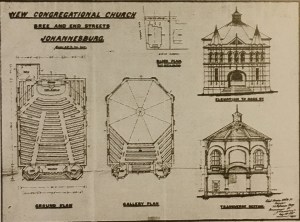
Being one of the first brick buildings in Johannesburg, the quality of the materials was poor, and due to defects, the building had to have extensive repair work done in 1893. In 1895, further alterations and additions were made. In 1903, the building was deemed to be unsafe. A new synagogue was meant to be built in End Street near Davies Street. The foundation stone was laid in 1906 but the temple was never finished.


From the photo above, one can see a framed drawing showing what the synagogue would look like. No plans exist and it was never built, so this is the only image we have of its potential.
In 1915 amalgamation of various Jewish congregations took place and the stone was transferred to the Wolmarans Street Synagogue or Great Synagogue as it’s known. The unfinished second building was amalgamated with End Street convent. The President Street Synagogue operated at a reduced scale until the building was sold in 1926 and demolished. Due to various congregational splits, several synagogues were operating in Johannesburg from the late 1890s onwards.

A stone’s throw from the unfinished synagogue, two stands from the corner of Rockey and End Streets stood the Princess Theatre. It was on land owned by Morris Rosenberg (on which the Baker-designed School of Music was built in 1906) and was a single-story hall-like structure. By 1912, the old theatre was used by a Jewish organisation ‘The Society for the Promotion of Hebrew Knowledge’. In 1914, presumably from this society, the Beth Hamedrash Kneseth Isreal Congregation was formed by Eastern European Jews living on the eastern side of Doornfontein and town. The congregation rented the theatre and used it as a synagogue from 1916 to 1931 despite having purchased land on the corner of Siemert and Buxton Roads (later sold with nothing built on it) for a new synagogue. In 1931, The congregation amalgamated with the Beth Hamedrash Hagodol in Saratoga Avenue. After the amalgamation, members who lived in town joined the Poswohl Synagogue on Mooi Street with the rest joining the Beth Hamedrash Hagodol. The old theatre became a piano warehouse and was eventually demolished and replaced with a block of flats.
The first application for a Dutch Reform Church in Johannesburg was received in January 1887. In the same month, Dominee van Warmelo of Heidelburg held the first service in the home of Field Cornet J. P. Meyer in Natal Camp. A subscription list was opened for the erection of a new church and fifty Pounds was collected. A young Dominee, J. N. Martins was convinced to stay in Johannesburg while passing through to Barberton. A house was built for him in Newtown (where the market now stands) and he conducted his first services in a reed stable until August 1887 when the first Dutch Reform Church was completed on Von Brandis Square where the Law Courts are today.

The second church replaced the temporary wood and iron building and opened on the 4th of April 1890

There are no original plans but there were alterations done in 1898 by R. L. McCowat for owner A. H. Halder. It was no longer a church at that time, as the DRC had sold the building with a view of building a new church in Braamfontein. At the time, c1897, there was also a split within the DRC congregation with the East (Irene) and Jeppe congregations going their own way.

In 1906 the Supreme Court building swallowed up the old church which was operating as a bakery at the time. A lecture hall, several small houses, and shops also made way for the new court buildings.

A breakaway congregation whose members included Jan Smuts and Louw & Frans Geldenhuys rented the Masonic Hall in 1897 but soon acquired a piece of land nearby on the corner of Plein & Hol (Edith Cavell) Street. Irene Hall was erected in 1898 and designed by Reid & Green with the cornerstone laid on 7 May 1898. Johannesburg’s first Afrikaans school, Helpmekaar, was established in 1921 as a mixed school at the Irene Church. In 1925 it moved to its current home in Braamfontein opposite Parktown Boys on the corner of Jan Smuts Avenue and Empire Road.


A larger church designed by Harold Porter (who also designed St. Martins in the Field in Rosebank) was built on the same site in 1932 and flats were built on each side in 1934 for added income and to reduce traffic noise. The congregation dwindled and the church was demolished in the late 1960s and a new church was built on the corner of Beit and End Street in 1971 that still stands today. The Masonic Temple was also eventually demolished after being surrounded by high-rise buildings in the late 1960s.


According to the book “Islam in South Africa’ the first mosque was established in 1888 in the Malay quarter of Ferreira’s Town and demolished in 1907 after being condemned as insanitary. The plot of land was incorporated into the Juma Masjid Society in 1916. It’s generally accepted that the Kerk Street site was used by Muslims prior to the first solid structure being built as detailed below but I was drawn to a piece of information about a plot of land of religious value near the sheds at 1 Fox Street that is owned and preserved by a the Mia family. This is the quote from http://www.skysrapercity.com by user Pule “Around the corner, in Alexander Street, lie the remains of the city’s first mosque, which has been walled off and retained as sacred ground by the Mia family”. This ties into the 1888 scenario as this area was still within Ferreira’s Town. Kerk Street is much further north and outside the boundaries of Ferreira’s Town. See the History of Ferreirasdorp for verification c/o work done by Liz Lancaster.
The first Mosque was a wood and iron structure built in 1906. It was replaced by what was known as the Kerk Street Mosque in 1918. The foundation stone of this Mosque was laid on 15 May 1918 by Syed Jammool Hoosain Mashade. The rectangular building was set slightly at an angle with the street, according to its relationship with Mecca, and was enclosed by a high decorative wall. The mosque was known as Madressa Himayatil Islam.


The building was demolished in 1989 to make way for a bigger and more modern Mosque which was completed in 1991 taking up the entire block. Prior to demolition, the heritage community hoped that the core or the facade would be preserved as they considered the building historically important. It was even listed as one of the top 100 buildings in Johannesburg to be preserved as a national monument. A trustee of the mosque, Mr. Ebrahim Mia, was quoted as saying, “We are going to demolish the mosque completely and build a bigger one because this is what the Muslim community needs.” He added that the old building was not representative of Islamic architecture, and because the land it was built on was considered sacred, it could not be taken over as a monument.

The following account from www.catholicjhb.org.za talks about the first Catholic service in Johannesburg: “February 20th. Sunday – I said the first Mass that has ever been celebrated on this plateau, open veldt up to the present. A reed hut, the Bakery of the Camp, is put at my disposal by Mr. Whelan of Bloemfontein. There were thirty-three Catholics present.” The exact site of this first Mass is lost but it was situated somewhere in Ferreira’s Camp to the west of the present City Hall.
The first Catholic Church was built and opened on 21 August 1887 on the corner of 148 Fox and Smal Street Street. The foundation stone was laid by Bishop Jolivet O.M.I. This stone is now displayed in the Saratoga Avenue Cathedral. It appears as though the first Catholic church was designed by J.S. Donaldson. He also designed the Grand National Hotel in 1888, the Palace Building in 1889 and the Hosken Building 1897.

Five years later in 1892 due to space requirements, a presbytery (or second church) was built on the corner of Main & Von Willeigh Streets just diagonally across from the church. A convent and school (staffed by Holy Family sisters) were also part of the church. The church buildings were sold and the whole block (including parts of the surrounding blocks) was then taken over by the Castle Brewery in 1895. The convent moved to End Street to what was the Doornfontein Club. The church buildings were demolished to make way for the brewery except for the presbytery. This was converted and became a stable which was still in use in the late 1940s. The four blocks that made up the Castle Brewery (including a few private hotels) are where the Carlton Centre and hotel are today.


The second bigger church, known as the Kerk St. Pro-Cathedral, was built on the block bounded by Kerk, Pritchard, Goud and Nugget Streets and was designed by J. F. Beardwood & Ibler. According to G. A. Leyds, the foundation stone was laid by Rt. Rev. Dr Jolivet in 1896 with the consecration taking place on 1897. Unfortunately, there are many details in Leyds’ book that are contradicted elsewhere. A Johannesburg Heritage Society booklet states that Jolivet laid the foundation stone on 7th June 1895 with the church solemnly opening on November 15th of the same year (Van Der Waal’s ‘Van Mynkamp tot Metropolis’ says 1896). The church stood for over sixty years until the Cathedral of Christ the King in Saratoga Avenue opened. The new cathedral was designed by Gregory & Monahan and the foundation stone was laid in 1958. Henry Nourse’s home ‘Clyfton House’ occupied the stand for over 60 years before the new cathedral was built.
The new cathedral’s first service was on Sunday 30th October 1960. Theodore, Cardinal de Gouvei, Archbishop of Lorenco Marques, presided over Solemn Mass which was celebrated by Monsignor Orfio Melanie, Charge d’affaires to the Apostolic Delegation in South Africa.


Other lost churches around Johannesburg
Maronite Church
The first church was a converted building in Johannesburg. In 1910 a church and rectory was purchased at 124 Commissioner Street (near the corner of Von Brandis Street) but soon moved to the corner of Kerk and Diagonal Street.


In 1936 the old Dutch Reform Church in Fordsburg was purchased by the Maronites and used until the early 1990s. The head of the church typically either lived on the premises or close by. When Father Peter Alam bought the Dutch church, he moved into a house at the closest address he could find at the time: 47 Mint Road – about two blocks away from the newly purchased church premises.
This quote from the Maronites book regarding the last days of the Mint Road church: “The 10am Mass on Sunday 20th July 2008 was a sad day in the annals of the Maronite and Lebanese South African community. It was a de-consecration Mass, signifying the closure of the Maronite Catholic Church in Fordsburg, Lebanese home for over 75 years, and its transferring to a normal building. The lights were on. The church is beautifully decorated. The Lebanese attending the Holy Mass as they and their forefathers and their families have done religiously and faithfully for over three-quarters of a century. The Maronite choir was magnificent. The congregation was in tears.”
Their newest church in Woodmead known as “Lady of the Cedars’ completed in the 1990s and later another in Mulbarton became the predominately Lebanese congregation’s new homes.

The brick building to the left of the church replaced a typical late 1890s Fordsburg house that was used as the Maronite school. The building replaced the house in 1955.


Dutch Reform Churches Fordsburg
The Nederduitse Hervormde Gemeente (NH of G) church, was consecrated on 6 December 1895 and two months later, on 19 February 1896, badly damaged by the Braamfontein dynamite explosion. Money was collected and the larger church was rebuilt and ready by 20 November 1896 (the foundation stone was laid on 21st of August 1896). See a previous post here on details about the Braamfontein explosion.
It appears that this NH of G church was built on Central Road and not Mint Road as initially thought. On both the Goad’s Map key plan, the church appears on Central Road between Park Road and Marais (Barney Simon & Lilian Ngoyi -previously Bree- Street today), and was one block east from where the Maronite Church is today. It was likely the first Dutch church in Fordsburg and was the one that only stood for two months until destroyed in the explosion. Its position on Central Road is consistent with the damage range of the explosion. Additionally, a parsonage for the church was built next to the rebuilt church on stands 73 & 74. The house was designed by Fleming & Reynolds in 1899 but was probably only built in 1902 or 1903 after the war. Fleming & Reynolds also designed similar Dutch Reform buildings in Fairview.


The NH of H church and parsonage were demolished in the early 1940s.
What does remain from the Fordsburg NG of H buildings is the Mission House on Central Road. This building has been a puzzle since my Fordsburg research, but no longer!

The foundation stone (currently illegible) was laid by General Louis Botha on the 26th of September 1904. According to the valuation roll, it was sold to the government in the 1920s and used as a cookery school. Patel (Snr) bought the building in 1963 for his optometrist rooms.
The Dutch Reform Church building designed by G. Kroon and built in 1903 on Mint Road was the one taken over by the Maronite congregation in 1936 (see Maronite section above) who used it for over 75 years.


The building has been standing empty since 2008 and was evidently sold a few years ago. The new owners stripped much of the church leaving a shell. These interior pictures were taken in June 2015.


It is stated that the original DRC building was also on Mint Road, south of Main Road. Evidence suggests that a church building that matches the description still stands behind a facade on Mint Road. It was converted to the Tivoli Bioscope in the late 1930s and may be the first DRC building. It was sold because it became too small. Labelled only as ‘Church’ on the 1910 Goad’s map and ‘Tivoli Bioscope’ in the 1937 map, the building is hidden by a facade and now operates as a motor spares warehouse.

The Longman’s Directory of 1896 lists a ‘Dopper Church’ at 15 Mint Road, which is a few blocks south of the first DRC church just mentioned. The site of 15 Mint Road was recently a business premises, but is now being re-developed. The building was sold as it quickly became too small for the congregation. It appears that the Dopper community (a Calvinistic breakaway of the DRC) moved to Melville in the early 1900s as opposed to the other two Dutch churches that remained in Fordsburg and moved later. There is no confirmed photo of this building.
Congregational Church
This church stood on the corner of End & Bree Street where architect Frank Emley was a member although R. Howden designed it. The foundation stone was laid by mining commissioner J. L. van der Merwe on the 14th of July 1895.
The first Congregational services were held in a wood & iron structure near Von Brandis Square by Rev. F. J. Ecclestone. Evidence points to this being the same iron church in Kerk Street between Eloff and Von Brandis which housed the early Johannesburg library. The church then moved to Richard Currie’s auction rooms in Commissioner Street on the 25th of April 1899 and later to the Masonic Hall in Jeppe Street before their new church was finally ready for occupation in late 1895. Ten years later in 1905 it was joined by the Sir Herbert Baker-designed School of Music across the road in End Street and the Caledonian Club which was built behind it. In 1913 an organ chamber was added. Where the church once stood is now a modern building. The Caledonian Club burnt down several years ago and has also been demolished. Further info on the School of Music and Caledonian Club can be found here.


Swedish Church
The Swedish Church stood on a small stand – measuring 100 x 50 Cape Feet (31.5 x 15.7 meters) – at the Northeastern corner of the intersection of Hancock and Quartz Streets. The building had been erected by the ‘Deutsche Evangelische Gemeinde’ – German Evangelical Congregation – in 1889/90.

In 1910 when the German Congregation was in the process of planning their new church to be built in Ockerse Street, Hospital Hill, the Swedes made an offer to buy the old church for the sum of £800. The Germans eagerly accepted the offer subject to being allowed the use of the building until their new church would be ready for occupation.
The old church – plus ancillary buildings added over time – remained substantially the same. The Swedes did make some improvements. The original corrugated iron roof coverings made way for slates and an impressive ridge turret was added. These alterations were done by BAKER & FLEMING in 1911.
The Swedish congregation remained until 1976 until they relocated to their newly built church, St. Johannes, in Kelvin.

The old church was subsequently pulled down to make way for a high-rise block of flats. (Konrad Voges 2014)

In the evenings, the church was used by Swiss Reform congregation for their services, as well as the Russian Orthodox church for a short time.
Park Synagogue
Park Synagogue in De Villiers Street (corner Joubert) was opposite the telephone tower. It was built in 1892 by Messrs Alpine and Short for a breakaway congregation of the President Street Synagogue who were unhappy with the re-appointment of the Rev. Mark L. Harris. It was designed by architects Menze & Brauer. The four stands it was built on were donated by President Kruger who also consecrated the building. J. F. Kroll designed the minister’s residence in 1896 and Kallenbach & Reynolds oversaw alterations in 1903 which included adding 150 seats. It operated until 1912 when it was sold to the railways and used as headquarters for the South African Railways and Harbours Rifles. In 1926, the unit disbanded and the buildings were demolished to make way for the 1932 Railway Building which now stands in its place. The Gordon Leith-designed 1932 railway buildings have been closed to the public since the early 1990s.

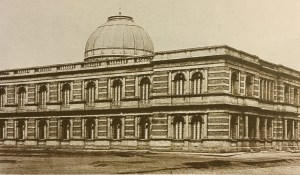

The Park synagogue in De Villiers Street had the first Jewish school in Johannesburg added in 1896 designed by J. F. Kroll. The foundation stone was laid by Chief Justice Kotze on 25th of March 1896 and the school opened on the 14th of July 1897. In 1915, the school was moved to End Street next to the railway line and became the Jewish Government School. In 1966 as Jewish residents in the area dwindled, it was renamed I.H. Harris Primary School and still operates. The split Witwatersrand Hebrew Congregation and the Johannesburg Hebrew Congregation eventually joined up in 1915 forming the United Hebrew Congregation. Their new synagogue was the Wolmarans Street synagogue or Great Synagogue. This building still stands today, but is no longer owned or used by the Jewish community.

Roman Catholic Mission
The first Roman Catholic Mission also known as ‘Sherwell Street Native Church’ was built in 1902 at 45 Sherwell Street in Doornfontein. It remained a church until 1937 and was also known as the Sacred Heart of Jesus Mission. Father John de Lacy who acquired the property and started the church was the first Catholic priest to visit Johannesburg on 20th July 1886. It was a school during the week for Africans taught by teachers from Holy Family Sisters and End Street Convent. The priests lived in the presbytery next to the Catholic church on the corner of Kerk & Nugget Street before the Pro Cathedral moved in 1960 to the corner of Saratoga Avenue & End Street.


St. Cyprian’s Native Mission
The original church founded by Rev. Darragh appears to have been at 185 Anderson Street (between Nugget and End Street) and also held services in Chapels at Robinson Deep, Selby compound, Parktown, Yeoville (St Aiden’s was used), Parkview, S.A.R. Braamfontein and Kensington. Although there is no date, it was designed by Edwin Luytens who also designed the Johannesburg Art Gallery in Joubert Park in 1910. The church was a largely black congregation and closed sometime in the 1950s.
The congregation moved to St. Mary’s Cathedral, known for its anti-apartheid stance. The original site is now the current Anderson Street off-ramp which runs right down the block between End & Nugget Street where the church and other buildings would have been. One report adds that the land was expropriated in 1963 – presumably for the highway.


Also under the St Cyprian’s banner was a school and a mission. The mission was based in Doornfontein at 10 Sherwell Street and was in use in 1931 based on an annual report by Wilfred Parker. Previously it was the St.Peter’s Anglican College founded in 1903 and a place where black mission workers and priests were trained. It moved to Rosettenville in 1913.

A telegram from 19 August 1925 was sent from Wilfred Parker [C.B.B.’s brother], St. Cyprian’s Native Mission, 10 Sherwell Street, Johannesburg, to Car [C.B.B.] in this telegram it’s also mentioned that a church is going up in Sofiatown.
In the annual report in 1929, it mentions that the school is to be moved to Sophiatown. There was a St Cyprian’s in Sophiatown that was closed down during apartheid. It is also noted that St John’s College adopted the mission school and was helping to raise money to buy land in the Western Native Townships.
Also part of this set-up was St. Mary Magdalen’s in Gibson Street Sophiatown.
St. Saviour’s City & Suburban
Dating back to 1905 this church was designed by Gilbert Cottrill who also designed Christ Church in Clarendon Place (which still stands) and the St. Mary’s church home in Berg Street (presumably part of St. Mary’s College) Not sure if this church still stands as no address or pictures can be found.
Ebenezer Congregational Church
Built in 1910, this church stood at 33 Sivewright Ave just off Market Street. It was extended in 1913 to accommodate 200 schoolchildren and again in 1918. In 1926 a new school was completed on the adjacent southern plot. The buildings were sold in the early 1970s and demolished.

The church served the coloured and Malay communities in Johannesburg. Given the segregation at the time, it was common (and easier) for deacons of non-white congregations to start up small churches and add schools later on. There was little in the way of government schooling for non-whites and the various churches and missions took on this task. Rev. Charles Phillips was to be the driving force behind the Ebenezer expansion around Johannesburg.
Ebenezer Independent Church Newtown
This church, part of the above congregation, was designed by Kallenbach & Kennedy in 1904. It stood on the corner of Jeppe & Becker Streets roughly where the turbine hall is today.

Ebenezer Congregational Church Ferreirastown
This church, which was part of the same group as the previous two churches run by Rev Charles Phillips, dates back to 1909 and was on the corner of Wolhuter and Main Streets. Wolhuter Street was re-named Margaret Mcingama Street. The entire block was demolished in the late 1970s or early 1980s and has remained undeveloped.


African Methodist Episcopal Church (AME)
This church was on the corner of Anderson and Phillips Street in City & Suburban. The architect was Ernest J Wellman and the plans are dated 14 April 1926. The church has been demolished but the headquarters for the AME is housed in a four-storey building (built in 1991) with the ground floor still being used as a church.

This from http://www.dacb.org: “Senatle built the headquarters for the AME 19th district in what was originally a small church building at the corner of Philipps and Anderson streets in Johannesburg. When he was transferred to the 19th district Senatle saw a need for both a residence and headquarters for the church. After negotiations with the local church that owned the building, Senatle started a fund-raising campaign. His main aim was to impress on the district that local money must be used to build the headquarters. He emphasized that the money had to be raised entirely from the black people of Africa. As a result of this spirit of self-reliance, the sum of three million rand was raised. Located in a four-storey building situated at the corner of Philips and Anderson Streets in Johannesburg, the headquarters opened in 1991. The bottom part is used as a church building, the middle two floors are rented out to local businesses and the upper floor is where the various offices of the headquarters of the 19th district are located.”
Apostolic Faith Mission of SA
The plans for this church date back to December 1917 with the architect noted as unknown. It was on the southern side of Mooi Street in City & Suburban. It is also noted that the congregation first held services in a hall in Doornfontein and in 1908 moved to the Bree Street Tabernacle before taking ownership of their new building. The original plans don’t match the building, but there may have been later alterations and additions. The building has been demolished.

Up until 1950 there were at least 15 active AFM churches around Johannesburg. I’ve managed to track down most of them and they will be featured in the next part of this piece. Of the 15 listed from 1950, only two seem to have been demolished. These are the ‘Tabernakal’ at 7 De Villiers Street and the one in Craighall Park at 59 Lancaster Ave.
The De Villiers Street AFM church was sold to Brian Brooke who converted it and opened the Brooke Theatre on 13 September 1955. It ran for 25 years until 1980 when Brian closed it. It was demolished in 1981 and replaced by an office block.
Native Mission Van Beek Street Doornfontein
Plans indicate that additions were made to this church in 1904 for owner Rev. HD Goodenough (for the Congregational Church of Americas Board). It appears to have been at 39 Van Beek Street and is now a small factory. It’s not known if the original church was demolished or altered to fit its new role.

St. Augustine’s
The first St. Augustine’s started out as a high school for boys on Height Street just south of Beit Street in 1892. In 1894 the congregation added a chapel which was later used by the congregants as a church (another source puts the building as an iron structure erected in 1888). It was then moved to Charlton Terrace where a new church was designed by Phillip Treeby with the foundation stone laid in 1904 by Bishop Carter of Pretoria. The Anglican community in the area had diminished substantially by the 1930s (presumably as the Jewish congregation grew) which may have been a catalyst for its demolition in 1936. Today, Charrow Court stands on part of the grounds where St. Augustine’s once stood.


The third incarnation was rebuilt in 1936 in Orange Grove with the original foundation stones incorporated into the new building. The new designers were Fleming & Co. who did work at the Milner Park showgrounds, Roedean and St. John’s College. One book claims St. Augustine’s was taken down stone by stone and re-erected in the shape of a house in Bramley, Louis Botha Avenue, called ‘The Worral’. This turns out to be true. ‘The Worral’ was demolished in the 1950s and rebuilt in Kyalami in the 1960s, again using the same stones, slate, and teak from the original church.

Wesleyan Church Yeoville
The foundation stone was laid by Sir Arthur Lawley and the church, on the corner of Alexandra Street & Harrow Road, was completed in 1904. Prior to construction, the first service for 70 people was held at the Masonic Hall (known as Corona Lodge completed in 1902 and designed by J. A. Cope Christie) on O’Reilly Road on 25 November 1903. The lodge building still stands and is one of only a few old Masonic halls left in Johannesburg although it hasn’t been in Masonic service since the 1960s.


The last service was Easter 1961 after which the church was demolished to make way for the Harrow Road widening. The congregation moved to a new church on St John’s Road opposite St. John’s College designed by Noel Dellow. The original glass windows were incorporated into the northern wall of the new church.

Wesleyan Church Jules Street Jeppestown (also known as the Victoria Society)
Designed by A.E & J.H. Till and built in 1903 (or 1898 – see below). Not much was known about this church but recent research (Oct 2016) has uncovered that the dwindling congregation moved to the Kensington Methodist Church in 1987.


The church was all but missing until Gary Walker alerted me to the shell of a church on the corner of Jules and Hans Street. From the Google Street view shots below, one can see it is the remains of the old church. The entire top half is missing.

Recent research on early Methodist history in Johannesburg also mentions the ‘Victoria Church’. This Methodist branch opened a wood and iron church in the vicinity of Commissioner Street and John Page Drive in 1897. It burnt down and a new church was built in 1898 (likely only completed in 1903) and renovated in 1935. The records indicate that J.H. Till was the architect of the ‘Victoria Church’ which means this is the same church. Till was heavily involved in the Methodist affairs. He died in 1956 at the age of 91.

In the book ‘Daughter of Yesteryear’ by Alice Ralis and Ruth Gordon, a story is told of a Weslyan church hall in Jeppestown that burnt down on Guy Fawkes night. The congregation was moved to a temporary wood and iron church hall while a new church was erected on the site of the old one. I suspect this is all related.
Yet another incarnation of the ‘Victoria Church’ was built on Main Street in Jeppestown in 1954. The ‘New Victoria’ commemorative stone was laid by Rev. J. B. Webb on the 3rd of October 1954 at the building’s opening. The building is no longer used as a church.

Wesleyan Church President Street
The first Wesleyan church in Johannesburg was on Commissioner Street near Joubert Street in Marshalltown on four stands donated by H. B. Marshall. It was the same block that the current His Majesty’s Theatre is built on. The foundation stone was laid by Captain von Brandis in July 1887 and the church was completed and opened on the 25th of September 1887 seating 300 people. The first Methodist minister in Johannesburg, Rev. F. J. Briscoe, used to preach from its pulpit. It is probable that this building was mostly constructed from wood and iron given the shortage of building materials. It is also recorded that this was the first church building in Johannesburg.


It soon became too small and was sold in May 1889 and a bigger church was built in the same year a block away from the first synagogue on the corner of President and Kruis Streets. It didn’t look like a traditional church with its numerous windows and ventilators but these were necessary as the building was also used as a school. The church initially held 500 people and was enlarged in 1892 to hold 700. It was in use until 1919 when it was sold.

In 1919, the Wesleyan Central Hall was built next to the old church building and extended to Pritchard Street facing Von Brandis Square and the Law Courts. It was designed by Howden and Stewart.


An oddity is that from the photographic evidence, part of the original church building was demolished to make way for another building between the hall and the church in the 1940s. It’s not known if the addition was Methodist.

In 1967, the Central Methodist Church was built on the corner of Pritchard and Smal Street. This fourth incarnation of this parish was designed by the firm Duncan, Gill & Adendorff. The building opened in 1968 and still functions as a church.

Wesleyan Church Fordsburg
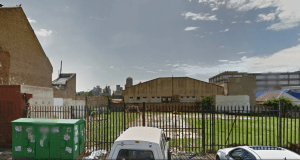
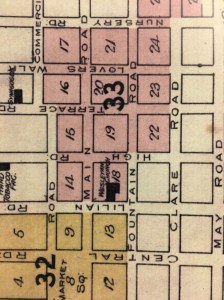
Also by A.E. & J.H. Till dating from 1894. The church was on Lilian Road between Main and Fountain Roads and has been demolished. In 1904 a parsonage was added in Fountain Road. There were also additions to the church. No Pictures have been found but below are the current site and foundations that match up to Goad’s 1910 insurance map on block 18.

Wesleyan Church Anderson Street
This came up on the insurance map I used for reference. A car park stands where the church once stood between Anderson & Frederick Streets. According to Wesleyan history, several small churches were opened along the reef to serve miners.

Synagogue in Fox Street
The Eastern European Jews broke away from the President Street congregation and established their own congregation (the JOHC or Johannesburg Orthodox Hebrew Congregation) and synagogue in 1891 in a house at 42 Fox Street on the western side near Ferreirastown. This house was rented from Harry Filmer (and was also used for early Catholic services prior to the first Catholic church in Smal Street). It was known as Beth Hamedrash (House of Learning). The split was because they felt the services were not orthodox enough based on the German and English Jewish practices that comprised the majority of the early community.

In 1893, the Trustees of the JOHC bought a stand in Ferrierastown with a small house on it. Plans indicate alterations were done to the house by architect A.P. Menze. A mikveh was erected behind the house. The building was finished in February 1893 and the scrolls transferred from Filmer’s house.

In 1912 a synagogue was built on both the original and adjacent site which was designed by J.F. Kroll who was also responsible for the Osborne Chemist in Jeppestown and the Fordsburg synagogue. The original house was demolished when the new synagogue was built, but the mikveh was retained. The foundation stone was laid by I.W. Schlesinger on 9 June 1912 and the synagogue was officially opened on 8 December 1912 by Gustave Imroth. It stood until 1948 when Anglo American purchased the block to extend its headquarters (it was still used by a much-reduced community before demolition). In 1916 a Talmud Torah was built nearby on the corner of Fox and Maclaren Streets. The school was sold in the late 1920s and the money was used to buy the land in Doornfontein in Sherwell Street for the Beth Hamedrash Hagodol. By the mid to late 1920s, the Jewish community in Ferreierastown was pushing northwards to Doornfontein as the area degraded. By the 1930s, Ferreirastown was a slum. It was cleaned up later in the 1940s with the building of the court and the Anglo American headquarters. By then, there were no Jews left in the area, and nothing remains in the area today to indicate it was once the centre of Johannesburg’s Eastern European Jewish community.


Two other synagogues in Ferreriastown also moved to Doornfontein in the late 1920s/early 1930s. These were the Chassidic Synagogue on the corner of Ferreira and Main Streets, and the Ponevez Society on the corner of Main and West (part of the same black as the Fox Street Synagogue). Sadly, these two were demolished along with others in Doornfontein in the 1960s. There are no photographic records for the two in Ferreirastown.
Altogether, four other smaller synagogues that stood in Doornfontein no longer exist: Talmud Torah Synagogue from 1918 (originally behind Ellis Park stadium), Altesheim Shul in Louisa Street built in 1927 next to the old age home, Chassidishe Shul in Siemert Street built in 1930 designed by Saul Margo (which appears to have re-located to Yeoville after it was demolished to make way for the Harrow Road fly-over in 1964) and Ponevez Shul in Hilner Street built in 1931.
The Doornfontein Talmud Torah Synagogue was on the corner of Beit And Staib Streets. It was originally a house and was altered by architect Saul Margo in 1918 to include a synagogue on the upper floor. The rest of the house was converted into classrooms for Jewish schooling purposes. It went through another major alteration and extension in 1936. Until the 1930s, it was one of only two synagogues in Doornfontein (the other being the Lion’s Shul), and the only one in New Doornfontein. By all accounts, it was a major part of Jewish life in the area. By the 1960s, many Jewish families had left the Doornfontein (similar pattern to Ferreirastown in the 1930s) for further northern suburbs like Orange Grove, Yeoville, Highlands North, Sandton, and Killarney. The building was sold in 1967 and expropriated in 1975 to form part of the new Johannesburg Technical College which was built in 1984.

Altesheim Shul, or Aged Home Synagogue was built on the corner of Siemert and Louisa Streets in 1927 with money donated by I. W. Schlesinger. It was designed by P. Rogers-Cooke who also designed an additional wing for the old age home at the time. The foundation stone was laid by Schlesinger’s four-year-old son John on the 8th of May 1927. The old age home expanded over time but was ultimately affected by the exodus of Jewish families in the 1960s. The organisation purchased land in Sandringham and built a new old age home and synagogue which is still in use today. The Doornfontein buildings were sold and eventually expropriated for the technical college. The synagogue was demolished, but part of the old-age home structure was incorporated into the new college buildings.

The Chassidic Synagogue was designed by Saul Margo in 1930 for the Adnath Israel Orthodox D’Anash Chassidim of Johannesburg (as they were known between 1910 and 1927). Their original synagogue was in Ferreriastown which they sold before moving to Dooornfontein in the late 1920s, initially using an old shop in Beit Street for services until land for their new synagogue was acquired. This was on the corner of Siemert and Harrow Raods, across the road from the Aged Home Synagogue. The foundation stone was laid by P. Feldman on 22 June 1930. In the 1960s, the land was expropriated by the council for the construction of the Harrow Road fly-over. A deal was made and the congregation were given another property on the corner of Harrow Road and Yeo Street along with money to build a new synagogue, which they did. The new building c1963 still stands but is no longer a synagogue. Yeoville (like Doornfontein and Ferreirastown before) also saw an exodus of Jewish families in the 1990s as the area’s socio-economic status changed.


Hilner Street Synagogue or Ponovez Synagogue was designed by Obel & Obel in 1931 and the foundation stone was laid by D. I. Fram on 26 July 1931. Like the Chassidic congregation, the Ponovez Sick Benefit and Benevolent Society started out in Ferreirastown, forming in 1896, with the object of assisting Jews from Ponevez, a village in Lithuania. Their first known premises was on the corner of West and Main Streets, purchased in 1912, near the Fox Street Beth Hamedrash. The Ferreirastown building was sold in 1931 after the purchase of land in Doornfontein on the corner of Siemert and Hilner Streets. The synagogue remained in use long after the old age home and other synagogues moved out of Doornfontein. The Ponovez Society was ultimately dissolved in the 1970s with the building being demolished after being sold to a development company that built an office park on the surrounding land. The old synagogue was cleared for the garden area after being used for storage during construction.


Check out Eli’s website for a more detailed Jewish perspective on the various shuls in Doornfontein here.
Synagogue in Fordsburg
Designed by J.F Kroll in 1904 with changes in 1906. The cornerstone was laid in 1906 by Mrs L. R. Melman. The synagogue building was on Terrace Road between Commercial and Avenue Roads and was demolished to make way for the Oriental Plaza in the late 1970s. In 1928, a new synagogue was built in Mayfair (which still stands). It caused a rift in the congregation and many moved away from Fordsburg to join the Mayfair congregation. In 1937, property was purchased on Park Avenue and 9th Street. In 1939, the Terrace Road buildings were sold to the council. It was sold again in 1982 for the Oriental Plaza development. A new synagogue was erected on the Park Avenue site and opened in August 1941. Unfortunately, the congregation continued to decrease, and the building was sold in 1963. The congregation was also known as the Fordsburg-Mayfair Hebrew Congregation and was the subject of a book by Bernard Sacks called ‘The Fordsburg-Mayfair Hebrew Community 1893 – 1964’. The community dissolved and donated the proceeds to the Sandringham old age home. Remnants of the community moved to Emmerentia and Greenside.


Hamadia Mosque Newtown

The picture above may be an early version of this mosque. This extract is from Elsabe Brink’s heritage survey of Fordsburg:
The most important and oldest of these is the Hamidia Mosque at 2 Jennings Street, Newtown. This is where in 1908 Mahatma Gandhi addressed numerous meetings and on 10 January 1908 presided over a gathering at which passive resisters burnt their passes in protest against new discriminatory legislation. The Star reported: “The meeting was held in the Mosque grounds, Newtown, at 11 o’clock, and despite the short notice of the meeting there was a large gathering. For the purpose of such [a] meeting a platform had been erected on the grounds and seating accommodation was provided by means of the serviceable paraffin tins which were strewn about in thousands. On the platform were Essop Ismail Mia, Chairman of the British Indian Association, an Indian priest in artistic Oriental garb, and Mr Gandhi.” This meeting signaled the resumption of the passive resistance campaign. On 16 and 23 August 1908, at public ceremonies at the mosque, more passes were burnt.

Central Tabernacle Bree Street
Just a few blocks east of the Hamadia mosque stood the Central Tabernacle at 88 Bree Street. The only information I can find is that the Apostolic Faith Mission moved there in 1908 for some time. I presume it was used by another congregation before that time and possibly after.


German Baptist Church Mayfair
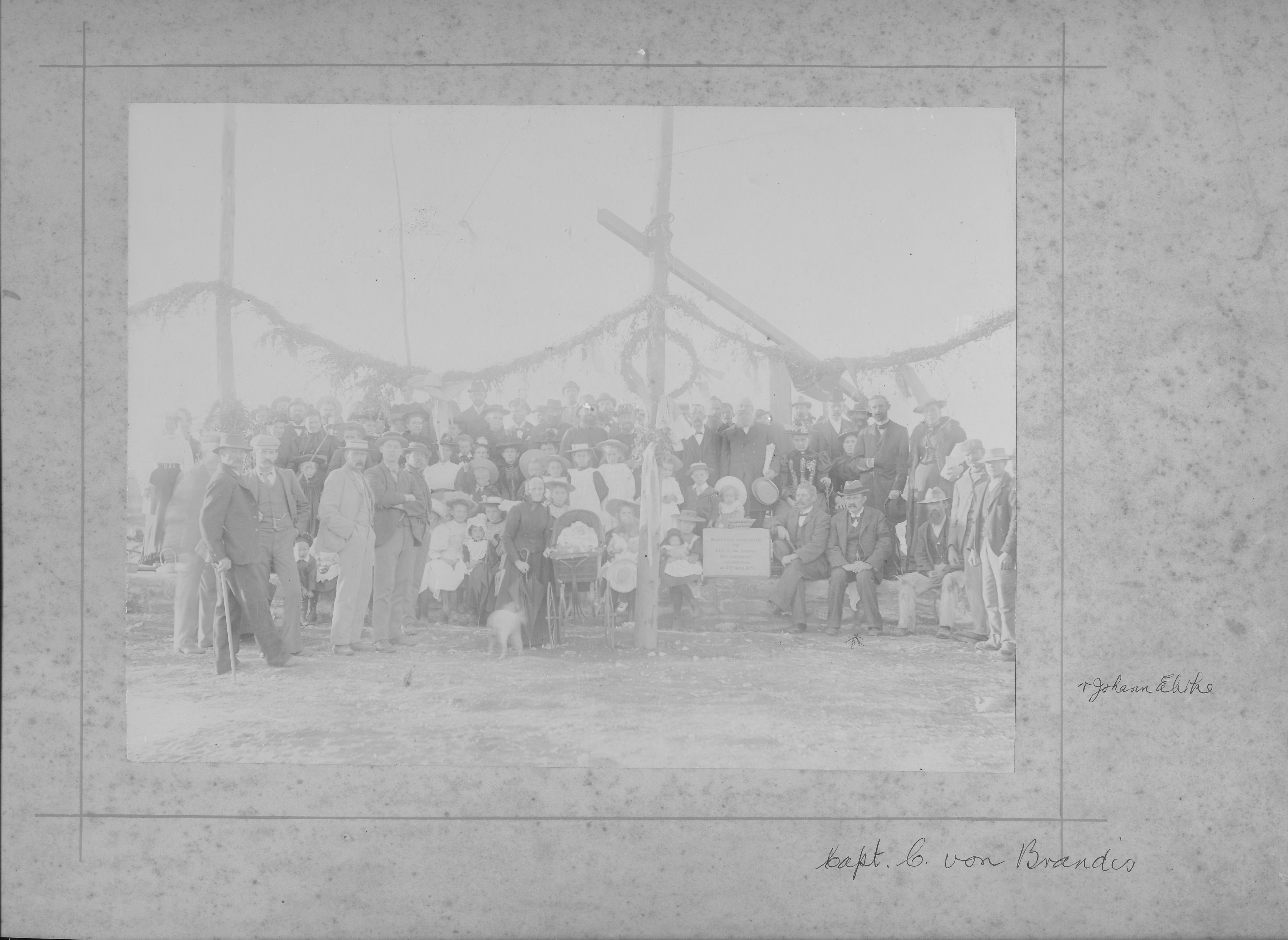
A 2023 addition courtesy of Dr. Stephanie Victor of Amathole Museum. The foundation stone was laid on 27 April 1897 by Capt Carl Von Brandis. According to Carl Hugo Gutsche (1843 – 1926): the Significance of his Life (University of Stellenbosch, 1999) which refers to Louis Preuss’ German Baptist Church in Mayfair, Johannesburg established in August 1897 (possibly the date when the church was paid for). In 1889 when Pastor Carl Gutsche of King William’s Town visited the congregation they were building a manse and church on the same site and opened a German school, but the church never flourished due to financial problems. The church appeared on the valuation rolls between 1904 – 1944 when it changed ownership and was presumably demolished. It was originally referred to as being in Fordsburg prior to Mayfair being established.
Presbyterian Church in Noord Street / St. George’s Presbyterian Church
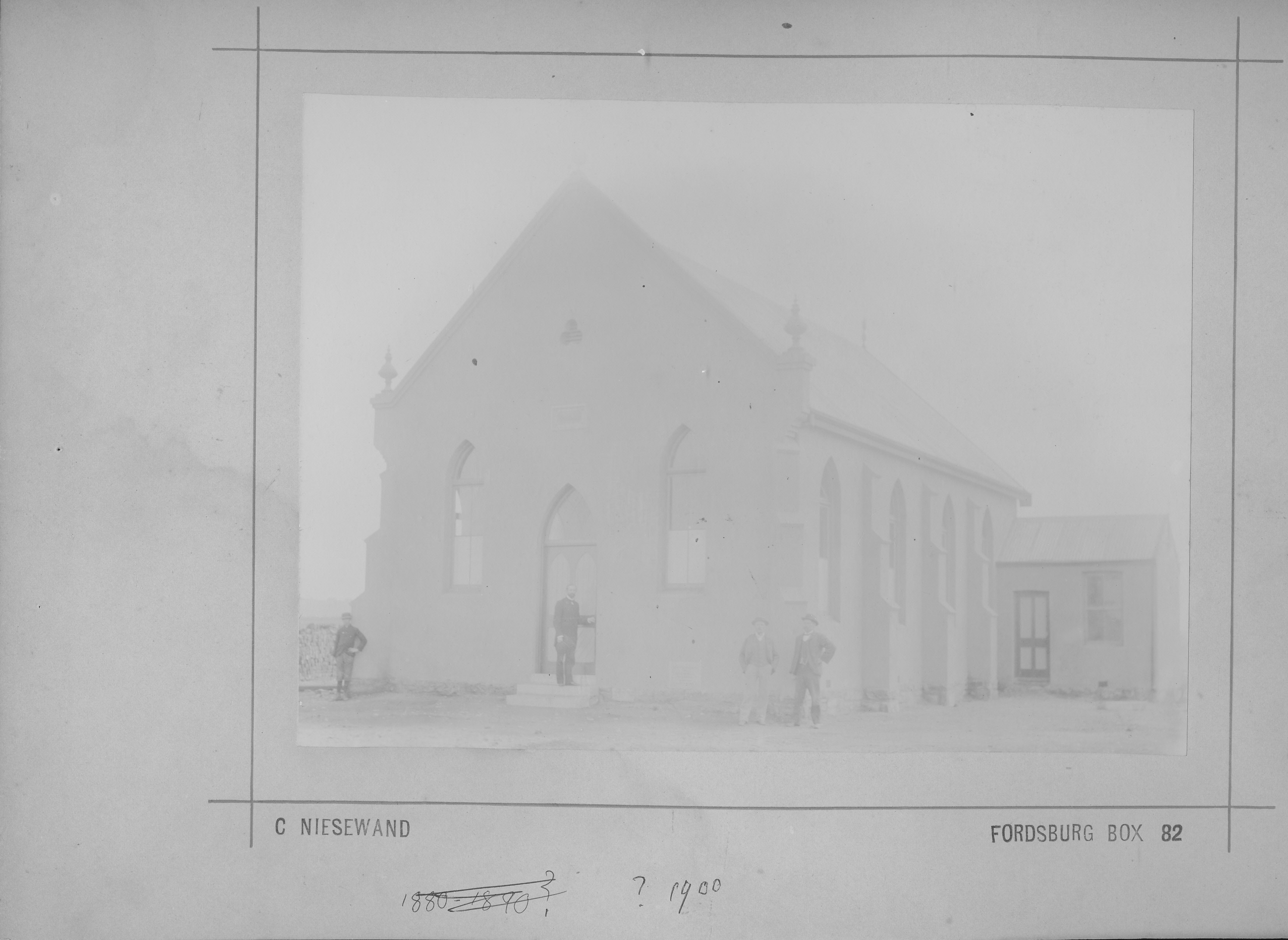
This church was built in 1906 and designed by R. Howden. I originally placed the church where the Cinerama was built in the 1960s which became a nightclub in the 1980s and 1990s and which is now being used as church. St. George’s was across the road where the BP garage is today (southwestern corner of Noord and Claim Street). Evidence points to this church being the ‘great parish of St. George’s church in Noord Street’ founded by James Gray and was also known as the ‘Scotch Church’. According to the plans, two houses presumably part of the church were designed and built first in 1895 on adjacent plots with the main church coming almost 10 years later. There were two previous Presbyterian churches in Johannesburg prior to this one: Kerk Street c1887, and Bree Street c1889. Noord street was conceivably the third in the lineage, with the upheaval in Johannesburg and the Boer war delaying its contruction.


The 1906 church was demolished in the 1960s and a new one built in Wolmarans Street across from the northern end of Joubert Park. It still stands today.

First Presbyterian Church Kerk Street / Second Presbyterian Church later the Catholic Apostolic Church cnr Bree and Von Weilligh Streets
The first Presbyterian church was built in Spetember 1887 on the north side of Kerk Street between Rissik and Joubert Streets. It was noted as being the first ‘permanent brick church’ building in Johannesburg, and could seat 200 people and was later taken over by the Baptist congregation.

The first church quickly became too small and a new church was built in 1889 and designed by Harry Clayton on the corner of Bree and Von Weilligh Streets. J. P. Meyer laid the foundation stone in October 1889. Sometime after 1897 and probably around 1905, it became known as the Catholic Apostolic Church (although not connected to the Johannesburg Catholic church). The new St. George’s Presbyterian Church in Noord Street became the main church in 1906.
The now named Catholic Apostolic Church appears to have been enlarged and modified by 1911. The church was eventually demolished and the corner developed into a hotel. Saul Margo, a Jewish architect linked to several synagogues designed the Buxton Hotel. It was later renamed the Berkeley Hotel in the 1960s, and then Philadelphia in 1973. It was demolished sometime in the late 1970s or early 80s. The shape of the old hotel building can still be seen on the opposite building wall.
Baptist Church Plein Street
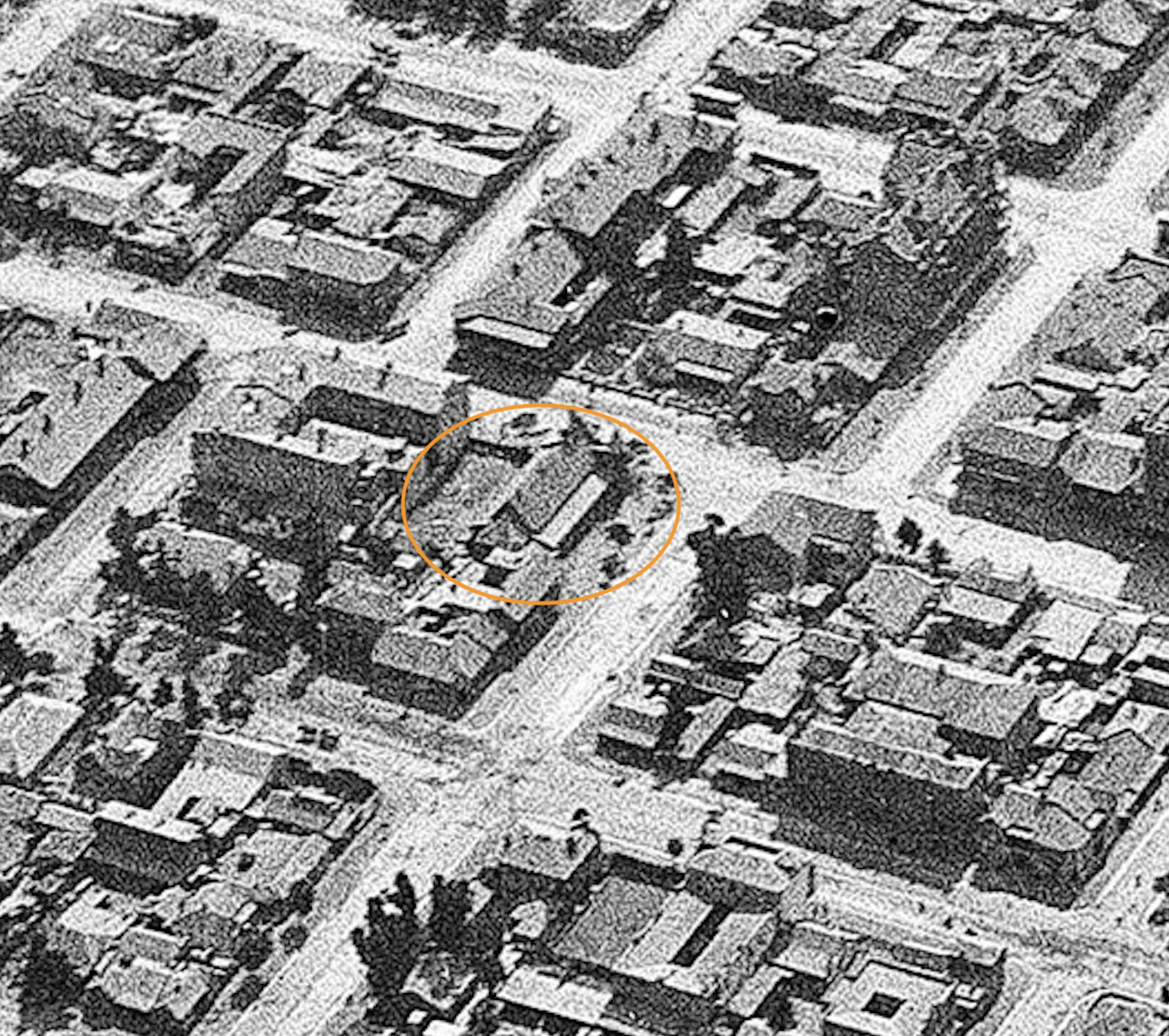
Designed by A. H. Reid in 1892. He was part of the team that designed the first synagogue in Johannesburg on President Street and the first Johannesburg General Hospital. The plans state the chapel was on the corner of De Villiers and Kaiser Streets. It survived at least until the mid-1930s functioning as a store.


Baptist / AFM Apostolic Church De Villiers Street
This Baptist Church in De Villers Street was operating in 1908 and later became part of the AFM Apostolic church. It was sold to Brain Brooke in 1955 who converted it into the Brooke Theatre which was ‘built out of the shell of an old Apostolic Church’. The theatre building was demolished in 1981.


Immanuel’s Kerk / Lutheran Church cnr Kruis and Marshall Streets
Immanuel’s Kerk is listed in the 1910 and 1937 Goads map. It’s not an early congregation I’ve come across. It was later known as the Lutheran Church and the building stood until the 1940s. My estimated build date based on the design would be mid-1890s – to early 1900s

Rosebank Union Church
Also listed under Baptist churches, this started in Cradock Avenue in Rosebank in a tin building (known as the Tin Tabernacle) in February 1906.

In 1926, the second building was erected. It was designed by F. Williamson and also called the ‘Spanish church’ due to the steeply pitched and red tiles roof. The Tin Tabernacle structure was donated to the Alexandria Baptist church in 1931.


This church was demolished in 1977 and a third and bigger church was erected on the site. In 1996, the property was sold to Total and the church bought new land in Hurlingham. The current RUC was opened in November 1999.
info and pictures from www.rosebankunion.org and Christain Life blog.
Clifton Methodist Church Braamfontein
Designed by H Granger Fleming in 1893, this church stood until 1972 when it was demolished. The brick and ochre building with its pipe organ cost GBP 10 000 to build.

During its last days, the minister, Rev. A. J. Cook, indicated that the steeple had become a danger and that the stained glass windows were leaking. The cost to repair the church was R40 000 which could not be raised from the mainly student congregation at the time, hence the decision to sell. The developers agreed to build a new church near the Intimate Theatre on Rissik Street. ‘Methodist House’ on the corner of Rissik and Juta Street corroborates the story.


Dutch Reform Church Braamfontein
This grand church was designed in 1897/8 and bounded by Jorrisen, De Korte and Harrison Streets. Frederick George Green was mentioned as the architect in “Ons kerk in die Goudstad’ although the plans do not. The partnership of Reid & Green designed the parsonage to the left for Rev. Martins in 1898 so it’s possible they also designed the main church. There is also mention in ‘Victorian Buildings in South Africa’ by D. Picton-Seymour that the church and parsonage were designed by Goodwin, Small & Cuthbert.

The 1897 church was a temporary wood and iron structure with the main building only starting in 1903. It is recorded that the foundation stone for the new church was laid on the 24th of June 1903 by Prof J. I. Marais of Stellenbosch. It could hold 700 people and cost GBP 12 000. The gap between design and build was initially a lack of funds, followed by the Boer War. It is also noted that there was a secession by the Johannesburg East (Irene) and Jeppestown branches from the mother church in 1897. The Braamfontein DRC buildings were demolished in 1955.

In the late 1950s, a new smaller DRC church building was built on De Korte Street across from the Methodist Church. It appears to be of the distinctive Geers & Geers design, but this is not verified. The building only lasted a few decades before being demolished in the late 1980s as congregants moved away to the suburbs as Braamfontein developed from a largely residential area to a business and office node in the 1960s and 1970s.

More information on the Braamfontein Dutch Reform church can be found here.
All Saints Clifton Parish Hall
This church hall which stood in Steimens Street was designed by Thomas Anderson Moodie. The plans date back to May 1906. The hall was demolished in the late 1960s to make way for the Civic Theatre and Centre expansion.

Congregational Church Loveday Street Braamfontein
The plans for this small church date back to February 1897. It was designed by Howden & Chandler for the Rev. Henry C.W. Newell

Clifton Presbyterian Church
Listed in the Longlands directory 1899, it appears to have survived until 1925 at 75 De Korte Street between De Beer and Melle Streets. Clifton was an early name for a section of Braamfontein.

Wanderers View Synagogue
Built for the Braamfontein Hebrew Congregation in 1919 and designed by S. Isaacs. The synagogue was on the corner of Smit and Loveday Streets in what was then known as Wanderer’s View, which was originally owned by Samuel Goldreich. The small suburb was north of the Wanderers Club, and in the early 1900s, more economically successful Jewish families from Ferreirastown moved to the area. By 1960, most of the Jewish families had left the area moving over the hill to Parktown, Saxonwold and surrounds. Braamfontein was also becoming an office hub at that time, and old houses and flats were being bought up and demolished for new office buildings. It was decided to deconsecrate the synagogue in 1961 and transfer the property to the Jewish Board of Deputies who sold it in 1968. The building was likely demolished in the late 1960s or early 1979s to make way for Total House.


This excerpt from Margot Rubin’s work: “Doornfontein was not the only enclave to expand during the 1920s, Braamfontein – Wanderers View had enlarged and grown in the previous decade, and the older community that had lived close to the Great/Park Synagogue had moved north and settled around Wolmarans Street, where they had constructed a new synagogue. Although plans had been afoot to build a synagogue since 1917, the Braamfontein Hebrew Congregation, which was mainly composed of Eastern European Jews, only constructed the Braamfontein Wanderers View Synagogue in 1921. The Jewish families in Braamfontein, generally, worked and lived in the area but the community did not remain long and the residents soon joined their co-religionists in the more eastern part of the city. There are, however, a number of nostalgic remembrances of the neighbourhood and early residents remember processions parading through the streets on Jewish festivals, which were occasions when the whole neighbourhood would join in (Abelman, 1987).”
Russian Orthodox Church of St. Vladimir
A latecomer to Johannesburg, the church started in 1952 to cater to the roughly 100 Russians in South Africa, of which half lived in Johannesburg. Early services were held in a flat and later at the Swedish Lutheran Church on Hancock Street. In 1961, the congregation purchased a house at 41 Koch Street, which was their home for approximately a decade. I’ve not found a photo of the house; a block of flats now occupies the site. The map below indicates the position.
Quaker Religious Society
Quaker House at 3 Gordon Terrace, which still stands, was used by the Quakers and other groups (like the Gay Christian Community) from around the 1960s to 2015. Quakers appear to meet in the building in Braamfontein that houses WITS Art Gallery.

The following 1911 aerial view shows the positions of various churches. Of interest are the two End Street positions, as well as the Park Synagogue and School. The first President Street Synagogue and Wesleyan Church are clearly visible. Only three churches located on the map below still stand today, and two were not yet built in 1911: Greek Orthodox Church (1912), Christian Science Church, and Great Synagogue (1915). All are on Wolmarans Street.

© 2015 Johannesburg 1912. Please don’t copy our content or images without permission — we work hard to research and produce everything you read here. If you’d like to share something, please link back to the original post. Thank you for respecting our work.
Information and pictures for this post came from various sources outside of the usual collection of books:
Heritage survey of Fordsburg – Elsabe Brink
http://www.catholicchurch.co.za
The Jewish Community of Johannesburg, 1886-1939: Landscapes of Reality and Imagination – Margot Rubin
Central Tabernacle Buildings | Flickr – Photo Sharing!
Russian Orthodoxy in South Africa in the 1950s and ’60s
SA Jewish Museum Archives – JDAP
Rose Norwich’s Doctorial thesis on Synagogues
Stone, Ida & Clayton, Harry 1976. Sketches. Johannesburg: AD Donker
JHF Research Centre
History of the Wesleyan Methodist Church of South Africa
Ons kerk in die Goudstad 1887-1947
Golden City – Tourist Profile of Johannesburg
Gray, J & Gray,E, 1937. Payable Gold. Johannesburg: Central News Agency, Limited.
People of the Cedars: 20th Century Insight in the Lebanese South African Community – Ken Hanna
Southern New Doornfontein & environs: An historical survey Part II – Alkis Doucakis
‘Knowing all the names’: The Ebenezer congregational church and the creation of community among the coloured population of Johannesburg 1894 – 1939 – Harry Dugmore
Artefacts – A detailed but mostly text-based South African architectural reference site
History of the Johannesburg East Methodist Circuit to 2014 – Various
Various Johannesburg-related newspaper articles collected by Dr Oscar Norwich whose scrapbooks are held in the WITS archive.


Leave a Reply